What is domain mapping and how does it work?

Domain mapping allows you to point multiple domains to a single central website or content management system (CMS). In a CMS like WordPress, for example, this helps you organise and connect multiple domains and subpages. This way, you make it easier for visitors to access your site through memorable domains while keeping everything clearly structured and under control.
What is domain mapping?
Domain mapping makes it possible to connect several domains with your main domain or content management system (CMS). You can use domain name mapping to, for example, register individual domains for different departments, product categories, or services and still manage them in the same WordPress installation. In short, domain mapping makes it possible to have several independent, distinctive domains and manage them centrally. This makes it easier for users to navigate your web content without having to click through subpages.
How does domain mapping work?
Mapping a domain is quite easy and very convenient. One web server is associated with several domains. That way, users have different ways to get to your content. This is relevant for multi-site structures, in which different subpages and landing pages have their own domains but everything can be managed centrally in your CMS. In addition, you can easily add existing domains from other providers to your web presence.
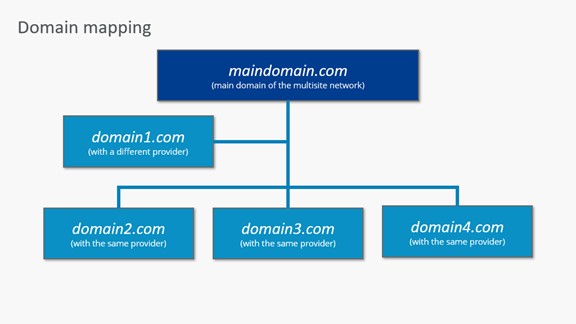
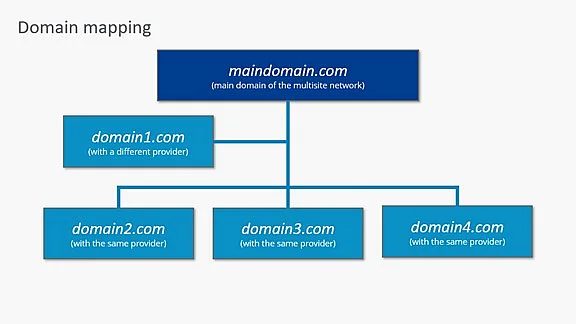
For example, WordPress makes this possible with its multi-site feature, which you can use to divide up a single WordPress installation into several connected domains. That way you can create separate subpages for customer service, your company blog, an online shop or local franchise sites and unite everything under the umbrella of your main domain.
Why use domain mapping?
Domain mapping is especially useful for companies and website operators that work with diverse sets of products, services, or topics. Mapping a domain makes it possible to connect a network of distinctive domains and thus make it easier to claim related domain names for yourself. It also makes it easier for users to find the part of your site that they need. Since all of the separate domains link to your main domain, it makes updating and maintaining your subpages significantly easier.
The advantages and disadvantages of domain mapping
| Advantages | Disadvantages |
|---|---|
| ✓ Easier management through centralised maintenance | ✗ Requires some CMS knowledge |
| ✓ Protects your brand with additional domains | |
| ✓ Helps you reach new audiences | |
| ✓ No need to transfer existing domains |
Advantages
The advantages of domain name mapping are pretty clear. If you use a CMS, you can manage all your domain maintenance and updates in one place. You’ll save time and money, since all your domains are part of your ‘domain map’. With domain mapping you can also secure several domains that are relevant to your brand.
The domains won’t just sit around ‘parked’ but can be connected with your main domain. That way you can optimise your reach, reach out to new customers, and increase your traffic. It’s also possible to use domain mapping to integrate existing domains into your system without spending a lot on domain switching, WordPress migration, or host changes.
Disadvantages
Disadvantages of domain mapping can arise, for example, when working with WordPress multisite structures. Without sufficient knowledge of content management systems, domain mapping can be difficult to implement. It’s therefore necessary to become familiar with how multisite networks and domain mapping work.
Domain mapping vs domain transfer
The main difference between domain mapping and a complete domain transfer is also one of the main advantages of domain mapping. If you have a contract with a service provider for your WordPress site, you won’t be able to transfer or change your WordPress domain without spending a lot of money doing so. It’s much easier to connect independent domains with already mapped domains without switching your provider or server. While a domain transfer from one provider to another entails transferring all content to a new server including the AuthCode, with domain mapping you can simply link your various domains to your main domain.
Domain mapping vs domain redirecting
If you want to secure catchy domains for trademark reasons or increase your reach with similar domain names, domain redirecting might be the thing for you. With domain redirecting, users will be redirected to your target domain even if they didn’t originally search for it.
With domain mapping, on the other hand, it’s not about being redirected. Instead, you’re dealing with a separate domain with its own content, which is connected to a multi-site network and links to it. Users are on the secondary domain but are shown content from the main domain. The URL in the browser doesn’t change.