

Franchising: gaining independence through partnership

You are a committed young entrepreneur and have a burning desire to start your own business. However, you don’t have a concrete business idea, you lack sales experience, or maybe the market entry barriers are just too big. There are also plenty of “big players” who have already somehow managed it. These successful businesses already have a functioning business concept, harbor influential relationships, and have the necessary capital. How tempting would it be to just get involved in a business that is already successful without having to give up your appetite for independence? Franchising might just be the right choice for you. Here, we explain how it works.
What is a franchise? A definition
The French term “franchise” refers to granting certain privileges to others. After several changes in meaning throughout history, this term now primarily refers to privileges of an economic nature. “Franchising,” also called “concession purchase”, is in this sense a form of distribution based on a partnership between two parties: the franchisor who sells the rights to use their brand (i.e. brand name, logo, design, business idea, and distribution rights to products and services), and the franchisee who receives these transferred rights. This partnership forms a “franchise system.” Due to the division of labor and synergies, both participants usually benefit from franchising, creating a win-win situation.
Franchising is a distribution form based on a partnership in which independent company founders (franchisees) use a franchisor’s already-successful business concept to set up their own business. The franchise system that is established serves the purpose of economic expansion.
Why become a franchisee?
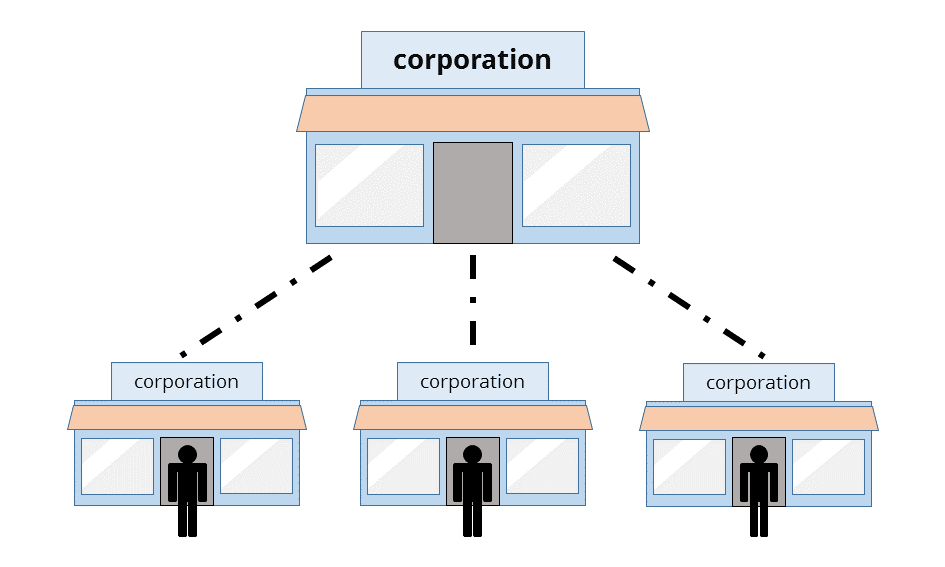
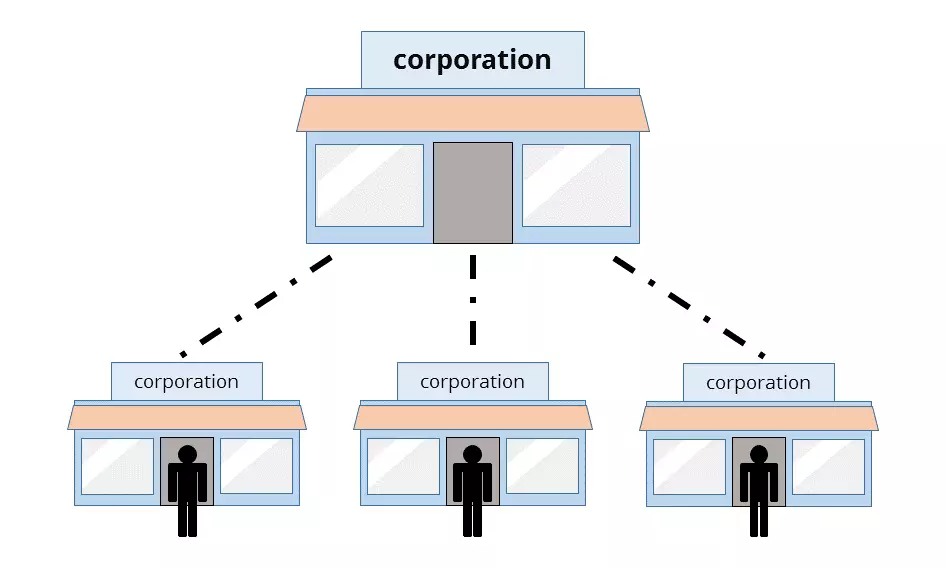
Due to increasing market entry barriers (especially with regard to financing), it is becoming increasingly difficult for committed young entrepreneurs to set up their own companies. The need to be a self-employed all-round talent in all things related to creating a business (business, financial, and legal aspects) is already nipping many entrepreneurial spirits in the bud.
If this effort also makes you shy away from setting up a business, then franchising could be an interesting alternative. By integrating yourself into an already-established business model, a large part of the organization is taken care of for you. This allows you to enter the market much quicker and easier than if you were self-employed outside a franchise system. Your franchisor’s experience and resources reduce the risks of setting up a franchise – and can also protect you from common mistakes made by many beginners. Nevertheless, you remain legally independent at all times – you alone are responsible for your business.
Franchise providers motivations
A franchisor is usually driven by motivation to further expand their business activities and advance their company economically. Franchising offers them the opportunity to expand quickly into new markets without having to set up and manage their own branch systems. Franchising is therefore also regarded as an efficient, low risk form of internationalization for good reason. A stronger effort to spread the brand brings added value to the customer, while the company becomes more attractive to regional suppliers at the same time. In this way, profits can be increased in the long term.
Franchisors see their franchisees as strong allies. In contrast to employees, they are demonstrably more motivated, work harder, and often have local relationships and knowledge. The proximity of franchisees to regional markets also allows the franchisors to react quickly and flexibly to the needs of end consumers and to continuously adapt and further develop the business model.
 To display this video, third-party cookies are required. You can access and change your cookie settings here.
Distribution and types
Franchise systems are becoming increasingly popular as a counter-model to traditional forms of distribution and are often also competing with larger corporations. They can be found in a broad range of industries: retail (The Body Shop), education (Sylvan Learning), and real estate (Engel & Völkers), while some opticians (Pearle Vision) and fitness studios (Orangetheory Fitness) work together with independent company founders.
The franchise sector is becoming more and more important globally. Most of them belong to the service sector (tutoring, sports programs, car rental, and cleaning services) followed by retail trade and crafts. Franchising is also widespread in catering and food services – the most well-known franchisor in this sector is certainly the fast food giant McDonalds.
There are three different types of commercial franchise systems:
- Product franchising is when there is just one specific product or product group sold by the franchisee (e.g. Coca Cola)
- Service franchising is where the partnership agreement relates to a particular service (e.g. Subway)
- Wholesale franchising is where the manufacturer supplies a wholesaler with material, equipment, and know-how to complete a product and pass it on to the retail trade for distribution (e.g. Home Depot)
The franchise approach is also increasingly being adapted in social projects. This “social franchising” transfers the concept, which is in fact highly commercial, into the non-profit organization area. This is not about expanding a business, but instead about the (international) dissemination of a social idea or a charitable project. Franchise donors in this case are, for example, foundations or non-profit associations that have already achieved a certain degree of awareness.
The franchise systems they set up work in a similar way to their economic equivalents. First, franchisees are contracted, receive a manual with instructions, and are trained in their future activities. As a rule, no fees are charged, but the franchisor has access to valuable data records that can help with the further development of the project.
In the context of internalizing a franchise system, the “master franchisee” has an important role to play. They are responsible for acting as a franchisor in their own country and for acquiring and supporting other franchisees.
How do I become a franchisee?
Basically, every company founder can set up their own business as a franchisee. Before choosing to, however, you should first really consider whether or not this distribution system is really appealing to you. While working with an established company will take some work off your hands, you still need to fulfil a number of tasks and requirements before you can officially open your franchise.
A personal e-mail address is a prerequisite for professional email communication. Secure your desired e-mail address with its own domain name now with IONOS!
Selection of a franchise system and establishment of contact
When you begin, you need to choose what kind of franchise system suits you. If you want to save yourself the hassle of searching online, you can try out this portal to assist you.
You can search for opportunities using filters like industry, low cost franchises, or new franchises. Detailed profiles of each company provides you with a description of the enterprise, as well as information about the year of establishment, the history of the business, and the entrance fee as well as current fees and net worth required.
Additional research is of course, invaluable, when it comes to selecting a franchise to invest in. News and press releases are a rich source of information. During your selection process, you should consider the following questions:
- How convincing and future-oriented is the business concept?
- Are innovative/risks or proven/outdates products and services on offer?
- What about the rate of growth of the company?
- What is the current market situation in the industry like?
- How strong is the competition?
- How many franchisees are there?
- What is the fluctuation rate among franchisees?
- How are the franchises geographically distributed?
- Has there been any negative publicity or scandal recently?
If you are interested in a franchise system, you can request information through the Franchise Direct website. You can then apply for a franchise, and if you’re lucky, be called in to interview or receive a follow-up phone call. Be sure that the information you receive is truthful, comprehensible, complete, and verifiable. You may also be offered a chance to sit in on another branch so that you get an idea of how the business is run.
Franchise contracts and fees
The details of a franchise partnership are outlined in a franchise agreement. This agreement regulates, among other things, a specific cooperation period, all implementation requirements, as well as the legally compliant transfer of usage rights and licenses.
Do not let yourself be pressured into signing a franchise contract prematurely under any circumstances. Always make sure to have a legal professional review the contract before you sign.
Special attention should be paid to the fees charged by the franchisor in order to amortize the capital invested in you and ultimately generate profits. This includes:
- The entry fee compensates (at least partly) for the costs incurred by the franchisor in developing and implementing their franchise system. It is also used to cover part of the opening and operating costs for your franchise. In the case of smaller businesses, $5,000-15,000 is a common sum, but for larger businesses investment sums can be $100,000 or more.
- The franchisor collects franchise fees, also known as ongoing fees, as a fixed percentage of your net revenue on a monthly or quarterly basis. This usually ranges from between 5-10%.
- In addition to the entry fee and ongoing fees, some franchise contracts also charge advertising fees to finance and implement advertising materials and marketing campaigns.
The majority of franchisors also set a minimum amount for the equity capital you need to be able to raise when setting up your franchise business. While this can vary greatly, most franchises in the USA require between $50,000-200,000. If there is no concrete amount specified, a ratio of 20:80 from equity and debt capital is recommended for financing. By using your own funds, you aren’t just proving your own creditworthiness, but you are also signaling to your franchisor that you are willing to take risks and have confidence in the business idea.
Establishing a franchise company is often associated with high initial investments, but these are still usually lower than a conventional self-employed career. However, you should make sure that the amount in fees is in proportion to the service you will receive from the franchisor. After all, you don’t just need to cover you own living expenses, you also want to make a profit on your business as quickly as possible.
Financing
Overall, a good franchise system presents you with fewer financial hurdles than other forms of self-employment. If financing is still a problem, there are a number of ways you can get access to external capital:
- Since franchise systems are tried and tested concepts, you generally have a better chance of obtaining loans and other financial support than for a solo self-employed project.
- If this argument is not enough, you can also refer to the franchisor’s reputation when making your case to the bank. As a rule, the franchisor can provide you with documents, data, and comparative figures that will strengthen your negotiating position.
- Although it might require more effort (and sometimes luck), you can undergo a personal search for investors or make a call for crowdfunding.
- In addition, there are public promotional programs for franchising offered by most banks.
Franchisee rights and obligations
Within the partnership, the franchisor doesn’t just determine the rules, they also act as a “mentor” of sorts for the franchisee with their extensive business experience. The franchisor fulfils this role by offering (before the contract is signed) structured training and/or further education, which gives you the necessary know-how to operate your franchise. In addition, you will usually receive a comprehensive manual describing in detail how to run your franchise.
Strict guidelines for management, personnel policy, marketing, sales, controlling, bookkeeping, and reporting are intended to achieve a uniform appearance for all franchise operations, since a homogenous corporate identity increases brand recognition value. However, the strong standardization of business processes also implies that you have little or no freedom to design your own business or to directly influence the development of your core business. If you are striving for “real” independence, this circumstance may be a difficult one for you.
Here is a summary of your most important duties:
- Considering the contractually agreed principles
- Adhering to the corporate identity
- Active cooperation with the franchisor
- Reporting regularly and in detail
- Implement advertising measures as prescribed
- Attend necessary seminars and training courses
What do you get in return for your compliance? Here is an overview of the benefits you can expect in a good franchise system:
- The guarantee of a functioning, proven business concept
- Usage rights for the entire corporate identity, as well as distribution rights for products and licenses for services
- Help finding a location for your business
- A local monopoly, also known as territorial protection, within the franchise system
- Support in setting up and opening your office
- Access to the franchisor’s IT systems (e.g. the merchandise management system)
- Support in setting up distribution channels and recruiting personnel
- A wide range of financial assistance, like favorable purchasing conditions (e.g. cost advantages for office supplies), loans, rent subsidies, graduated fees, supplier and commodity credits, as well as the provision of financing, liquidity, and profitability plans to prove eligibility for funding to banks
- Possible insurance options
- Help with the organization of an opening campaign, and the provision of advertising material and other promotional activities
How do I become a franchisor?
Do you yourself have a successful company and are considering establishing a franchise system? Then you should first ask yourself the following questions:
- Do I have a clearly defined business idea?
- Is this business idea competitive in the current market environment?
- Can I make clear demands of any franchisees I might get?
- Do I have enough entrepreneurial experience for this expansion project?
- Do I have secure financing for my project?
- Have I already successfully tested my business idea?
The last question, in particular, should be a resounding yes. Generally it is necessary for franchisors to have at least one, or preferably more functioning test or pilot companies. These are considered successful if they have been in operation for at least one to two years and have been continuously optimized on the basis of the experience gained.
You will need to advertise your franchise diligently so that potential franchisees can find you. You should take time to create a clear requirement profile that covers not just vocational training and entrepreneurial experience, but also financial requirements and soft skills. Some franchisors also hire special recruitment agencies to meet their need for new supporters. However, you shouldn’t get frustrated if the search doesn’t work right away – a rule of thumb says that 100 first attempts never result in a contract.
As soon as you have entered into a partnership, remember that a franchisor also has certain obligations and responsibilities towards their contractual partners. A relationship based on mutual trust and seeing eye to eye is particularly emphasized. Transparency in decision making is important on both sides.
What is the legal situation regarding franchising?
Im Allgemeinen bietet das Franchising mehr Vorteile als Nachteile für alle Beteiligten. Trotzdem gibt es ein paar Risiken, die es zu beachten gilt. Dazu gehört, dass die Win-win-Situation bei einem Franchise-System stets aus einem Kompromiss entsteht: Der Franchise-Geber kann mithilfe engagierter Unterstützer sein Business ausweiten, verzichtet dafür aber auf einen Teil seines Umsatzes. Der Franchise-Nehmer wiederum kann für die Existenzgründung auf bereits vorhandene Expertise und Ressourcen zurückgreifen, muss sich aber an klare Regeln halten und hat so gut wie keine Möglichkeit, seinen Betrieb oder das Kernunternehmen mitzugestalten.
Franchising in the USA is regulated by the US Federal Trade Commission (FTC). Rule 436 defines a franchise as a business relationship with encompasses these three aspects:
- They allow the use of a name or trademark
- They provide “significant operating control/assistance”
- A franchisee is required to pay above $500 in the initial six months of the operation (which can cover initial/advertising/training/equipment fees, among others)
If a commercial relationship adheres to this FTC franchise definition, the franchisor is then required to provide any prospective franchisee with a Franchise Disclosure Document (FDD). This is a document which contains up to 23 specific items in a prescribed format, as well as any contracts the franchisee is required to sign and a copy of the franchisors audited financial statements, if applicable. The FDD must be given to the franchisee at least two weeks before selling them the franchise, and a completed franchise agreement must be presented to the franchisee at least a week before selling them the franchise. You may only claim with certainty information included in the FDD with regards to the business. Another important rule is that all franchisee applicants must be treated equally, i.e. any business negotiations you are willing to engage in with one prospective buyer must also be offered to others.
The above regulations are simply those covered by the FTC regarding franchising. In addition to federal oversight, a number of individual states also have their own legislation in place to regulate franchising. More information on which states have their own franchising regulations can be found here. As always, it is best practice to have a legal professional look over your documents to ensure you are adhering to both federal and state obligations when issuing or purchasing a franchise.
Ein besonderes Risiko birgt außerdem die enge Verbindung der beiden Parteien: Fällt ein einzelner Betrieb negativ auf, kann dies das Image der gesamten Marke beeinträchtigen; andersherum leidet das Geschäft des Franchise-Nehmers, wenn es zu Problemen bei den Kollegen oder in der Zentrale kommt. Eine unbefriedigende Kauferfahrung kann die Meinung eines Kunden gegenüber dem gesamten Unternehmen verändern. Zudem verbreitet sich negative Publicity durch die sozialen Medien und das Internet so schnell wie nie zuvor. Dabei ist nicht gerade hilfreich, dass das Franchising in Teilen der Gesellschaft eh einen eher fragwürdigen Ruf als „Ausbeuter-Konzept“ oder „Scheinselbstständigkeit“ genießt – zurückzuführen auf die wenigen schwarzen Schafen in der Branche.
What are the disadvantages of franchising?
In general, franchising offers more advantages than disadvantages for all parties involved. Nevertheless, there are a few risks that need to be considered. These include the fact that the win-win situation with a franchise system always arises from a compromise: with the help of committed supporters, a franchisor can expand their business, but forgo their turnover. The franchisee, on the other hand, can draw on existing expertise and resources to set up their business, but also needs to adhere to clear rules and have virtually no opportunity to help shape their business or the core company.
Another particular risk is the close relationship between the two parties: if an individual business is perceived negatively, this can affect the image of the entire brand. The franchisee’s business suffers if there are problems with colleagues or at headquarters. An unsatisfactory buying experience can change a customer’s perception of the company as a whole. In addition, negative publicity from social media and the internet is spreading faster than ever before. It’s not particularly helpful that franchising enjoys a rather questionable reputation in parts of society anyway as an “exploiter concept” or “bogus self-employment” – attributed to the few black sheep in the industry.
Overview: advantages and disadvantages of franchising
In the following overview, we have once again summarized for you the advantages and disadvantages of franchising for both franchisees and donors:
| Franchisee | Franchisor | |
| Advantages | ✓ Use of an already established business concept ✓ Fast and easy market entry ✓ Minimizing of the foundation risk ✓ Legal independence ✓ Comprehensive support and supervision by the franchisor | ✓ Efficient and low-risk expansion into new (international) markets ✓ Alternative to the complex branch system ✓ Opportunity for sustainable increase in profits ✓ Cooperation with motivated employees with proximity to the market ✓ Reduced liability risk due to outsourcing to upstream contracting companies |
| Disadvantages | ✗ High upfront investment costs ✗ Fees and charges ✗ Little or no possibilities for co-designing ✗ Liability for third-party products and services ✗ Negative headlines about the franchisor or other franchisees can affect your operation | ✗ Waiver a part of turnover ✗ Cost and time of an intensive franchisee recruitment process ✗ Partly negative attitude towards franchising in society ✗ A single franchisee can damage the entire brand image |
Summary
In recent years, it has become increasingly difficult for committed young entrepreneurs to overcome the numerous barriers to market entry on the way to setting up a business. Franchising can help you to fulfil your dream of economic independence after all. However, not everyone is made for the role of a franchisee: if you not only want to be legally independent, but also have creative and entrepreneurial freedom in your business design, you will probably be disappointed by the sales model, because you must play according to the rules of the franchisor. In this case, the individual of founding of a company might be the better choice.
If you are still interested in the concept of a franchise, you should carefully examine your partner company and the contractual basis. Is it a proven business model? Are there already many franchisees? Is the relationship between fees and services right? If you can answer these questions with a clear “Yes” after sufficient preparation and research, chances are good that you will profit financially from franchising.
Click here for important legal disclaimers.
Reviewers

Anne-Laure Wolber
Anne-Laure has been part of the IONOS Digital Guide since its inception in 2016. As an expert in the startup category, she focuses primarily on the strategic integration of SEO, GEO, and conversion rate optimization. Over the years, she has also gained extensive experience in related performance disciplines such as lead generation and native advertising. As a polyglot, she leverages her multilingual background to develop content strategies with precision and impact for international audiences.

Christian Heldmaier
Christian Heldmaier is an experienced online marketing and SEO specialist from Karlsruhe. He has been working as an SEO Manager at IONOS since July 2020.