

Am I a leader? A comparison of management styles

There are many different ways to lead a team. Depending on the situation and goal, different skills are also required. There are essentially three different types of leadership: managers, leaders and experts.
There are many different ways to lead a team. Depending on the situation and goal, different skills are also required. There are essentially three different types of leadership: managers, leaders and experts.
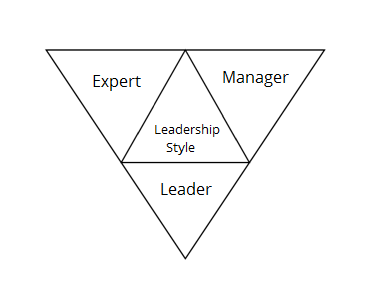
Am I a leader, an expert, or a manager?
How do you recognize which management style you are most suited for, or prefer? What is behind the three main types of leadership?
Management in terms of a directing function includes tasks like setting goals, drawing up plans, making key decisions and giving instructions. This makes it clear that management is a control or administrative activity.
A manager plans work strategy, carries out organizational tasks and gives instructions.
Leadership focuses on direct interaction between the manager and the employees. In this type of leadership, the communication skills of the leader and the ability to built trust with and among employees are important. Leadership depends on interaction in both directions, from leader to employee and vice versa. These communication skills are less important for management, which tends to function “from above”. Leadership can therefore be classified as a personal type of leadership.
Leaders convey a vision and therefore provide a long-term perspective. They mobilise and motivate employees. Leaders also involve their team directly in the project, tapping into existing potential and ensuring cohesion within the company. They work closely with their team and exchange ideas with them on a regular basis.
A leader leads and motivates the employees on a personnel level. They need to be able to interact with people in many different ways.
The expert is responsible for a certain quality standard due to their professional competence. They pass their knowledge along to employees and are available for advice. With this type of leadership, the focus is on the substance itself, which means that personnel management can sometimes be neglected as a leadership aspect. Since their knowledge places them at a natural advantage, expert leaders often make most decisions themselves.
An expert is always in demand when someone is looking for information, and the quality of their answers is always a given.
A comparison of the three leadership styles
In the workplace, management styles have decisive influences on everyday working life and are an important contributor to a company that performs well. Good leadership is particularly important for motivating employees. It is no secret that satisfied employees who enjoy their job also achieve better results. As a manager, you should be clear about your personal management style.
Essentially, every larger company needs both good managers who can secure the business and have the organization under control, and leader who can lead different teams, promote initiative and innovation and keep the organization of managers in mind, as well as experts with the necessary know-how to implement ideas.
Types of guides and their special features:
| Manager | Leader | Expert |
|---|---|---|
| Scheduling | Vision | Knowledge |
| Procedures | Communication | Duties |
| Structure | Initiative | Self-made |
| Organization | Innovation | Sharing duties with the boss |
| Rules | Changes | Quality |
| Resources | Employees | Implementing your own ideas |
Each of these three types of leadership requires different competences. Communication with employees also varies according to leadership style. A manager is usually good at organizing and keeps an eye on everything. A leader should be able to lead a team and develop the employees. The expert, on the other hand, should enrich the company through their knowledge, advising both managers, leaders and their teams.
One person on their own cannot perform all these functions. In practice, it often turns out that a good manager is not always a good leader; experts who are also strong leaders are also rare. As a manager, you should be strive to constantly develop your skills, expand your range of activities and constantly question yourself.
What leadership styles are there?
At this point, we will take a closer look at leadership styles. To find out what kind of leader you are, you should know what the different leadership styles that exist are. In most cases, your own style is a mixture of two or more subtypes of the main leadership style. However, this can and should change depending on the situation. If appropriate or necessary, you can temporarily modify or change your management style in order to lead your team to the best of your ability. Here are examples of leadership styles:
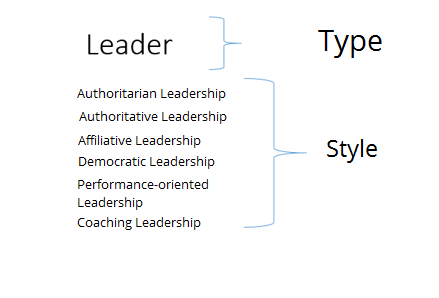
Authoritarian leadership (“Do as I tell you!”)
An authoritarian management style motto would be “Do as I tell you!” This means that the leader is the only one with the authority to make decisions and encourages employees to follow their instructions. This style is particularly recommended in emergency situations where quick action is required. This means that everyone is working towards the same goal, and decisions do not need to be discussed at length.
As a leader, you should strive for authoritarian leadership in exceptional situations. Be clear and precise in your statements and when you distribute tasks. Specify clearly what needs to be done and who should complete each task. You should not get involved in discussions. This style requires a high degree of assertiveness.
But beware! A permanently authoritarian style can considerably worsen the working atmosphere and discourage employees. Therefore, combining it with a different style is recommended. Additionally, you should treat your employees with respect during all interactions and apply some self-reflection to your approach.
Authoritative guidance (“Accompany me on my way”)
An authoritative guidance leadership style contributes to an great employee environment. This management style is a good choice, especially in times of crisis, when a company is changing, or when employees lack prospects. The main focus is on the team. The leader decides what to do, but pays attention to the freedom and independence of individual employees. This encourages team members’ own commitment.
Characteristic of this style of leadership is, above all, the leader’s willingness to communicate. Although they embody authority, they should not make that a constant focal point. Instead, they should encourage their employees to follow along and contribute their own ideas and opinions. This gives employees the feeling of being able to work on their own, have some responsibility and develop their own skills. However, sometimes, it can be easy to lose sight of the common goal when concentrating on the whole team.
Affiliative leadership (“For me, it’s people that count“)
Empathy and social skills are required in an affiliative management style. It’s about building positive relationships between colleagues and open communication within the team. This management style is a good choice, especially if there are problems on the team or if an employee needs advice.
This leadership style is the right one for you if you want to incorporate humanity into your actions. Affiliative leaders have understanding for their employees when it comes to solving problems and they can see the good in every team member. In this way, they convey to the team that the most important thing is the employee, not the final product or service. This often has a positive effect on the working atmosphere. However, if important and urgent decisions have to be made, they may not be the most capable at taking the lead and making difficult decisions.
Democratic leadership (“What do you think“)
As is customary in a democracy, decisions are made by the whole team. A positive aspect of this management style is that employees can get involved and are considered to be of equal value. This motivates the team and ensures a positive atmosphere in the long run. Furthermore, employees are involved in the projects – which motivates them to approach their tasks with a more responsible approach.
As soon as employees want to have their own voices heard as well as yours as a manager, the democratic style of leadership must be taken into consideration. The shared responsibility means that every team member feels respected and encouraged to actively participate in what is happening.
Just like democratic society in general, however, it can sometimes be that opinionated leaders create a stage for themselves, while others are completely held back. As a leader, you should have a good sense of who influences the dynamics of the team in what way, and whose concerns may be being neglected.
Performance-orineted leadership (“Just do what I do!“)
The performance-oriented management style is a suitable choice in extreme situations to steer the team in one direction and to achieve maximum performance together at short notice – whether in the event of an employee shortage due to sick leave or in the case of projects that need to be completed to a tight schedule.
However, you need to involve yourself in the work and try to do your best, otherwise you will quickly lose credibility and respect. Stay in touch with your employees at all time, and be sure to listen to their needs. Otherwise, you may seem too authoritarian, or even ignorant. This style differs from authoritarian leadership in that you demand a high degree of commitment from your employees. Everyone has to push their limits to reach goals.
Important to note: When used permanently, this style is a real motivation killer and is a sure fire way to end up having your employees find a new job. Mixing this style with another is generally recommended.
Coaching leadership (“Try it again“)
With this leadership style, the your employee’s future is your driving force. You work out strategies together at eye level and pursue common goals. If every single employee is successful, so is the entire company. If the employee wants further training or is in a personal crisis, you can try to help them using this method.
Similar to affiliative management, the focus here is on the individual person. However, the coaching management style places even more importance to tapping into the potential of each individual team member. To do this, you need to be very specific about the interests of the individual and give them enough freedom to develop their abilities. However, too much guidance can put a damper on learning and have a patronising effect.
You should also keep an eye on each employee’s potential, strengthening and promoting it through targeted assistance. In the long run, your employees will feel at home in the company.
Leadership styles in comparison
Each management style has different advantages that make it suitable for certain situations. But you should also be aware of the disadvantages that come with each leadership style. Here is an overview:
| Leadership style | Advantages | Disadvantages |
| Authoritarian | ✓ In emergencies, decisions are made and actions are taken quickly ✓ Everybody knows what they have to do | ✗ Can permanently worsen in the working atmosphere ✗ Disregards individual potentials |
| Authoritative | ✓ Addresses the team as a whole ✓ Promotes good communication within the team ✓ Promotes the independence of employees | ✗ Achieving the goals sometimes seems secondary |
| Affiliative | ✓ Focus on humanity ✓ Ensures a good working atmosphere | ✗ Can be considered too gentle in some situations |
| Democratic | ✓ Includes employees ✓ Leads to increased motivation ✓ Considers the opinions of the individual | ✗ Often long discussions about decisions ✗ Susceptible to group dynamics |
| Emphasis on performance | ✓ High performance even in bottlenecks | ✗ Effective only for short phases ✗ Detrimental to motivation if used permanently ✗ Overtaxes some employees |
| Coaching | ✓ Focused on employees and their individual potential ✓ Strengthens employee loyalty | ✗ Danger of being patronizing |
You can apply these management styles according to the requirements of the industry, the respective project or the specific situation. It is important that you rethink your style from time to time and realign if necessary. This can also serve to provide fresh impetus and create new incentives. One style alone will cause problems in the long run and could demotivate the team. Therefore, it is recommended to combine at least two styles, of course tailored to the requirements of your company.
In addition, the way you run your business should suit you as a person – so stay authentic and open to new ideas. Your employees will thank you.