Lean startup: reasons without risk?

With the launch of their first product, young companies enter a decisive phase. After months or even years of developing and improving prototypes, establishing sales channels, securing financing and taking various marketing efforts, the moment of truth arrives. Will the product be a success? Will it inspire customers and make money? Or, is there simply no market for the product? Is it under-developed and missing the market demand? If the product fails at its launch, this usually means the end of the startup.
For some years now, many founders have been big proponents of the lean startup methodology. Promising to minimize the unpredictability of the market launch, the lean startup approach helps to make young companies more flexible, innovative, and ultimately more successful.
History of the lean startup model
The term “lean startup” was coined by entrepreneur Eric Ries, who had a disastrous experience with his Silicon Valley startup “There Inc”. After years of secret research and development, the product – a virtual online world – failed terribly upon its market release, as a result of poor judgment by those who developed it and a misreading of the needs and wishes of its potential users.
Following this experience, Ries developed the lean startup model, which he first discussed on his blog in 2008. In 2011, he published his book “The Lean Startup” in which he described the idea and all of the basic building blocks to the approach. The book proved to be highly popular and sold very successfully.
What is the meaning of a lean startup?
“Lean startup” is a buzzword that has been circulating within the startup scene for some years now, yet relatively few people have truly come to grips with what the concept means. A lean startup does not necessarily have to maintain a minimum budget or rely upon self-financing, nor is it suitable only for small or young companies; it is suitable for all kinds of companies, not just digital ones. So – what does “lean startup” mean?
Definition: lean startup
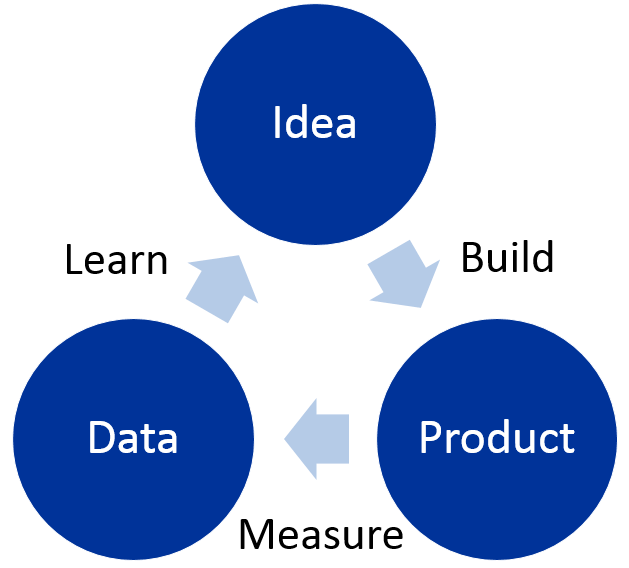
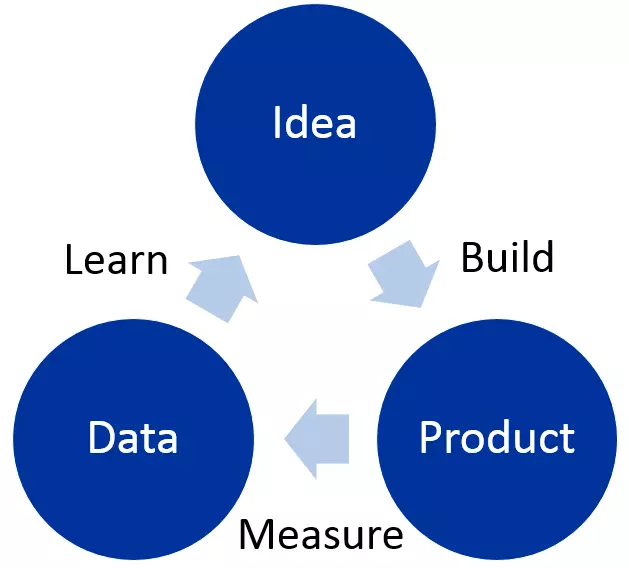
The lean startup model is a set of processes that help to establish companies and realize business ideas. Fast market entry is central, with a prototype that shows only the basic functions and characteristics of the business idea – the so-called MVP (Minimum Viable Product). Based on customer feedback, the product is continuously improved and adapted to the needs of its users and thereby becomes a more marketable product with each development. Eric Ries refers to this as an improvement loop that is repeated many times; “Build – Measure – Learn”.
To enable continuous change to a product – and in many cases to the business itself – there must be a lean and flexible corporate structure. As a result, the lean startup approach is not limited to just product development, but affects all areas of the company.
Lean startup: a method against uncertainty
The pragmatic lean startup approach offers many advantages – one of the most important is the collection and analysis of data, which helps to reduce uncertainty.
- The product is not developed on the basis of assumptions, but on the basis of analysis
- This analysis makes it more likely to meet customer needs
- Unsustainable ideas are weeded out early in the development process
- Failure becomes less likely
- Changes to the product may reveal previously unseen gaps in the market
- Users are directly involved in product development via feedback, building their brand loyalty
- Resources are not used for the development of unnecessary features
What does lean startup mean for product development?
The quality of the MVP is decisive for the success of a lean startup as it is the basis for further investigations and tests. The prototype is limited to the core function on which the business is based. This makes it possible to tell immediately whether there is a market for it. Additional functions should not be implemented at this stage. As the product’s features are limited at the time of its market launch, it’s all the more important that it should work flawlessly and that all attributes must be implemented perfectly. Before releasing the first version, consider the following questions:
- What is the product’s core function and what is its added value for uses?
- Which features are not relevant at the beginning and can be excluded?
- What resources are required to implement the MVP?
- What methods can the company use to obtain the most amount of relevant data regarding customer satisfaction with the product?
The early MVP iterations – i.e. the product versions with minimally adapted features – will extend or change the scope or orientation of the prototype step-by-step.
Gain knowledge with validated learning
At the beginning, the business model concept exists only as a hypothesis and set of assumptions. In order to check their validity, surveys on customer satisfaction, user behavior, and the long-term efficacy of the concept are required. It is not important whether the initial hypotheses and assumptions were related to the product, the corporate structure, financing, or any other aspect of the startup. This process of gaining knowledge based on data is called validated learning.
On the basis of the validated learning, the business model can be adapted, changed, or even discarded and reimagined – the latter is known as a pivot. The founders of Twitter, for example, initially wanted to focus on podcasts. Only as a result of a pivot did they change their product to cater for short messages with a limited number of characters. The subsequence success of the company is well known.
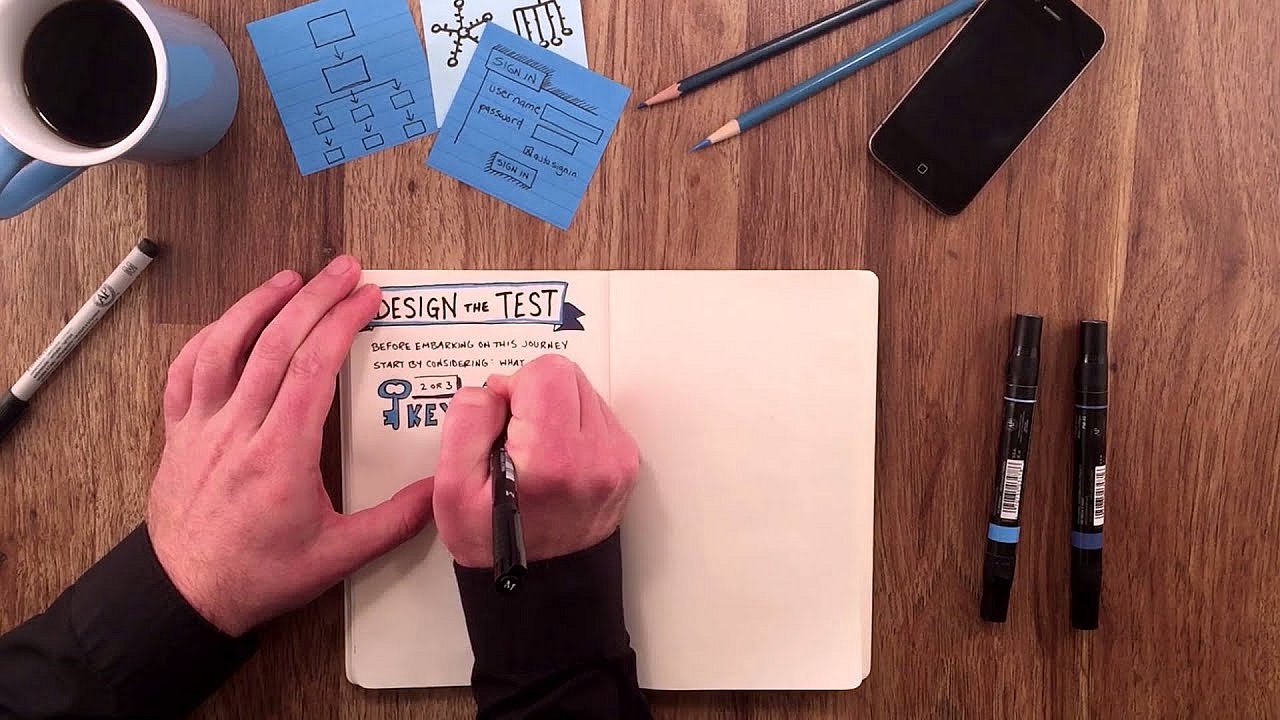 To display this video, third-party cookies are required. You can access and change your cookie settings here.
 Flexible definition of lean startup business models
The traditional business plan that company founders draw up concerning their corporate strategy, market analysis, and financing potential is too static for lean startups. The business model canvas has established itself as a more flexible variant. It consists of nine areas each pertaining to key factors for the company model. Each area is fulfilled individually before being combined with the others in a modular fashion. The key fields are:
- Value offered: What uses or benefits does the customer get?
- Customer demographic: Who are your customers? For which groups of people is the product interesting?
- Sales and communication channels: How does news of the product reach the customer? How do they get it?
- Customer relations: What is needed to build and care for customer relationships
- Revenue source: What kind of income can be expected? How is this achieved?
- Key resources: What infrastructure and resources are required to deliver the product?
- Key activities: What processes are necessary to continue to offer the product long-term?
- Key partners: What external suppliers and/or service providers does the company need to use?
- Cost structure: What does the financial planning look like? What are the cost factors?
The five principles of a lean startup
In his book, Eric Ries laid out the ideas, characteristics, and methodology of lean startups in five guiding principles:
There are entrepreneurs everywhere
Startups are not bound to a specific time or location: anyone can set up a startup and become an entrepreneur, whether from their garage or from within a large company.
Entrepreneurship is management
Founders must be aware that it is in their hands to lead the company responsibly and to make good strategic decisions. The new lean startup approach also needs a new business model.
Still don’t have a website? With IONOS MyWebsite, create a fully customizable website that’s tailored to your industry and optimized for all devices!
Validated learning process
The most important aim for a startup is not to develop a new product or to make a profit – first you must find a sustainable business model. Relevant data procured through observations and extensive testing is therefore essential.
Innovation record
For progress to be measurable, it must be visible. Defined milestones and a careful prioritization of tasks therefore helps the startup to maintain an overview and record successes.
Building – measuring – learning
The repetition of these three lessons is important not only for product development, but is especially helpful for optimizing the business model. Validated learning processes ensure that the business is headed in the right direction.
Comparison: the traditional approach vs. lean startup
What concrete advantages does the lean startup model offer compared to the traditional approach? What are the differences between the two, and ultimately which is more sustainable?
| Traditional Startup | Lean Startup | |
| Strategy | Business plan defines long-term approach | Flexible approach, reorienting is possible and easier |
| New products | Detailed preparations through product management | MVP is launched quickly then further refined |
| Failures | Are unexpected and suggest a fundamental problem | Expected part of the solution |
| Speed | Determined through a business strategy | Dynamic |
| Data | Using the maximum amount of data | Using the available data |
| Organization | Different departments fulfil a defined function | Departments work together |
| Financial reporting | Determined through accounting | Based upon measured variables |
Click here for important legal disclaimers.