

Inventory management software: best solutions

Once a company grows beyond a certain size, managing its warehouse effectively requires a reliable system. To keep track of inventory at all times, businesses turn to inventory management software. These solutions help streamline warehouse operations and, in some cases, support logistics coordination. In this article, we explore the importance of this software, who can benefit from it, and the available solutions on the market.
Overview of inventory management software
| Cloud Solution | On-Premises | Suite Component | |
|---|---|---|---|
| Cin7 | ✓ | ✗ | ✓ |
| Zoho Inventory | ✓ | ✗ | ✓ |
| SellerCloud | ✓ | ✗ | ✓ |
| Brightpearl | ✓ | ✗ | ✓ |
| Logiwa | ✓ | ✗ | ✓ |
| SYSPRO | ✗ | ✓ | ✓ |
| Ordoro | ✓ | ✗ | ✓ |
| Fishbowl | ✗ | ✓ | ✓ |
| Stitch Labs | ✓ | ✗ | ✓ |
What is inventory software?
Inventory management software provides a comprehensive overview of stock levels across a business. This means companies always have real-time visibility into what items are in stock, where they are located, and whether they are in transit. Managing inventory manually can be complex, but a good inventory management system streamlines operations, reduces errors, and optimizes supply chain efficiency.
There are two primary types of inventory management systems: perpetual and periodic inventory systems. Periodic systems determine stock levels through scheduled physical inventory counts, such as quarterly or annual audits, often following GAAP (Generally Accepted Accounting Principles). In contrast, a perpetual inventory system updates stock levels automatically with every transaction, purchase, or sale. To ensure accuracy, inventory management software integrates with barcode scanners, RFID sensors, or IoT tracking devices, allowing real-time updates.
Inventory management software is often categorized under different systems, including Inventory Management Systems (IMS), Warehouse Management Systems (WMS), and Enterprise Resource Planning (ERP) software. The distinction lies in the functionality and scale of each solution.
- IMS (Inventory Management System) focuses primarily on stock tracking, order processing, and inventory optimization but may not include advanced warehouse logistics features.
- WMS (Warehouse Management System) is designed for warehouse operations, managing storage, order fulfillment, and logistics.
- ERP (Enterprise Resource Planning) integrates inventory management with broader business functions, such as accounting, procurement, and supply chain management.
For industries such as food distribution, pharmaceuticals, and hazardous materials, inventory management software must comply with FDA, OSHA, and supply chain security regulations to ensure legal compliance and operational safety.
A comparison of the best inventory management software
The market offers a wide range of inventory control systems. Here, we present the nine most promising options.
Cin7
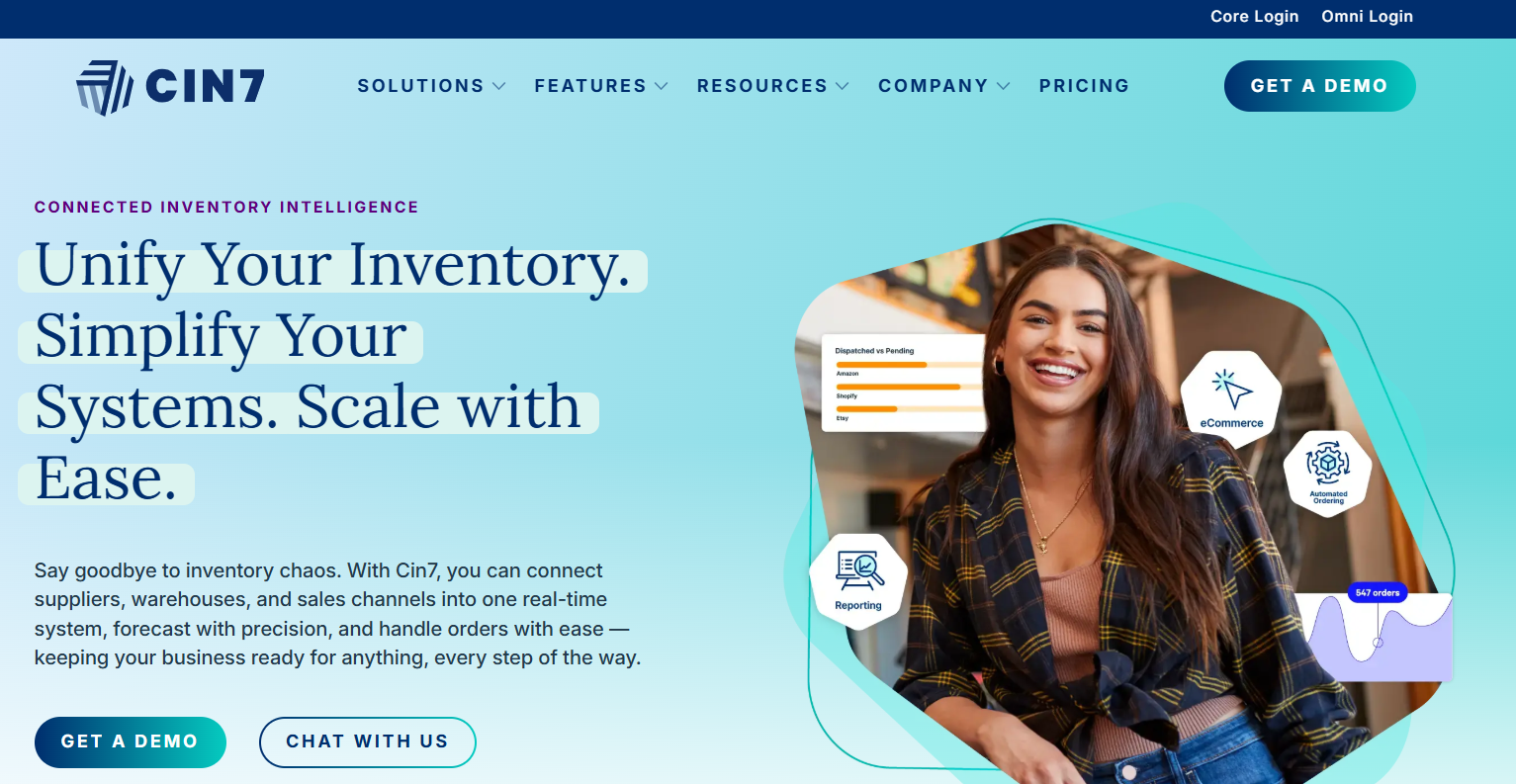
Cin7 is particularly well-suited for e-commerce and retail businesses. With integrations for various online shop platforms and connections to POS systems and in-store registers, the software effectively supports day-to-day sales operations. For processing orders in the warehouse, employees can either use handheld scanners (based on Android smartphones) or traditional printed picking lists generated by the software. Additionally, Cin7 can be integrated with logistics solutions, making product shipping simple and efficient.
 To display this video, third-party cookies are required. You can access and change your cookie settings here.
 Access to all areas of the software is managed through a dashboard, which also consolidates reports and analytics. Since everything is cloud-based, the warehouse management software is accessed via a web browser, while mobile apps are available for handheld devices. To ensure smooth implementation, Cin7 provides onboarding and long-term customer support.
| Pros | Cons |
|---|---|
| Part of a larger software suite | High starting price and scaling costs |
| Cloud-based solution | Complexity due to extensive features |
| Integrations with online shop systems and marketplaces | Limited customization |
Zoho Inventory
Zoho Inventory is a web-based inventory management software designed for businesses of all sizes. Favored for its intuitive and easy-to-use features, it supports inventory tracking, warehouse management, shipping integrations, and seamless connections with accounting and CRM tools. The software also includes barcode scanning capabilities and integrates smoothly with Zoho’s suite of productivity tools.
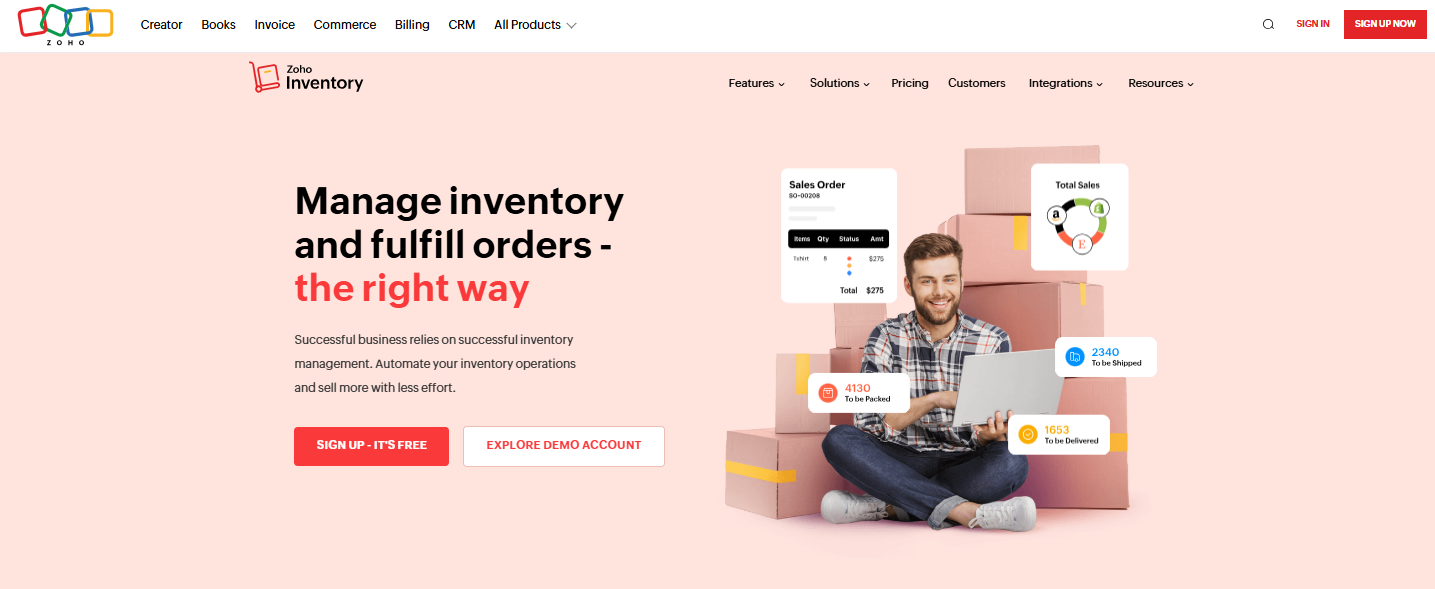
Zoho Inventory is one of the best value options on the market. It offers Basic, Standard, and Professional plans, with pricing based on the number of users, orders, and warehouses needed.
| Pros | Cons |
|---|---|
| User-friendly interface | Limited third-party integrations compared to competitors |
| Extensive integration with Zoho’s productivity suite | Some users find it difficult to tailor features to specific requirements. |
| Extensive integration with Zoho’s productivity suite | Many features can be overwhelming for new users |
SellerCloud
The SellerCloud is a powerful multichannel e-commerce solution that offers inventory management, order automation, and multichannel selling tools. It is particularly beneficial for online retailers managing multiple sales channels. Key features include multichannel compatibility, listing automation, order and shipping automation, and advanced reporting tools.
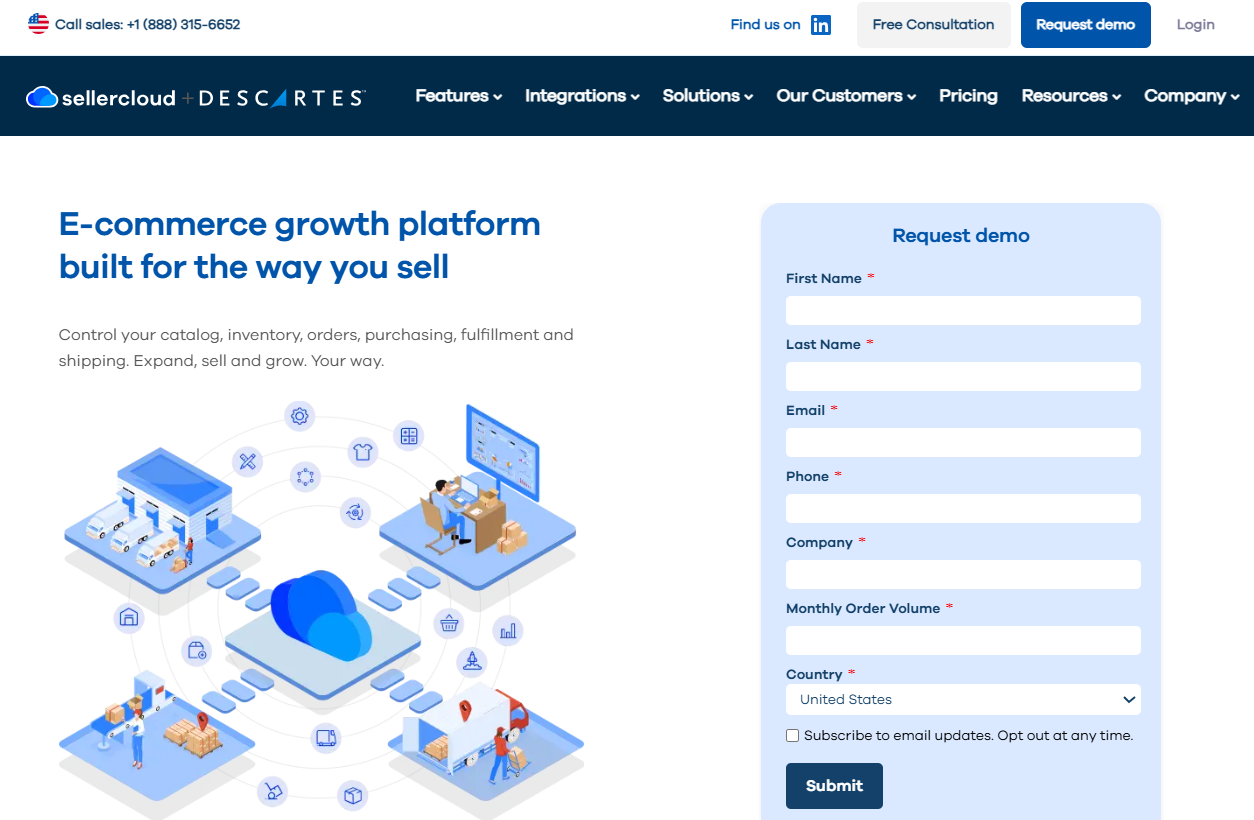
One of SellerCloud’s standout features is its seamless integration with major sales channels like Amazon, eBay, and Walmart, as well as shopping cart platforms (Shopify, Magento), shipping carriers (FedEx, DHL), and third-party logistics providers (e.g., Amazon Fulfillment).
| Pros | Cons |
|---|---|
| Extensive multichannel connectivity options | User interface can be difficult to navigate at first |
| Comprehensive feature set | Higher starting price point (over $1000 per month), which may not be ideal for small businesses |
| Includes HTTPS encryption and multi-factor authentication for secure transactions | Customization can be complex and requires technical knowledge |
Brightpearl
Another prominent inventory control software, Brightpearl, assists retailers with real-time inventory management, customer data, orders, reporting, and accounting. Compared to its competitors, this web-based solution offers a wide range of integrations with popular marketplaces, sales channels, and services, enabling seamless operations across multiple platforms. Its built-in financial management and accounting features are specifically designed for larger retail businesses, providing real-time insights for an instant overview of company finances.
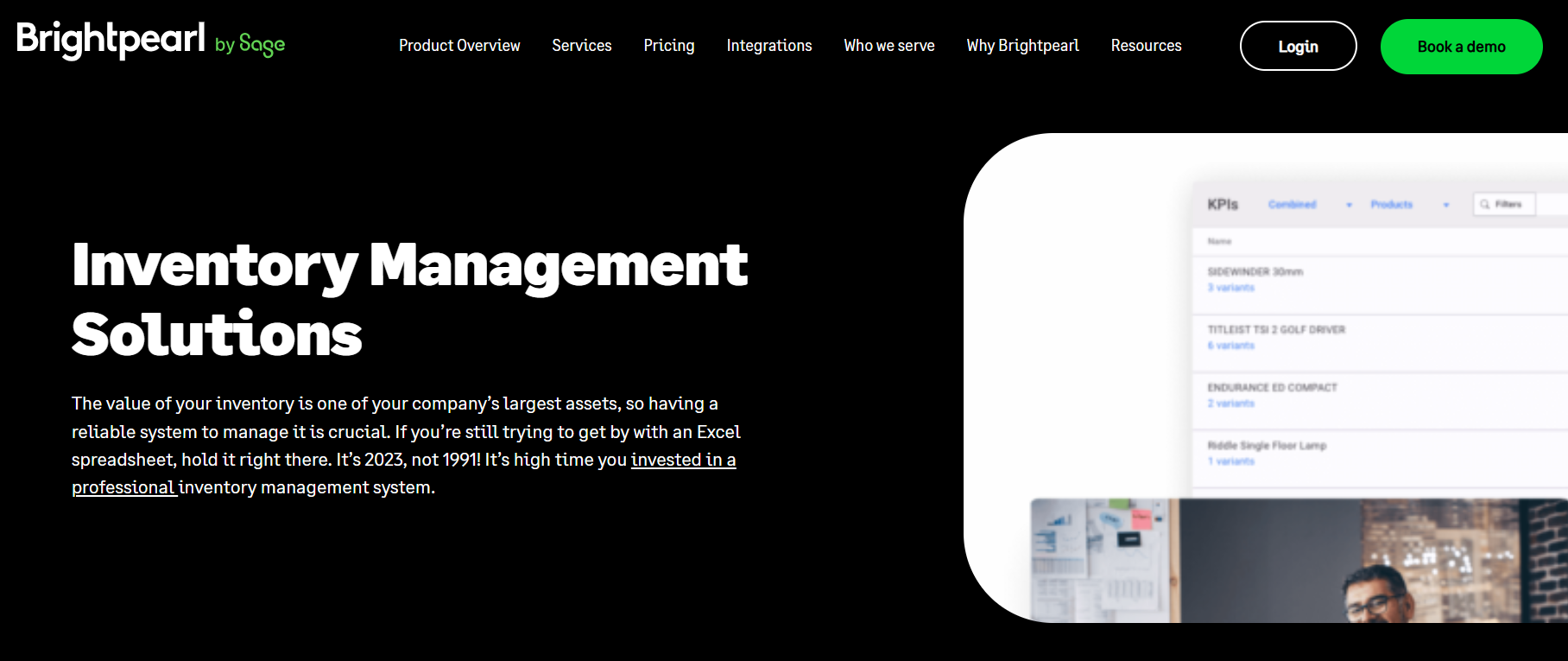
Unlike many of its competitors, Brightpearl is built specifically for omnichannel retail, meaning it seamlessly integrates with various marketplaces, e-commerce platforms, and accounting systems. Its automation capabilities help businesses reduce manual processes, improve efficiency, and focus on growth.
| Pros | Cons |
|---|---|
| Wide range of multichannel connectivity options | Frequent reports of bugs |
| User-friendly interface | Complaints about poor customer service |
| Integrated financial management and accounting | Complicated reporting feature |
Logiwa
Logiwa is a cloud-based warehouse and inventory management software designed for small to medium-sized retail, third-party logistics (3PL), and e-commerce businesses. It provides essential tools for inventory and warehouse management, multichannel integrations, order fulfillment, and real-time data analytics, allowing businesses to streamline their logistics and fulfillment operations.
Logiwa offers a highly customizable and scalable system, enabling users to automate workflows, integrate with multiple sales channels, and access real-time inventory updates and performance reports. Its cloud-based infrastructure ensures accessibility from anywhere, making it a flexible solution for growing businesses.
| Pros | Cons |
|---|---|
| Accessible from anywhere, ensuring scalability and flexibility | Complex user interface |
| Configurable to meet specific business needs | Limited advanced features |
| Highly-rated customer support and onboarding experience | Fewer integrations than some competitors |
SYSPRO
SYSPRO is an Enterprise Resource Planning (ERP) software suite designed to help businesses streamline and automate key processes, particularly targeting small to medium-sized manufacturing and distribution companies. The software offers essential features such as automated scheduling, ERP integration, multi-currency support, and order management.
While SYSPRO offers integration capabilities, it is not limited to Microsoft products. The SYSPRO Integration Framework allows for integration with various third-party applications, enabling businesses to extend SYSPRO’s functionality beyond Microsoft-centric environments. SYSPRO’s pricing is based on customer requirements, the number of users, and the chosen deployment method. The price increases the more users there are.
| Pros | Cons |
|---|---|
| User-friendly interface | Complex compared to competitors |
| Comprehensive ERP suite | Not all processes are fully automated |
| Flexible deployment |
Ordoro
Ordoro is a comprehensive e-commerce logistics platform that provides shipping management, inventory control, third-party fulfillment, financial reporting, and barcode scanning, making it an ideal solution for small to medium-sized businesses transitioning from manual inventory management to automation.
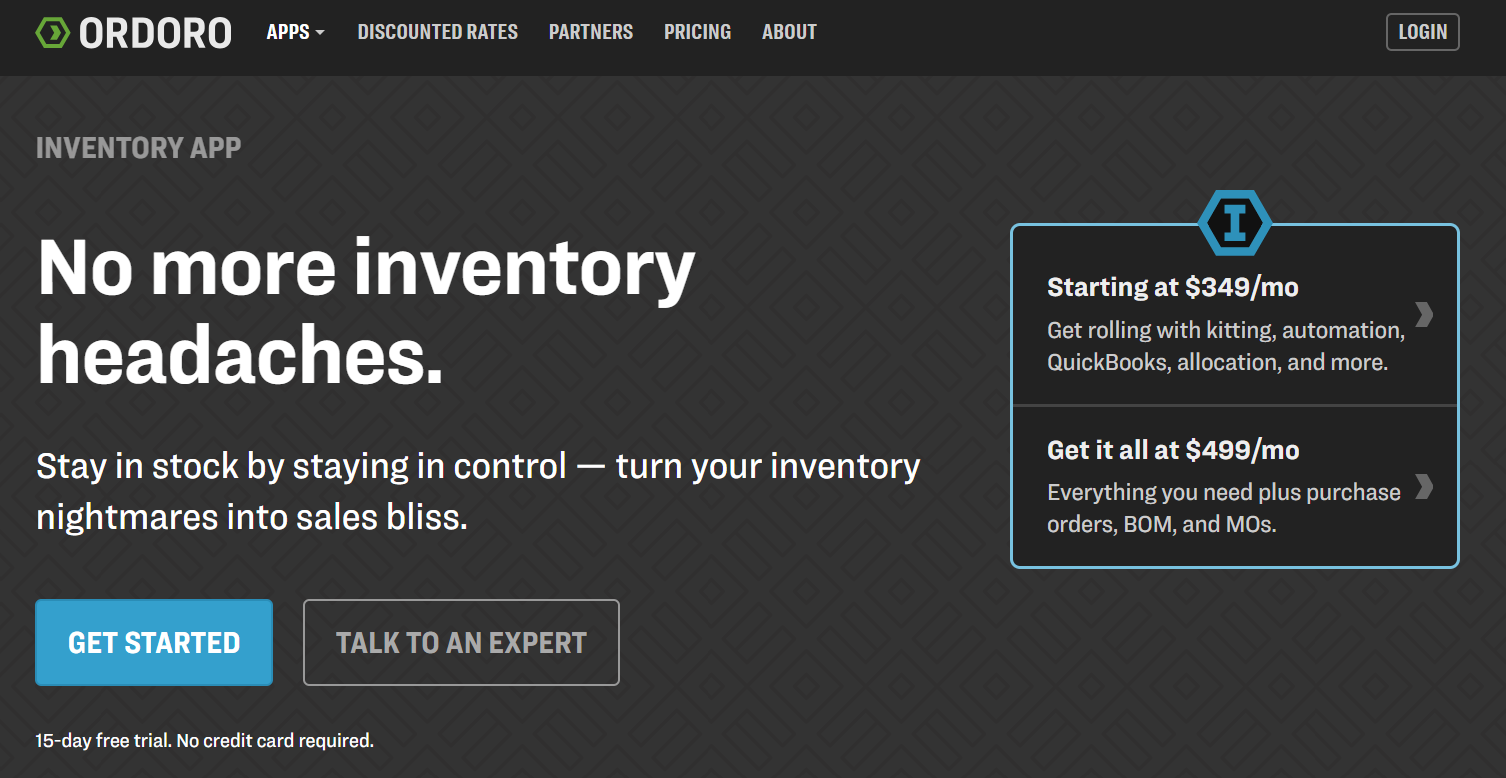
It offers three pricing plans: the Express Plan at $59 per month, which focuses primarily on shipping management without inventory features; the Pro Plan at $499 per month, which includes inventory management, dropshipping, and kitting; and the Enterprise Plan, which has customized pricing and provides advanced features like custom workflows and supplier management. Ordoro integrates with major e-commerce platforms and marketplaces, including Shopify, Amazon, eBay, Walmart, and WooCommerce, covering essential integrations, though it may not offer the extensive range found in some competitors.
| Pros | Cons |
|---|---|
| User-friendly interface | Offers fewer integrations compared to competitors |
| Cost-effective | Express plan lacks inventory management features |
| Excellent customer support | Not ideal for large enterprises |
Fishbowl
Fishbowl is renowned as a leading inventory management solution, particularly for businesses utilizing QuickBooks. It offers features such as shipping integration, merchant services, asset tracking, and wireless barcoding, making it a popular choice among small to medium-sized businesses aiming to streamline their operations. A notable feature is its Wizard function, designed to guide users through processes efficiently.
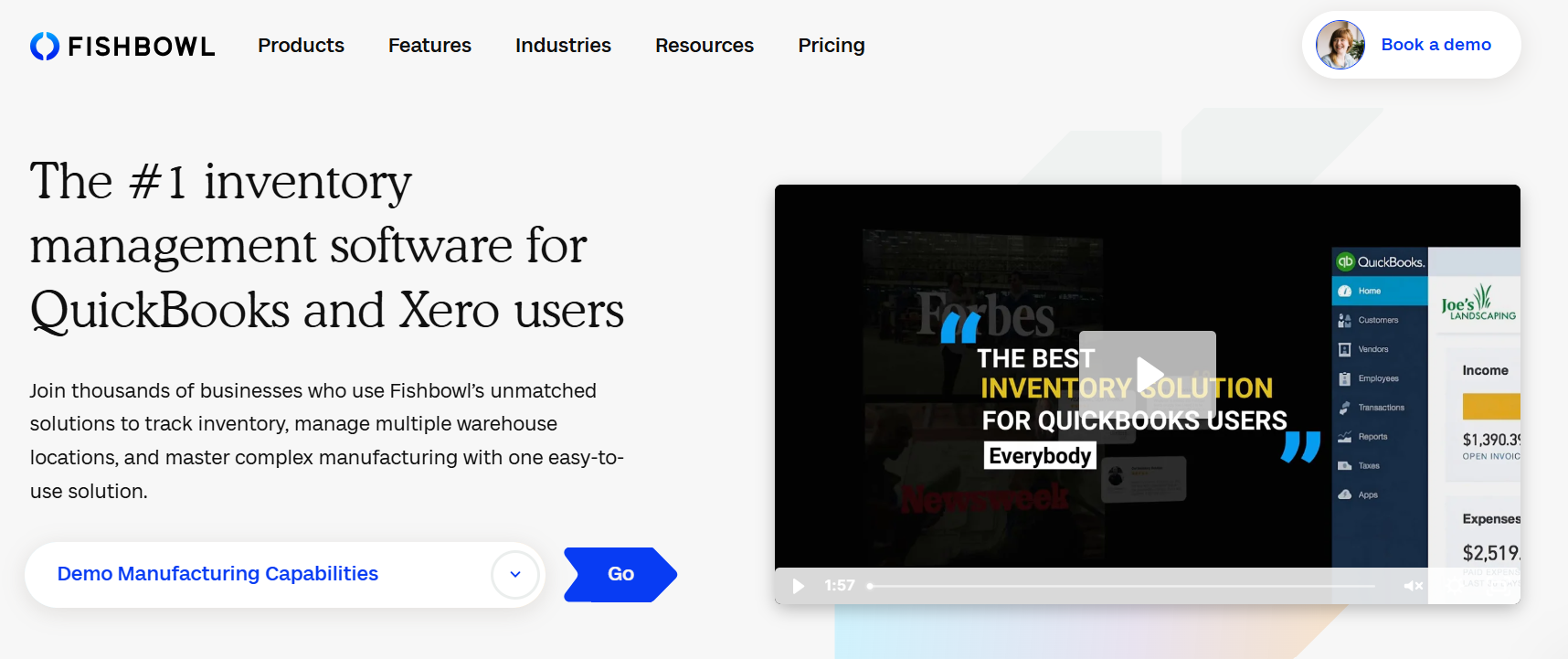
Additionally, Fishbowl provides comprehensive training resources, including videos and tutorials, supported by a dedicated customer support team, which is beneficial for first-time users. Fishbowl’s pricing starts at $4,395 per year, with the cost decreasing slightly as more users are added. A 14-day free trial is available for businesses to assess the software’s capabilities.
| Pros | Cons |
|---|---|
| Effortlessly integrates with QuickBooks | High starting price |
| Easy-to-use interface | Limited third-party integrations |
| Offers plenty of tutorials and a dedicated support team | Support dependent on time zone |
Stitch Labs
Stitch Labs is a cloud-based inventory management solution designed for growing businesses and small to medium-sized enterprises. It offers robust multichannel integrations, including POS systems, warehouses, third-party logistics, shipping fulfillment, EDI, and various marketplaces. Key features encompass order logistics, fulfillment capabilities, and detailed reporting. The Basic Plan starts at $799 per month, including unlimited sales channels, users, and partner integrations., and the High Growth Plan is priced at $999 per month, offering additional advanced features.
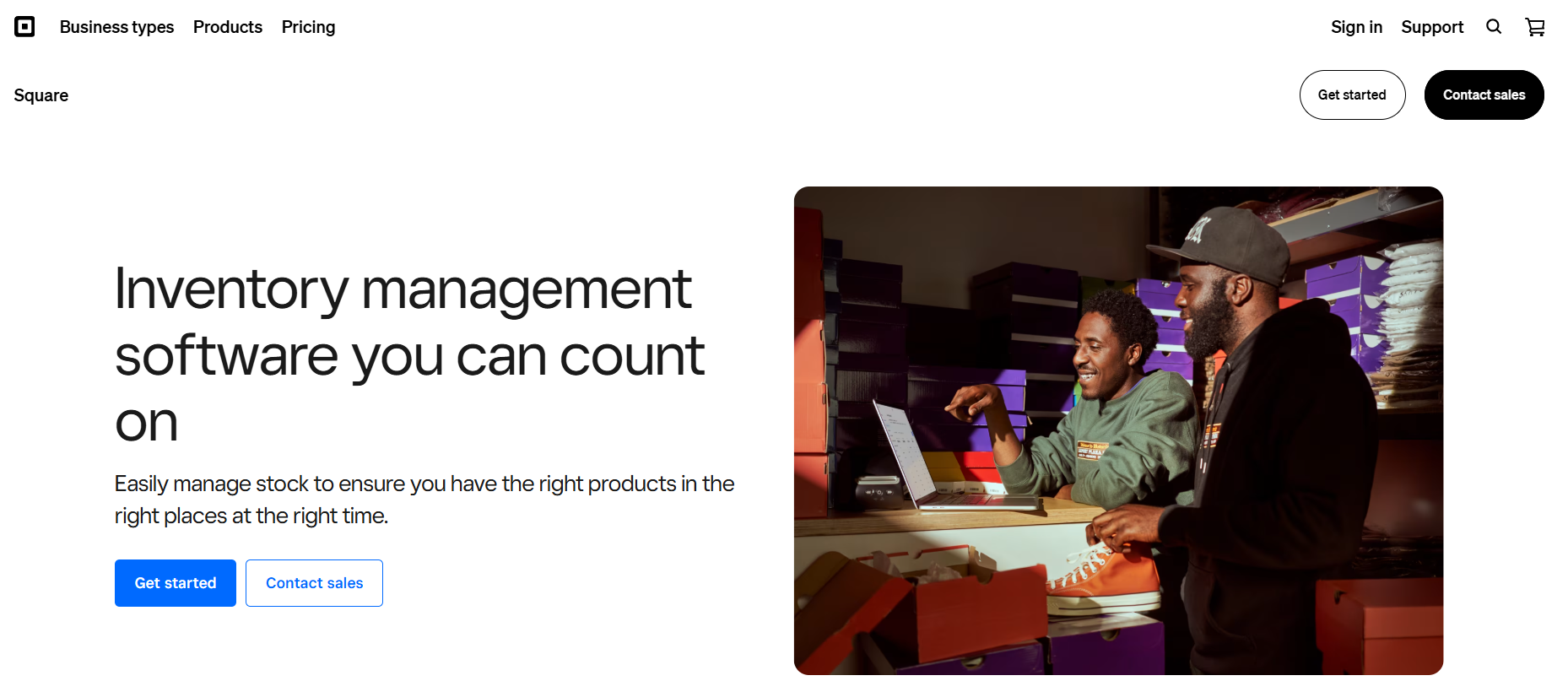
In July 2020, Square acquired Stitch Labs to enhance its seller services. As part of this integration, Stitch Labs’ products were scheduled to continue operating for existing customers until Spring 2021, after which they were planned to be phased out to focus on integrating features into Square’s offerings. Therefore, Stitch Labs is no longer available for new customers, and current users should transition to alternative solutions.
| Pros | Cons |
|---|---|
| Offers extensive tutorials and a dedicated support team | High starting price |
| Easy-to-use interface | Limited integrations post-acquisition |
| Easily connects with various platforms | Existing users may face challenges as Stitch Labs phases out in favor of Square’s integrated solutions |
Please note the legal disclaimer for this article.