

Exercise at work can help reduce stress and prevent illness

Sitting and standing for hours on end can be hugely detrimental to your health. This sounds a bit dramatic, but is confirmed when we look at some statistics. According to WHO, more than 1.4bn adults globally - a fifth of the population - are not getting enough exercise, increasing their risk of cardiovascular disease, type 2 diabetes, dementia and cancer. When you consider that we all spend a lot of our lives - an average of around 37 years - at work, this is not surprising because most people do not exercise at work.
Common ailments can be traced to lack of exercise. Back pain can be traced back to lack of exercise in 90 percent of cases. The risk of developing cancer or depression also increases with a sedentary lifestyle. Topping this list of doom and gloom is cardiovascular disease: A lack of exercise can lead to it.
Why sitting for so long has these harmful effects can be easily explained. Humans are simply not made to sit still for long periods of time. Our musculoskeletal system is a product of evolution, but has hardly changed since the Stone Age, unlike our lifestyle. And our ancestors, unlike us, were hunters and gatherers and constantly on the move. One of the best things we can do for our bodies is to move them, even if only a little bit, regularly. This is entirely possible even at work if you are willing to get into office fitness!
Exercising in face of physical distancing
Lots of the regular tips for getting more exercise at work cannot be put into action in times of the Coronavirus pandemic. In order to slow down the spread of Covid-19, many people are currently practicing physical distancing. Those who can work from home can only see their colleagues via video chat. Going to the gym or to a yoga class after work has also been put on pause. Even when working at home, however, you should think about your health and give your body a break from constant sitting. The desk exercises we suggest in this article can also be done whilst working from home, for example.
To incorporate more exercise into everyday life, video classes are currently a popular option. Lots of fitness, yoga or dance courses can now also be attended via a video conference. Those who are not in quarantine and who have relatively relaxed lockdown restrictions can also do sports outdoors- whilst keeping their distance from others.
Occupational Hazard: Lack of Exercise?
Not doing enough sport and sitting for hours on end increase the risk of falling ill, as we have mentioned. Complaints such as muscular tension or back pain can appear shortly after starting a desk job. The long-term consequences, however, are much more serious. The same applies to people who stand uninterruptedly in retail or at trade fairs, for example. Although standing desks are great, the key is frequent change between sitting and standing, because this entails movement! The veins, and therefore the cardiovascular system, will be overworked if you have to stand all day without a break.
Sadly some of these side-effects of a sedentary life cannot be combatted in old age, after having worked all your life. Therefore, it is important to consider the effects of not exercising in the office now:
- Cardiovascular diseases: Sitting for hours without moving means your heart isn’t put to work enough. Little by little, the heart muscle gets weaker and in physically demanding situations will become overtaxed faster. Since lack of exercise also increases blood pressure, the risk of heart attack and stroke increases. Lack of exercise is even more dangerous in this respect than smoking cigarettes, some healthcare practitioners have argued.
- Weight and metabolism: People who hardly do any exercise at work put a strain on their metabolic system. We may gain weight and get metabolic problems such as insulin resistance. A serious consequence of being overweight is diabetes type 2.
- Backpain: Continuous sitting can cause people to slump over a longer period of time. The pressure on the spine is enormous in a curved sitting posture.
- Osteoporosis: Bad posture leads to shortening of the back muscles. This leads to tension in the neck and shoulder area, which in turn often causes headaches. The risk of developing arthrosis or osteoporosis increases at the age of 50 and older.
- Mental illnesses: Any job can get hectic at times. When sitting for hours on end, the body is less able to break down stress hormones. The result is a feeling of permanent stress. In addition, too little exercise in the office makes people prone to depression.
- Cancer: Sitting a lot increases the risk of developing intestinal, lung or uterine cancer.
Office Fitness: Tips for a healthier office life
The health hazards of everyday office life are therefore greater than most think. The good news is that everyone can integrate exercise into their daily routine. Even a small amount of exercise at work works wonders. And with a few changes, you can easily ensure you get moving at work.
A few myths could do with busting first though. An ergonomic work space is without question important for good sitting posture that is healthy for the body. Among other things, the height of the seat and table as well as the distance to the monitor play a role here. An ergonomically designed workplace is not the be all and end all though. No one sitting position does any good in the long run. Instead, dynamic sitting is the order of the day. Move around in your chair as much as you can – set a timer to remind yourself.
Do you go to a football club after work, or go for a run through the city park or even do an intensive workout? In any case, you will do yourself some good. Unfortunately, this is not enough. The widespread assumption that sports training can safely prevent the negative consequences of long periods of sitting and standing is unfortunately wrong. After-work sports and morning jogging are by no means enough to compensate for this.
The aim is instead to firmly integrate movement at the workplace into the everyday office routine. You don’t have to turn into an Olympic gymnast on the way to the printer and filing cabinets, or be a sports superstar. Smaller bouts of exercise at work, which you do regularly make a positive change. Here are a few tips.
Small breaks at work
In general, it is advisable to take small breaks and move as often as possible. Ideally, you should alternate between dynamic sitting and standing at least three times per hour. This helps to stimulate your circulation and relieve the affected muscles. It is best for office workers to spend a total of fifteen minutes every hour standing. In addition, you should be actively moving for about five minutes, for example walking a few steps or doing an exercise.
Screen breaks
This is easy for all those who work from home or as freelancers and who can manage their time reasonably freely. Employees should be able to take screen breaks without having to feel bad. There are numerous opportunities to take exercise in the office during the remaining working hours. It's high time for a break when your feet start tingling or you feel a tense neck or headache.
Free whitepaper
Do small tasks standing
Stand up when reading your mail or making a phone call. If you buy a headset, you can also walk up and down in the office building during longer phone calls. Try to talk to colleagues in person and avoid making phone calls even if they work on a different floor. If you have standing desks in your office, you should use them from time to time.
A coffee break away from your desk and the walk to the toilets are also good occasions to relax the muscles. It is also good to use the stairs instead of the elevator. Make your desk less convenient, and move supplies so you have to walk and get them. For example, the wastebasket or printer could be at the other end of the room and arrange things so you have to get up to answer the phone.
The same applies to typical standing jobs. Even in these kinds of jobs you should move around as often as possible and change your standing position. Dynamic standing ensures that the blood circulates better and the veins are relieved. For example, you can shift your weight from one leg to the other, or alternately stand on tiptoe and on your heels.
Being active during breaks and office fitness
Even better are longer breaks such as your lunch break. This gives you a change to get moving at work and return to the desk full of energy. In principle, it is possible to do small amounts of exercise at work. Exercise in the office can therefore be carried out anywhere. But it can be scary to do a workout in front of colleagues! You might find that chair workouts are less exposing or ask colleagues if they want to join beforehand. You’ll feel less exposed in a group.
Meeting room workouts
Consider whether there are rooms with more privacy around your workplace. Perhaps a meeting room or fitness room is available for you, or perhaps there is even a yoga school or park nearby.
Afternoon walks
Short walks around the block are also helpful and also save you from feeling too sleepy after lunch. The most effective way of walking and enhancing circulation is to keep an upright posture and let your arms swing freely. This will help mobilize your metabolism.
Exercise on your commute
A good opportunity to make your own working day more active is to be active on your commute. Anyone who leaves their car in the garage and walks or rides their bike instead will start their office day actively. For longer distances, it is often possible to park the car nearby or get off two stops earlier instead of driving directly to the front of the building.
Work Benefits: Gyms & Clubs
Many companies cover the costs of sports activities or offer discounts on memberships. Some even offer courses on their own premises before work starts, during lunchtime or after work. Take the initiative and ask whether this could be introduced. Maybe you could arrange a running group or outdoor sports club with colleagues. When playing sports together, you can spur each other on and motivate one another.
The following sports are particularly suitable for people who sit a lot at work, particularly for back problems:
- Swimming: Working out in the water relieves joint tension. The best technique is backstroke.
- Weights: Either with your own body weight or assisted weights. If you suffer from back problems, you can help combat these by strengthening the muscles that stabilize the spine.
- Dancing: Fast movement sequences loosen muscles, the spine and make you flexible. In addition, dancers pay more attention to a good posture, so join in and maybe you’ll have better body awareness.
- Yoga: Yoga is great for office fitness and relaxation. Relaxation exercises also help to reduce stress.
- Jogging: This is a great way to get fit for free. Just make sure you have the right shoes and you’re good to go. Plug into your favourite playlist and you’re off!
Exercise at work
Before we introduce some short exercises that are easy to do, here are a few tips. If you are doing the exercises for the first time, you should really concentrate on them and be patient. Maybe try them at home first. This way you will internalize the right alignment, and exercising in the office will be easier.
For a start, it may be helpful to make an exercise plan. Be consistent and make up for exercises that you missed out on. Over time, the exercise will become routine. Occasional rewards will keep you motivated. For example, treat yourself for each exercise and enjoy the relaxation that exercise at work gives your body. Keep in mind that you are doing something good for your body.
Exercise 1: Do the Twist!
A twist is great for the spine and neck. Start by gently turning your head to the left, lifting your chin slightly without overstretching your head. Then return your head to the centre, looking straight ahead and bending your chin slightly towards your chest. Then turn your head to the right and repeat all directions several times, ideally five times.
Exercise 2: Shoulder circles
Circling your shoulders loosens your muscles from all that typing! It is important that you let your arms fall loosely - only your shoulders should be moving. Your shoulders should be active, but not hunched by your ears. Then circle your shoulders in a small circle five times forward and five times backward.
Exercise 3: Cat-Cow while sitting
This office fitness exercise is taken from yoga. Opening your chest is important if you work at a desk all day. Open your chest by squeezing together your shoulder blades and looking upwards. Keep breathing. Round your shoulders forward and drop your head - try and imitate a cat’s back. Do this several times.
Exercise 4: Side stretches
This is a great one you can do anytime when wanting to exercise in the office. Place both your arms above your head and lean to one side. The goal is not to get as far as possible over to one side, but to remain in an aligned, upright position with a straight back. Pull your body up and over to one side through your arms without compressing your back or shoulders. You should feel one side lengthening. Start small. Having a co-worker stretch in unison will make the action more fun!
Exercise 5: Total Workout!
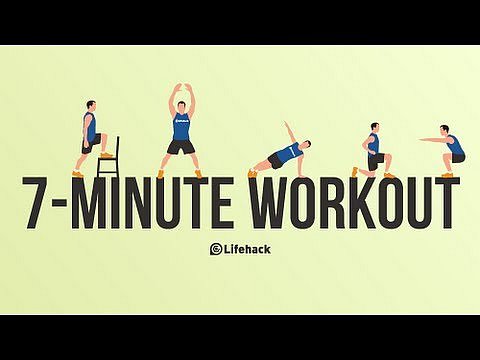
The video below offers you a 7-minute workout for exercising at work. You’ll need a space where you can lie on the floor, but other than that you need a chair and a wall. Maybe just pick your favourite exercises and spread them throughout the day at first. But the whole seven minutes is good to get blood pumping!
 To display this video, third-party cookies are required. You can access and change your cookie settings here.