

Time management: meaning & strategies

By applying effective time management strategies, you can prioritize important tasks over less critical ones, plan your to-dos more efficiently, carry them out consistently, and achieve better results. In this article, we share some useful time management tips.
- Write perfect emails with optional AI features
- Add credibility to your brand
- Includes domain, spam filter and email forwarding
What does time management mean?
Time management helps you use your available time as efficiently as possible in order to complete your tasks. But the term “time management” doesn’t really get to the heart of the matter because we can’t actually manage time. We can only manage the way we work. That’s why “self-management” has become an increasingly important term used when it comes to self-organization and the most efficient use of available time.
There are now many different time management strategies and techniques that can help you prioritize, plan, execute, and monitor your professional and personal tasks for success.
No time management strategy is inherently better or worse than another. How well a technique works for you depends on your personality, your work style, and which activities or tasks you apply it to. It’s up to you to find the time management technique (or a combination of different techniques) that’s most effective for you. We have some time management tips for you below.
The benefits of time management strategies
Improving your time management takes a bit of effort at the beginning. You’ll need to experiment with different techniques and practice each one consistently over several weeks. Some methods might initially feel like extra work, but they will ultimately streamline your workflows significantly. A time management strategy needs to become a habit before you can truly assess its effectiveness. Often, a combination of multiple strategies will yield the best results. Although trying out different techniques can be somewhat tedious, it typically proves to be well worth the effort.
If you’re wondering why time management is important, it can provide a range of benefits:
- Greater productivity
- Less stress
- More time for yourself, family, and friends
- Better work-life balance
An overview of the 9 best time management techniques
Below is an overview of the most popular and effective time management strategies. You can combine them to develop your own time management techniques.
Eisenhower Principle
Do you have difficulty prioritizing tasks? Do you often spend so much time answering emails that you no longer have time to concentrate on other tasks? Do you let meetings and phone calls fill up your day? Then you might want to apply the Eisenhower principle. It helps you prioritize all your tasks by putting them into one of four quadrants that make up the Eisenhower matrix:
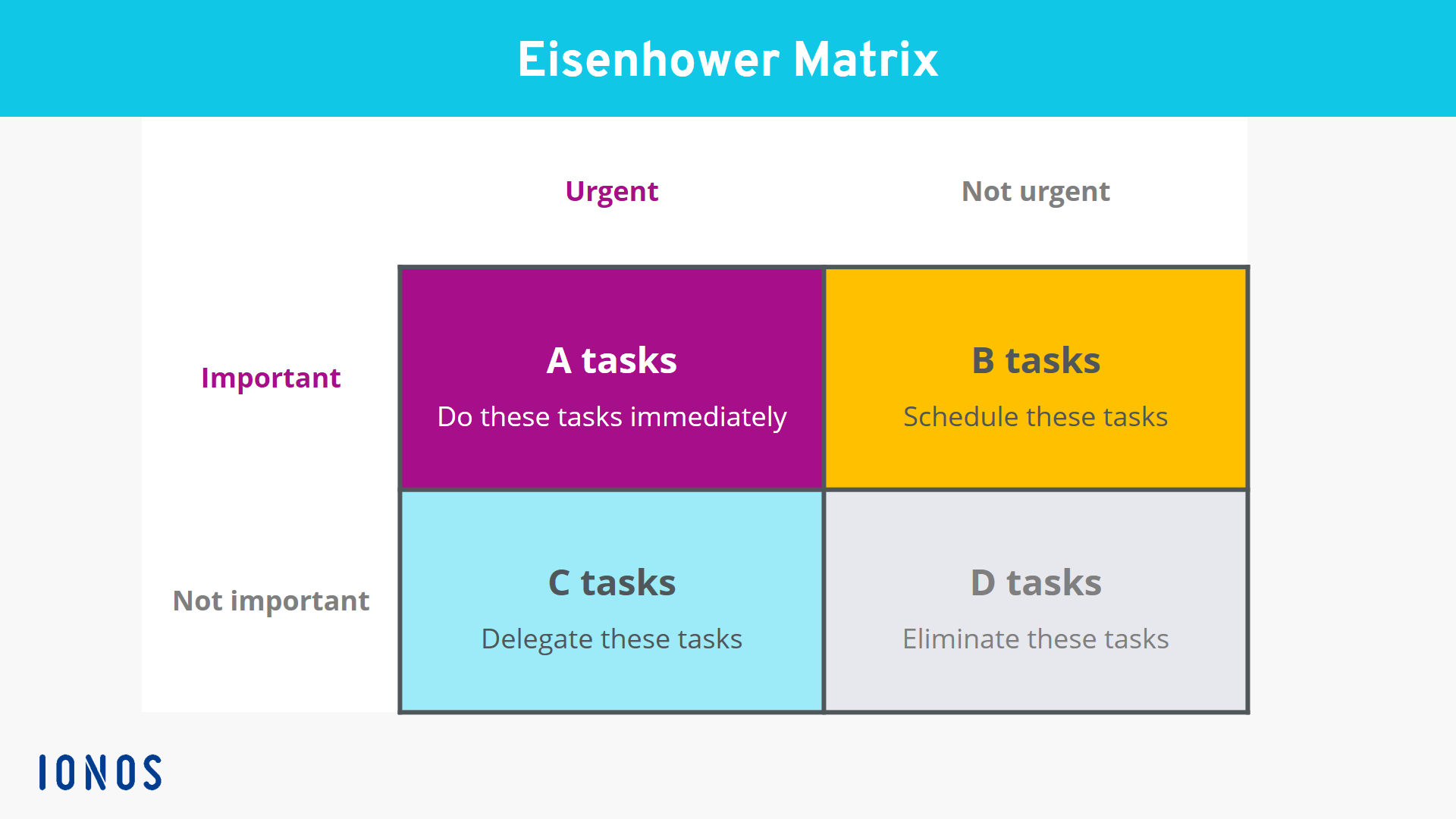
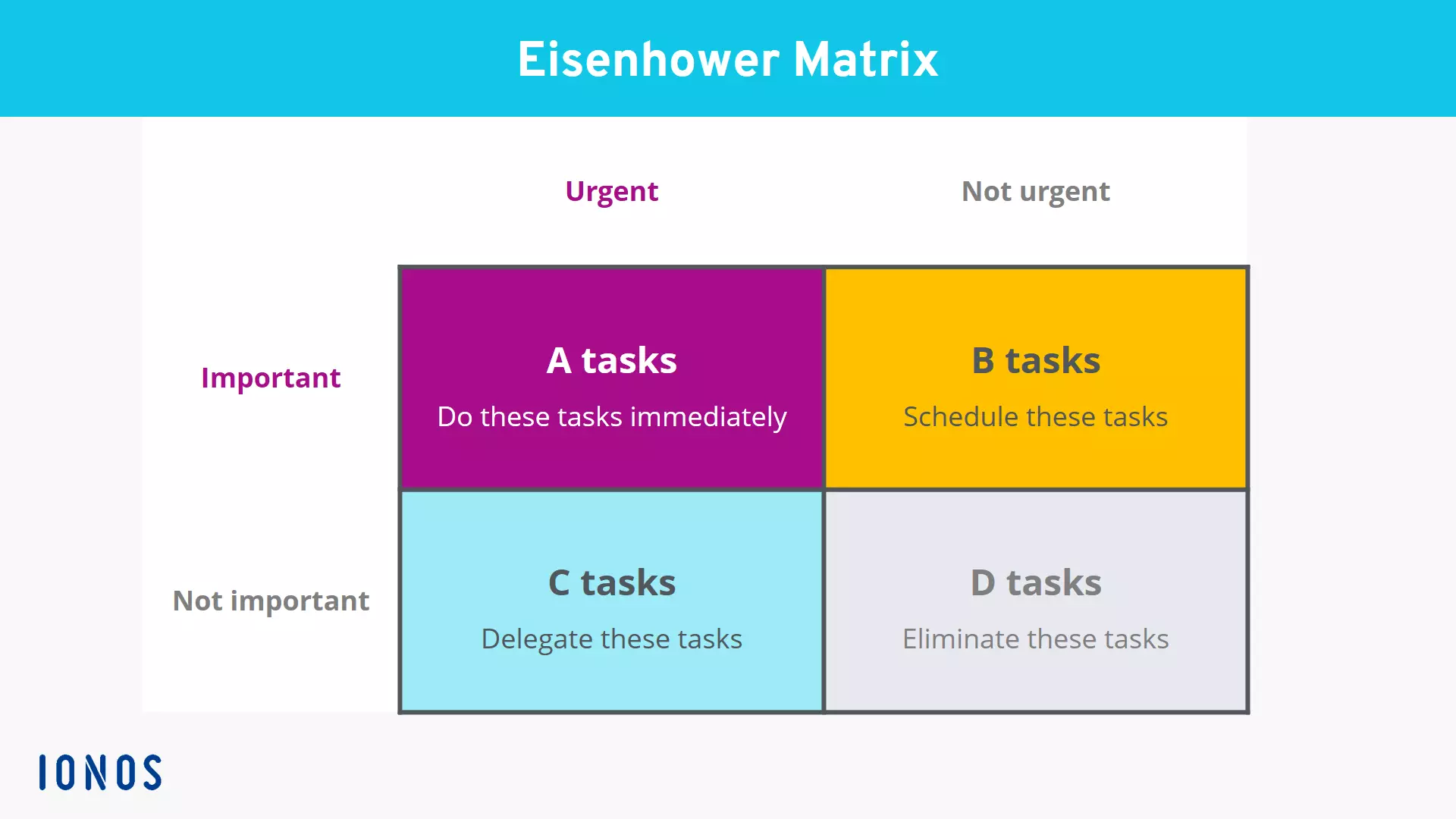
You should do quadrant 1 tasks immediately, otherwise you may encounter problems. You should schedule quadrant 2 tasks and not neglect them (which can easily happen). Tasks in quadrant 3 should be delegated in order to reduce your workload. You should eliminate quadrant 4 tasks, or if you have no other choice, delegate them.
Pareto Principle
Are you constantly busy but notice that everyone else seems to be getting more done with less effort? If so, you can use the Pareto principle to improve your time management. This principle ensures that you spend your time focusing on the tasks that have the biggest effect.
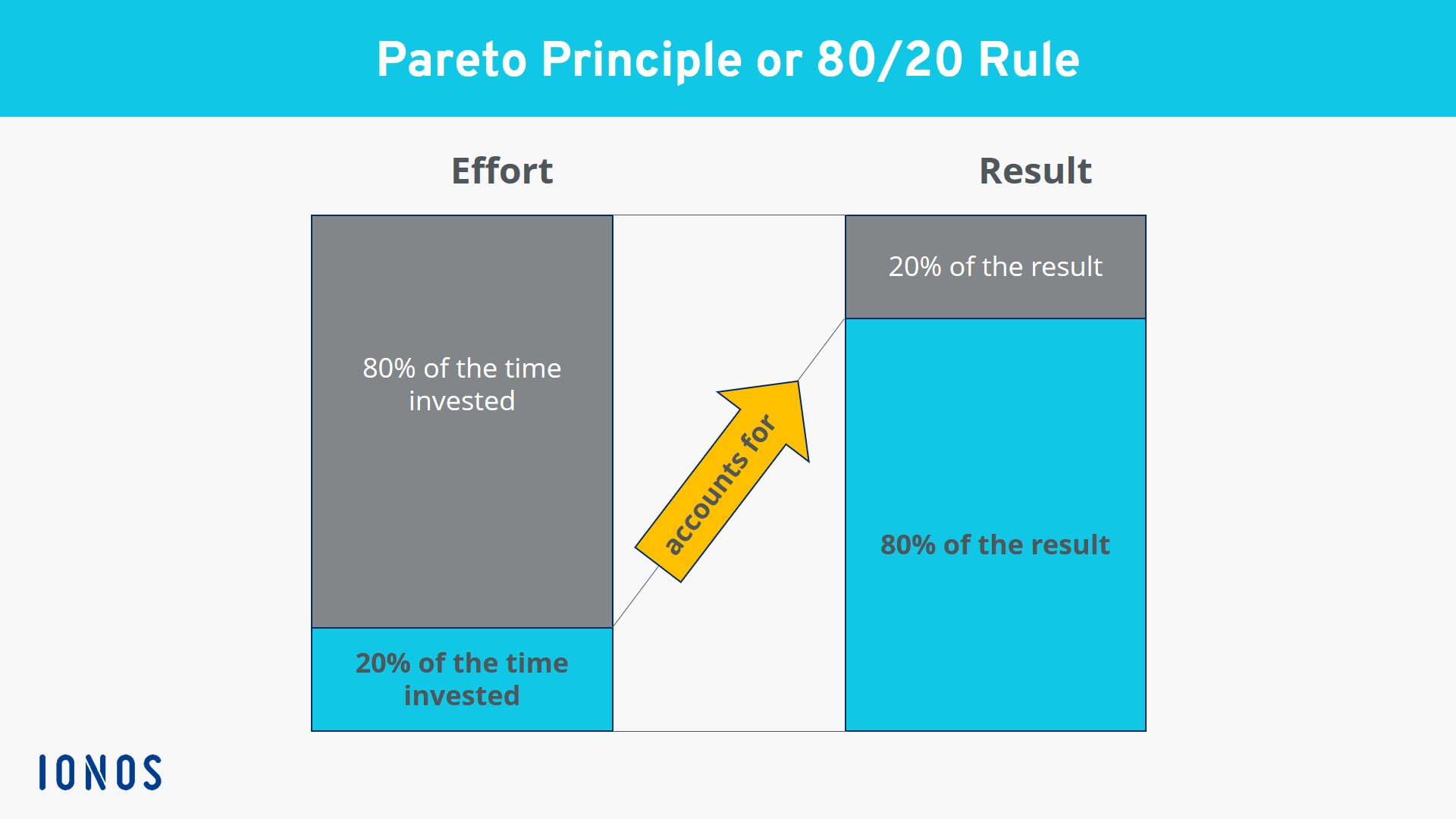
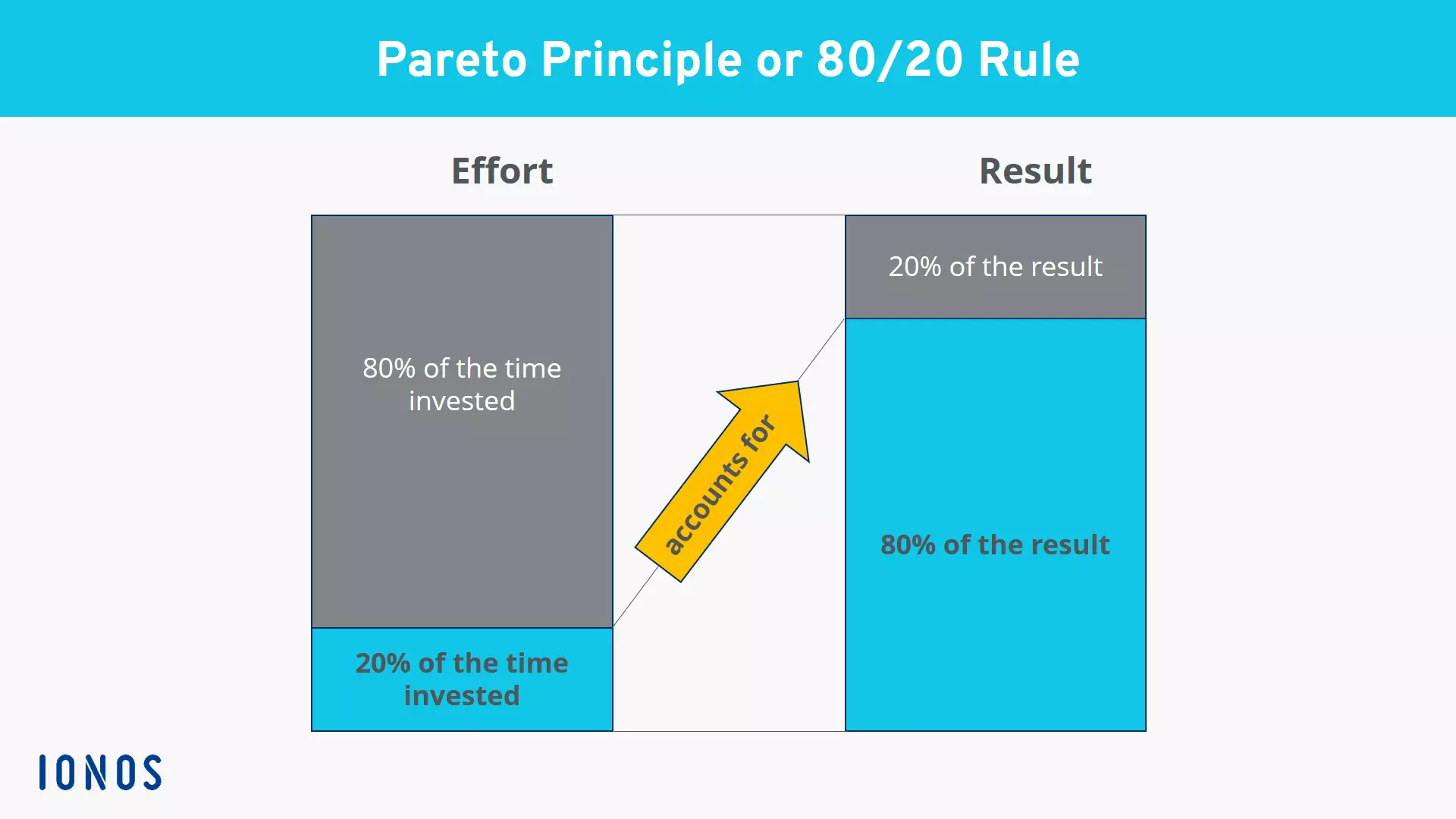
The Pareto principle states that 20 percent of the work accounts for 80 percent of the results. That means you should prioritize the crucial 20 percent of tasks in your to-do list.
ABC analysis
An ABC analysis is a classic business management technique for evaluating the basic strategy of a company. This time management strategy helps you visualize factors that have a decisive impact on the company’s success.
The analysis examines questions such as:
- Which customers account for the largest share of revenue?
- Which products or services contribute most to the company’s profit?
- Which raw materials cost the most to procure and store?
In order to answer these questions, you organize the different elements into the categories “A” (very important), “B” (not as important), and “C” (marginally important). You can also divide these elements into more than three groups. The most important thing is that they’re clearly defined.
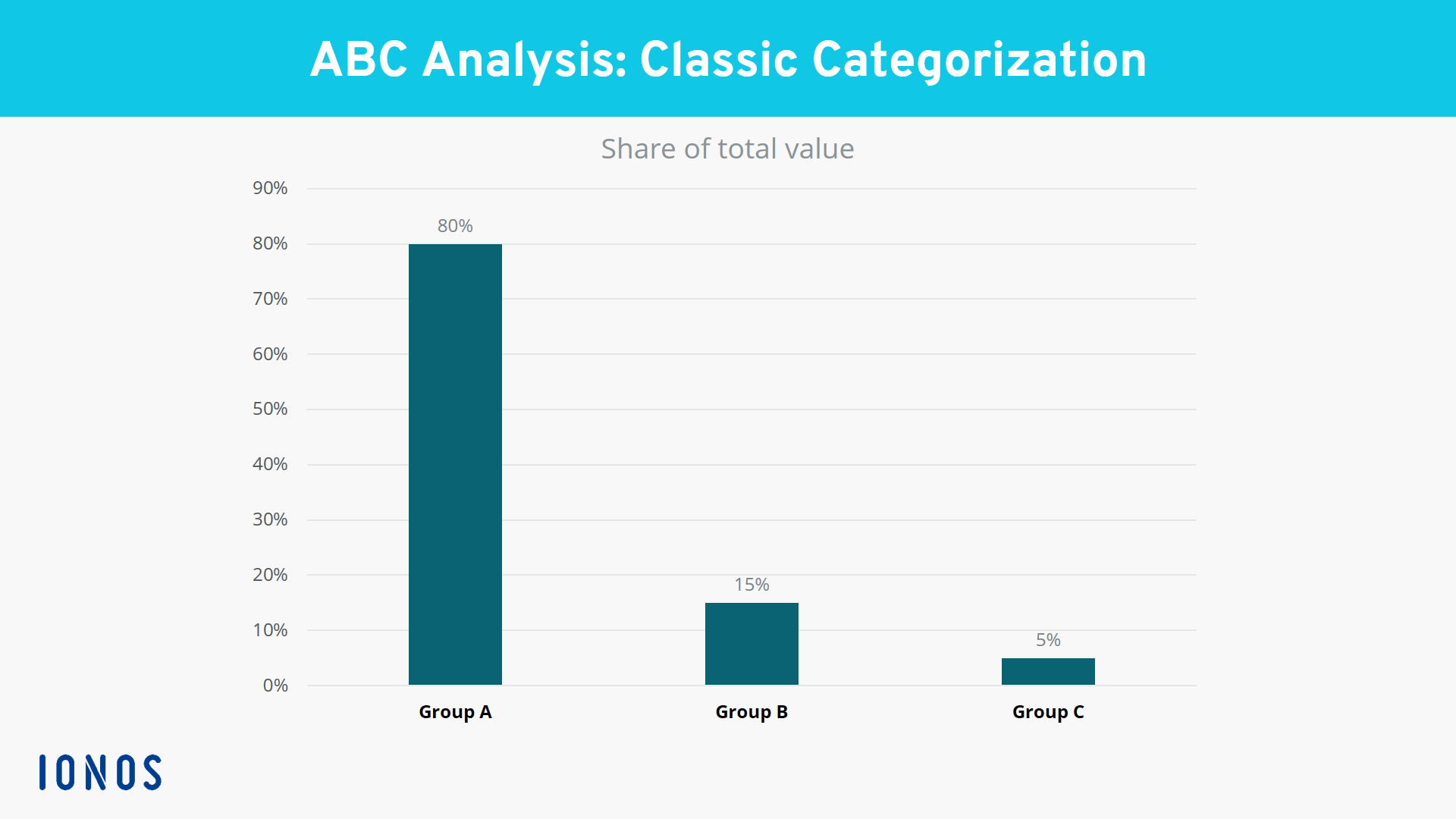
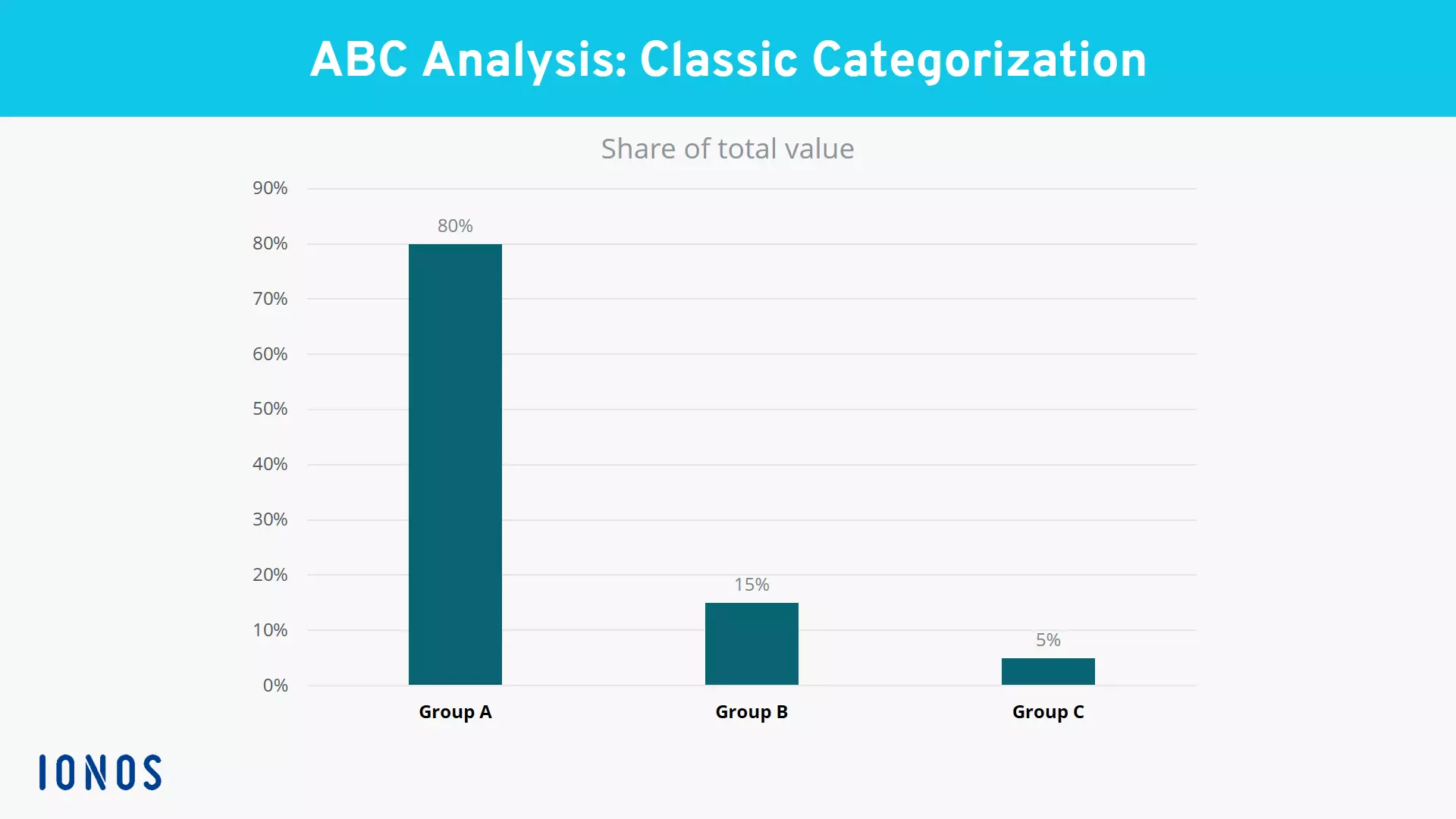
This gives you a guiding principle for further business planning and helps you decide which tasks you need to tackle next. The analysis is more of a preparatory step for time management.
ALPEN method
The ALPEN method is more of a technique for better organizing your workday than a tool for business planning. It shows you how to structure your day for maximum effectiveness in five steps:
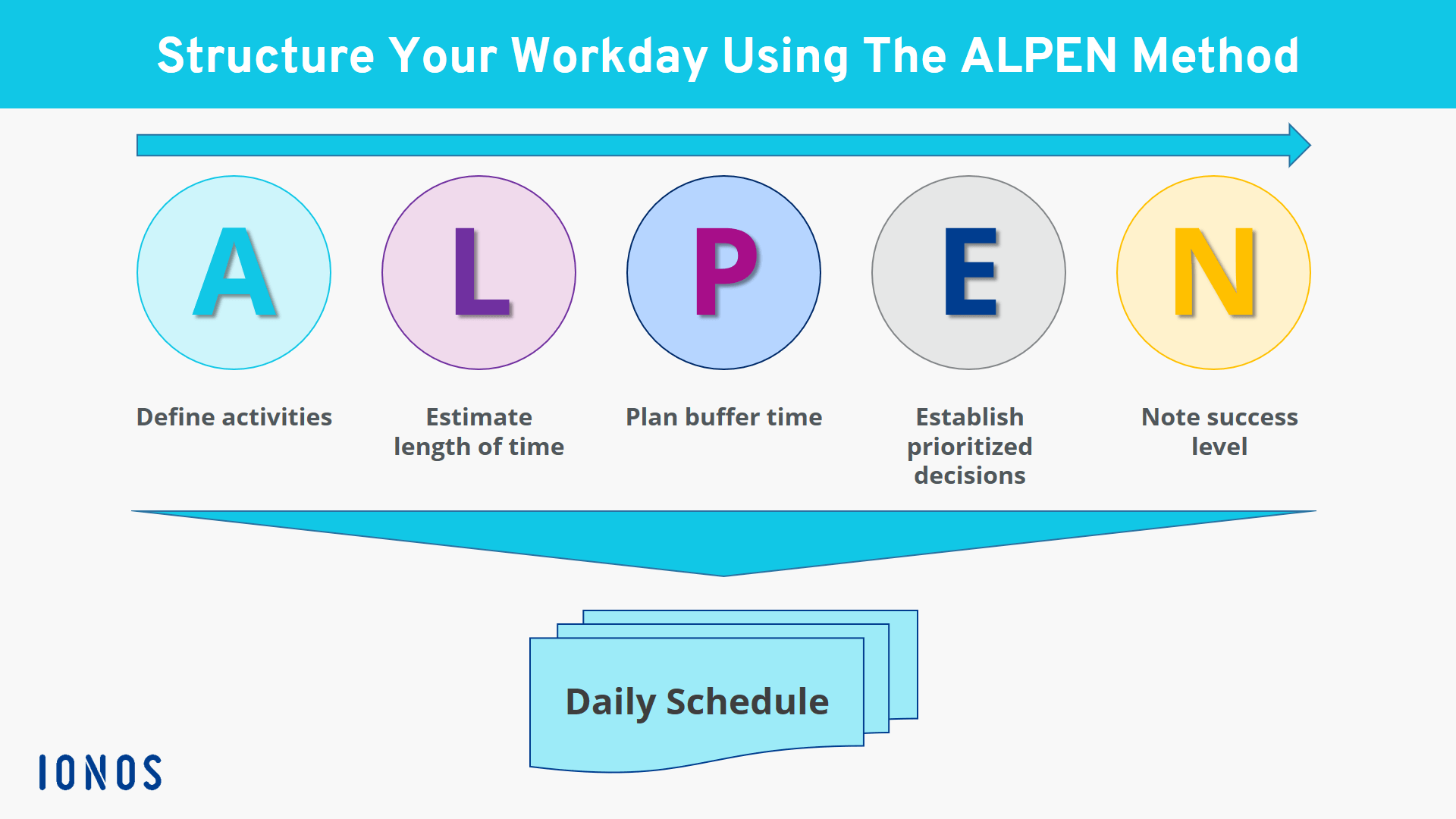
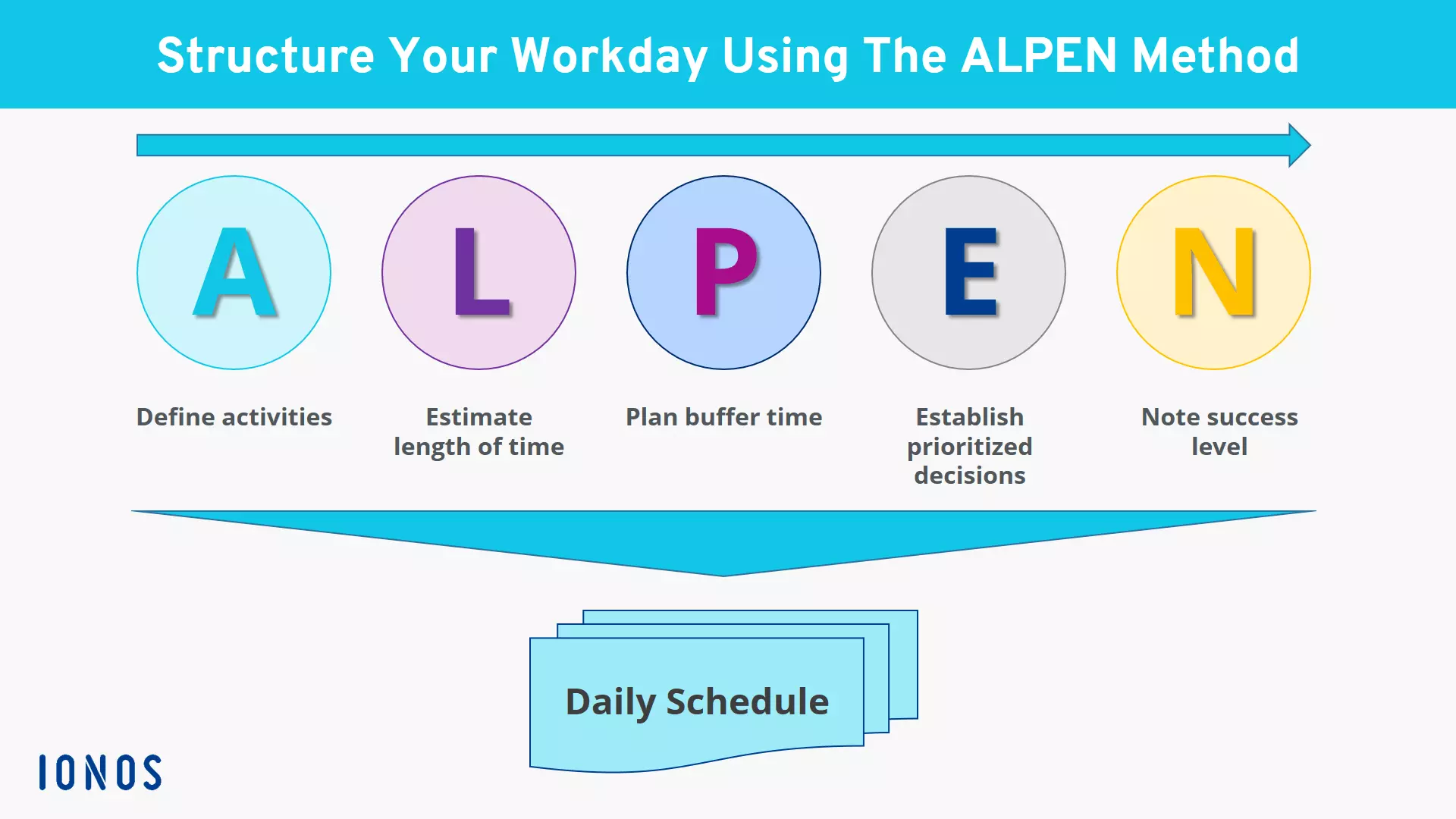
A: Define your activities. This involves creating a list of all your to-dos.
L: Estimate the length of time. Get a rough idea of the time it takes to complete each activity in your list. The total planned time gives you an idea of whether you can manage your planned daily workload.
P: Plan buffer time. You should plan only 60 percent of your work time and reserve 40 percent for unexpected events and social activities.
E: Establish prioritized decisions. Decide which task you’ll work on first and which ones you’ll do later in the day. Prioritization techniques and time management strategies such as the Eisenhower matrix and the ABC analysis can be useful here.
N: Note your level of success. In the evening, check how successful your planning was and whether you’ve achieved your goals.
Pomodoro technique
If you work in an office, you’re well aware of all the potential distractions on your computer, including social media, emails, messages, and more. If you find it difficult to resist these enemies of productivity and concentrate on a single task for an extended period, you should try the Pomodoro technique.
Instead of resolving to tackle a single task with pure willpower before moving on to anything else, the Pomodoro technique breaks tasks down into small, manageable subtasks that are worked on in time intervals of 25 minutes each. After each 25-minute session (pomodoro), a five-minute break follows. After four pomodoros, you take a longer break of 30 minutes. This completes a full Pomodoro session.
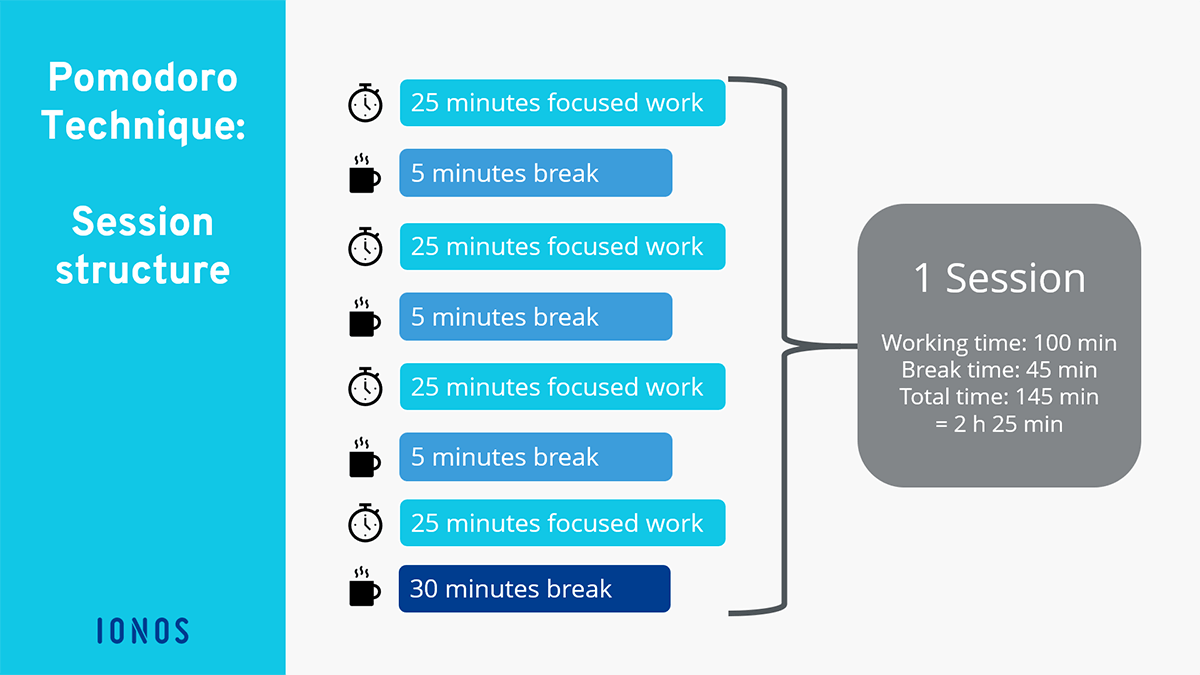
By continuously alternating between concentration and rest, your brain is much more able to stay focused and effective over several hours.
SMART goals
If you and your team want to complete tasks in a motivated and efficient manner, you first have to set the right goals. If you set vague, unrealistic goals without a set deadline, you’ll sabotage your chances of success and never achieve good results, no matter which time management strategy you use for organizing your daily tasks.
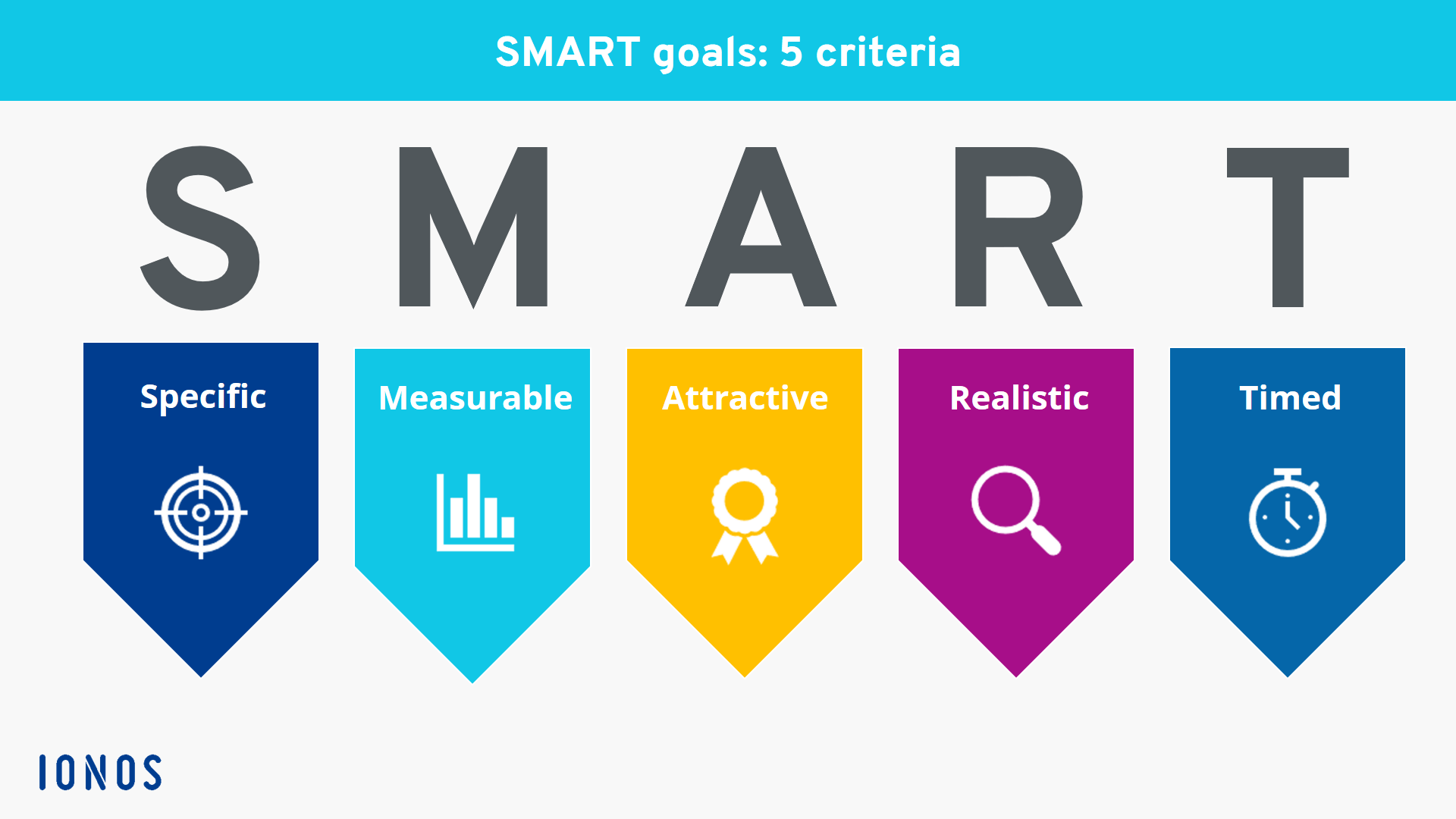
You can use the SMART method to avoid common pitfalls when setting goals. According to this proven method, good objectives must meet five criteria: They should be specific, measurable, attractive, realistic, and time-bound.
Getting Things Done
You have many professional and personal commitments and want to ensure that no appointments are missed or that sudden time gaps go unused? The time management strategy Getting Things Done (GTD) is an all-in-one system of lists and calendars for both work and personal life.
By capturing all your tasks and projects in writing, you’ll free up your mind and won’t forget anything. You can apply this strategy to any new information you receive or task you are given. It consists of five steps: capture, clarify, organize, reflect, and engage.
You have to process your task list on a regular basis. The Getting Things Done technique provides a detailed decision-making process for deciding how to proceed with a task.
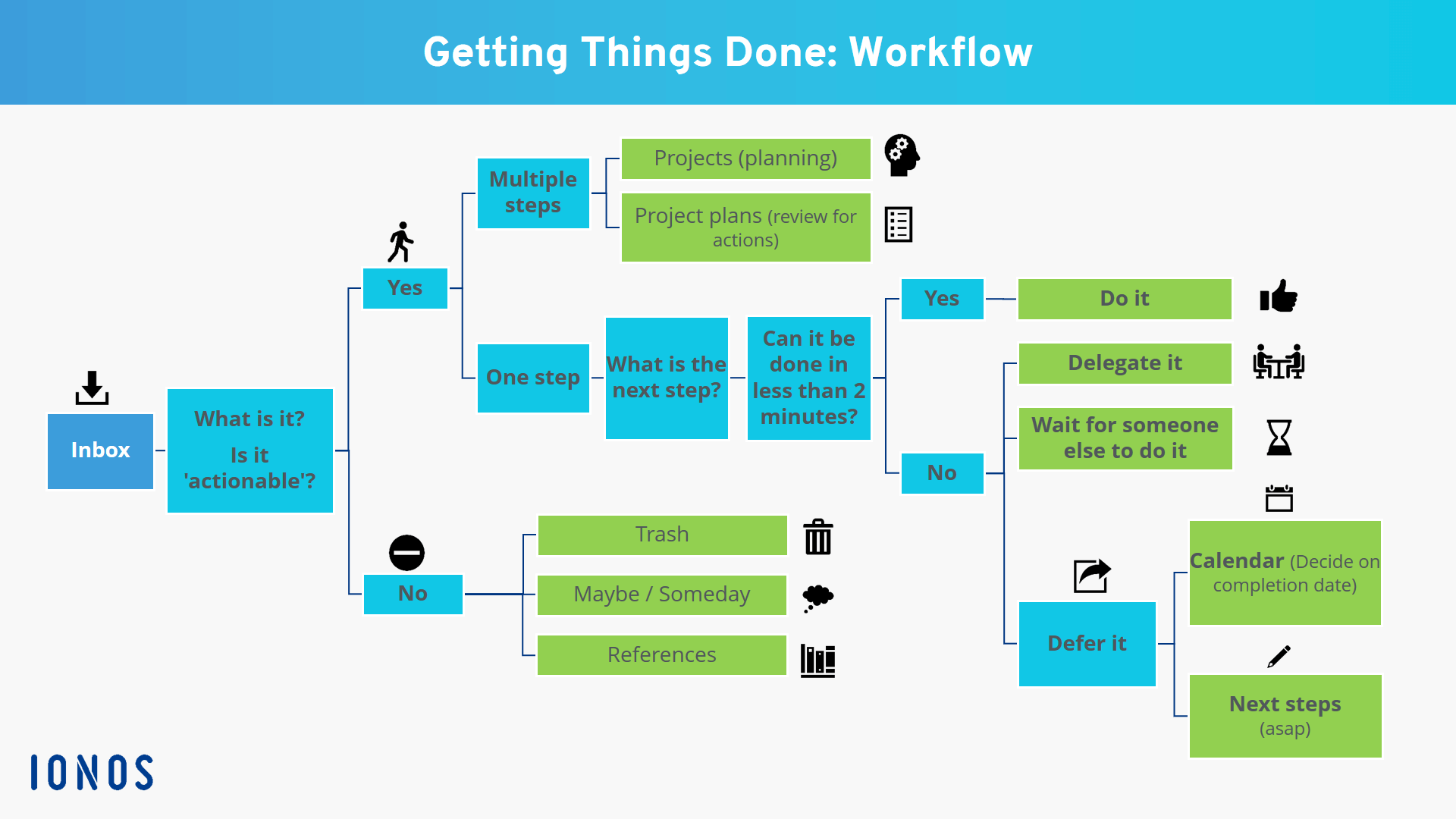
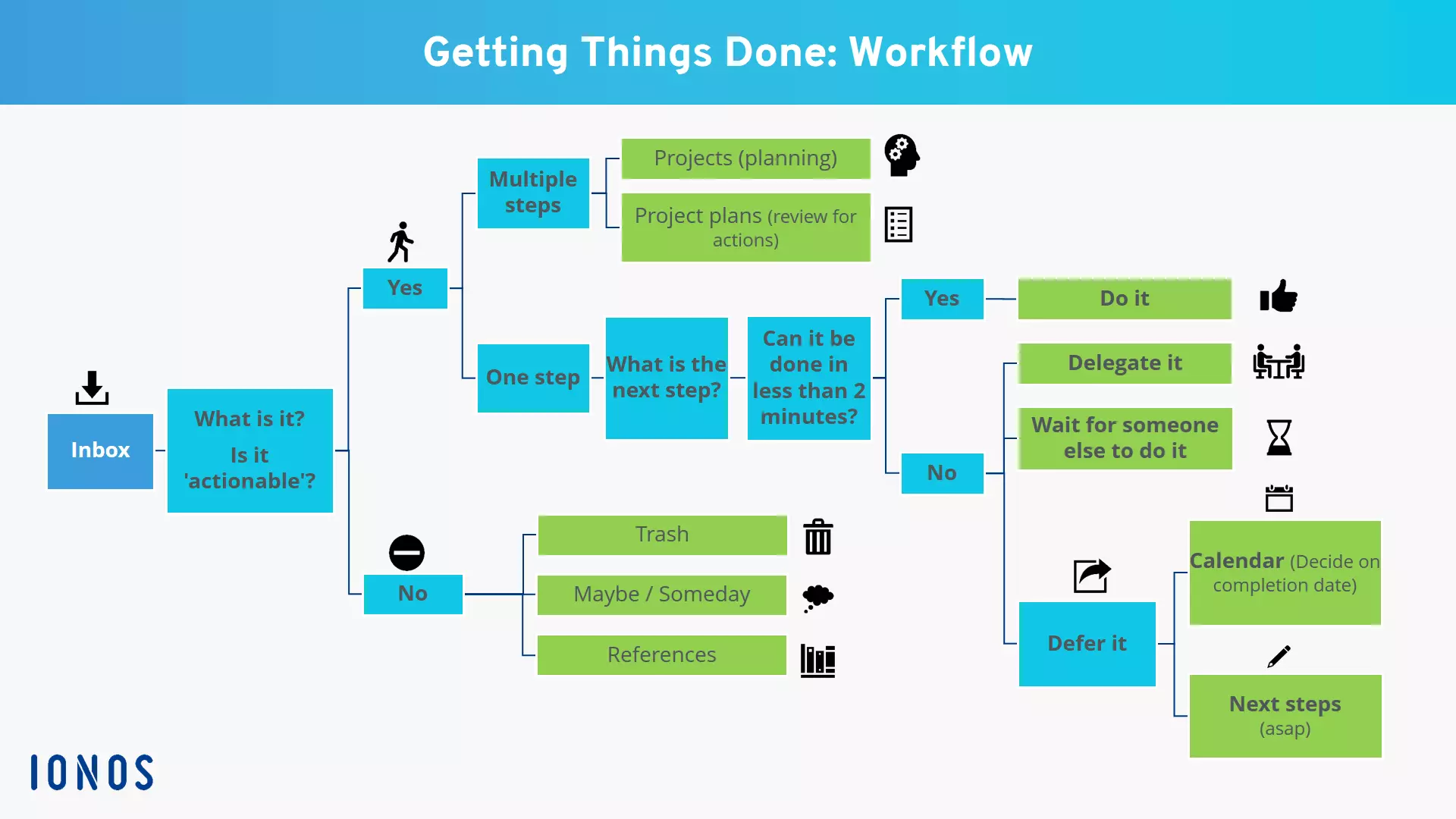
If you can’t complete a task within two minutes, put it on a different list such as “Projects”, “Next Actions”, or “Waiting For”. Enter appointments in your calendar. At least once a day, check your lists and decide which tasks you want to work on next.
Timeboxing
The timeboxing time management strategy comes from project management. With this technique, you assign tasks to specific timeboxes within which the tasks must be completed. The technique is based on the assumption that tasks often take as much time as you have for them. Without a clear deadline, costs can increase or projects can be delayed unnecessarily. Timeboxing creates a productive sense of urgency.
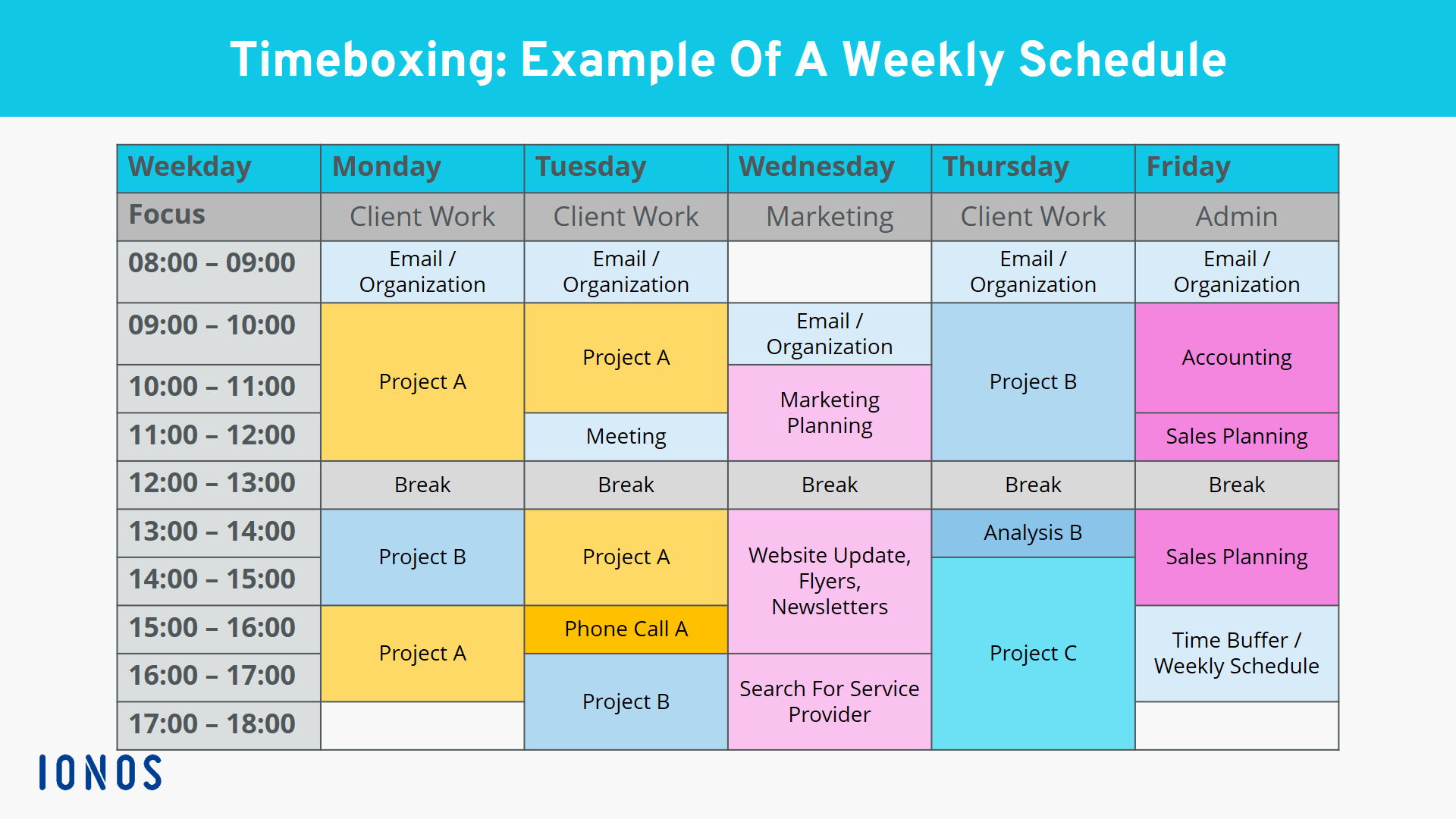
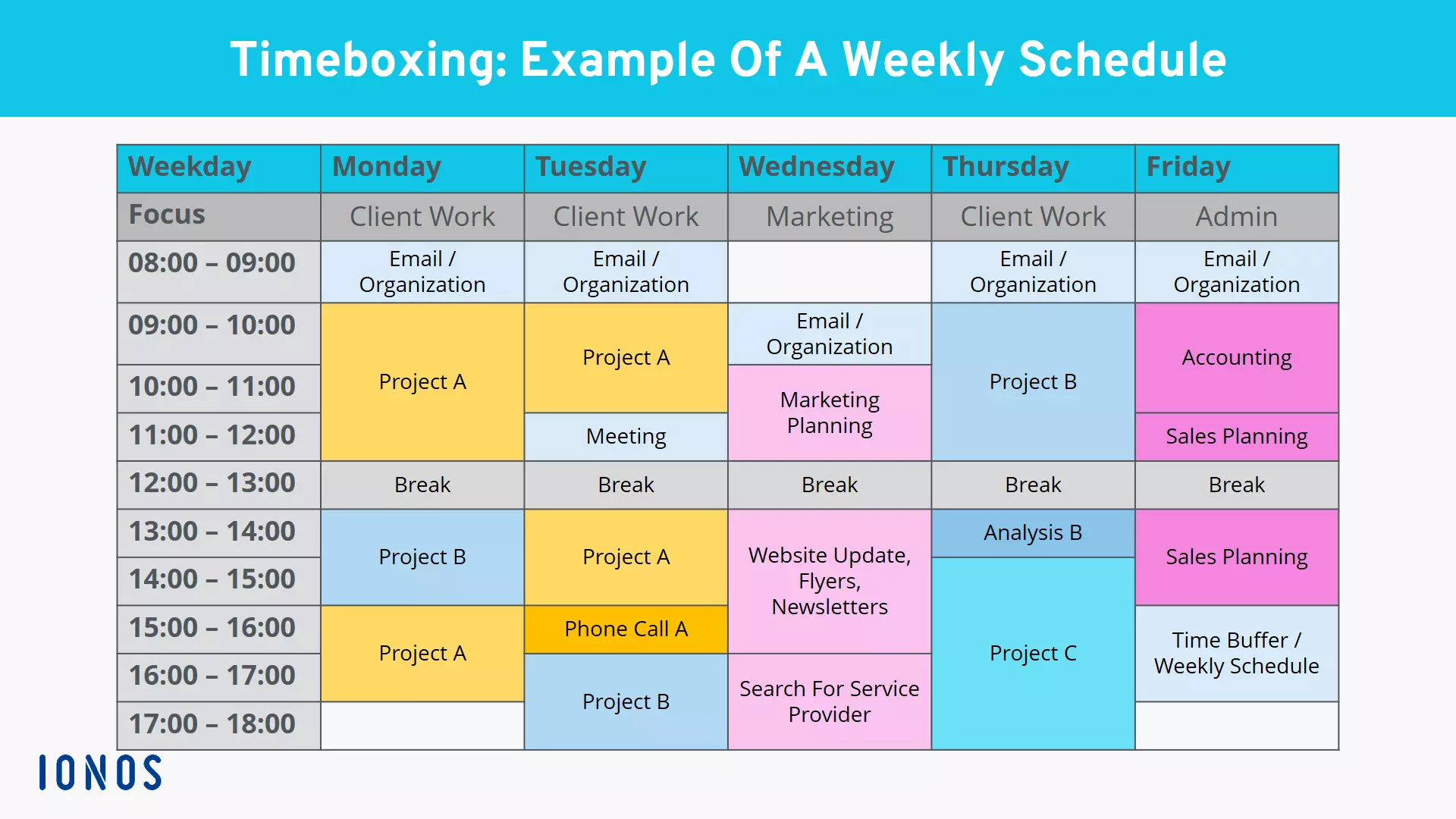
Define timeboxes in which you or your team will focus on completing a task or achieving a result. Timeboxes can span hours, days, or weeks, depending on whether you use the time management strategy for individual tasks or entire project sprints. For the technique to be effective, timeboxes shouldn’t be too long or too short, otherwise they’ll create stress, which impedes good results.
The POSEC method
The last strategy in our guide is POSEC, which is an acronym that stands for “Prioritizing by Organizing, Streamlining, Economizing, and Contributing”.
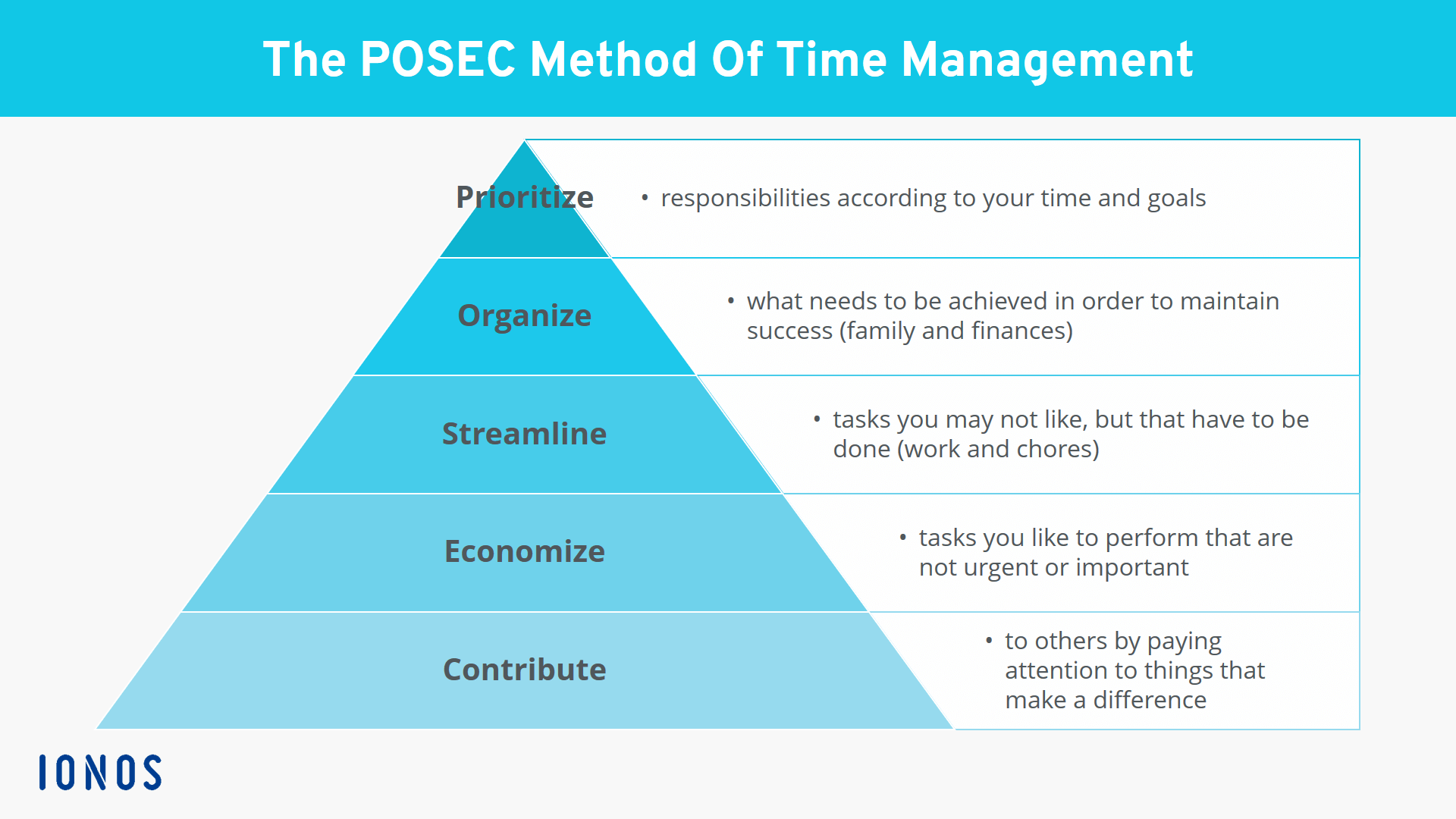
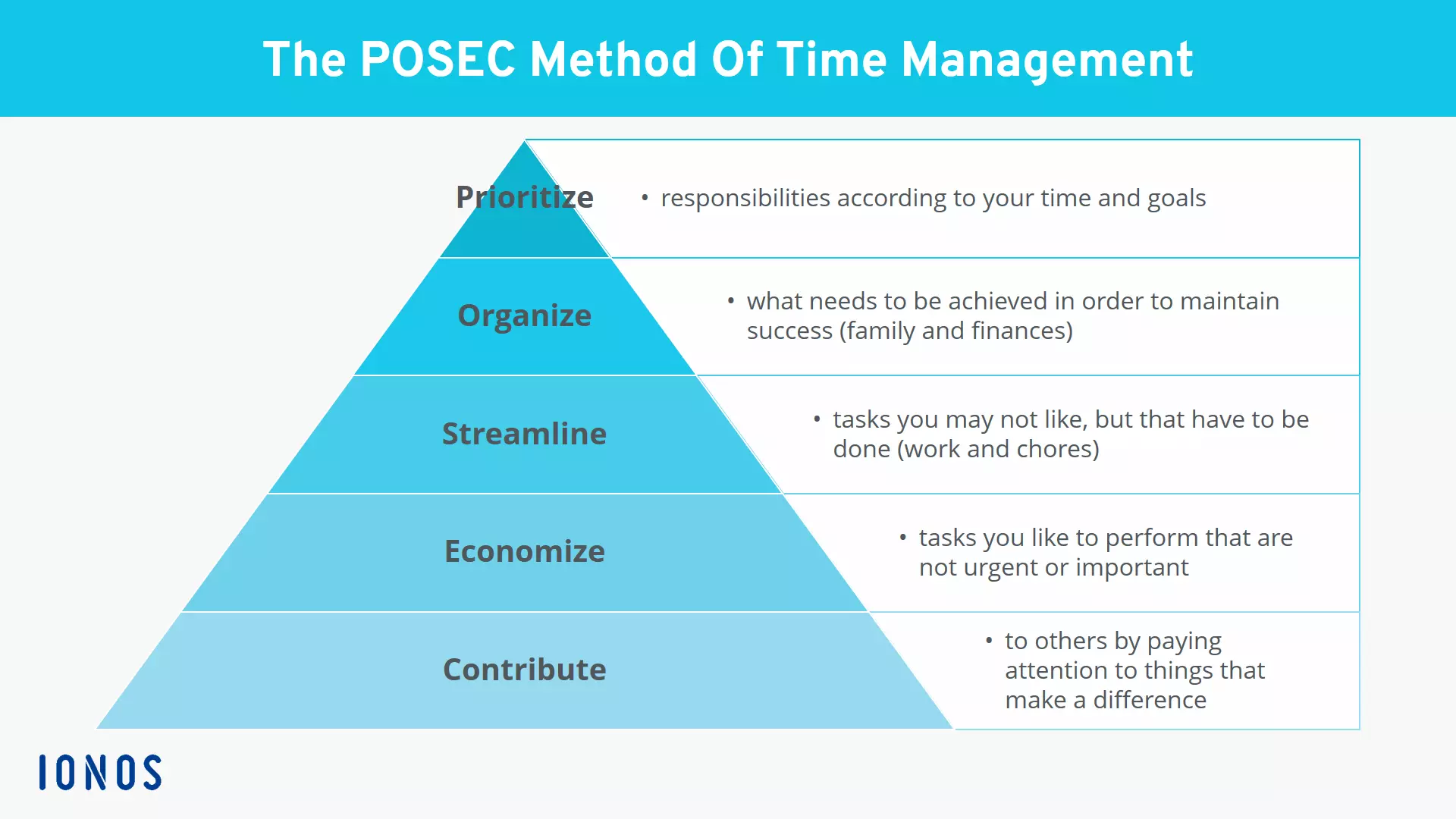
The POSEC method is based on psychologist Abraham Maslow’s hierarchy of needs, where a person’s basic needs and duties hold the highest priority and serve as the foundation for their more aspirational goals. Below are the components of POSEC, in order of relative importance:
-
P: Prioritize: Start by deciding which goals you want to achieve and list them in order of importance. You should allocate the most time to the goals you identify as the most important.
-
O: Organize: This step involves planning and organizing the recurring tasks and obligations necessary to achieve your prioritized goals. Having these tasks planned out provides stability and security, allowing you to progress to the next step.
-
S: Streamline: In this step, you find ways to complete your essential tasks more efficiently. For tasks you must do but may not enjoy, saving time can allow you to focus on goals further down your priority list.
-
E: Economize: This step involves allocating time for non-essential goals—those that are enjoyable or desirable but fall lower on your list of priorities. Using the efficiencies gained from streamlining, you can budget time for these goals.
-
C: Contribute: In the final step, you give back to the community or your team, as your own needs have already been fulfilled. In your personal life, this might involve community service or helping others achieve their goals. In the workplace, it could mean offering suggestions or implementing processes that benefit your team or organization.
- Free Wildcard SSL for safer data transfers
- Free private registration for more privacy
- Free Domain Connect for easy DNS setup
Please note the legal disclaimer for this article.