

Deep learning vs. machine learning

Deep learning is a specialized subset of machine learning that employs multi-layered neural networks. In contrast, machine learning often relies on simpler algorithms like linear models or decision trees. Deep learning’s deeper network structure makes it possible for it to detect more complex patterns in larger datasets.
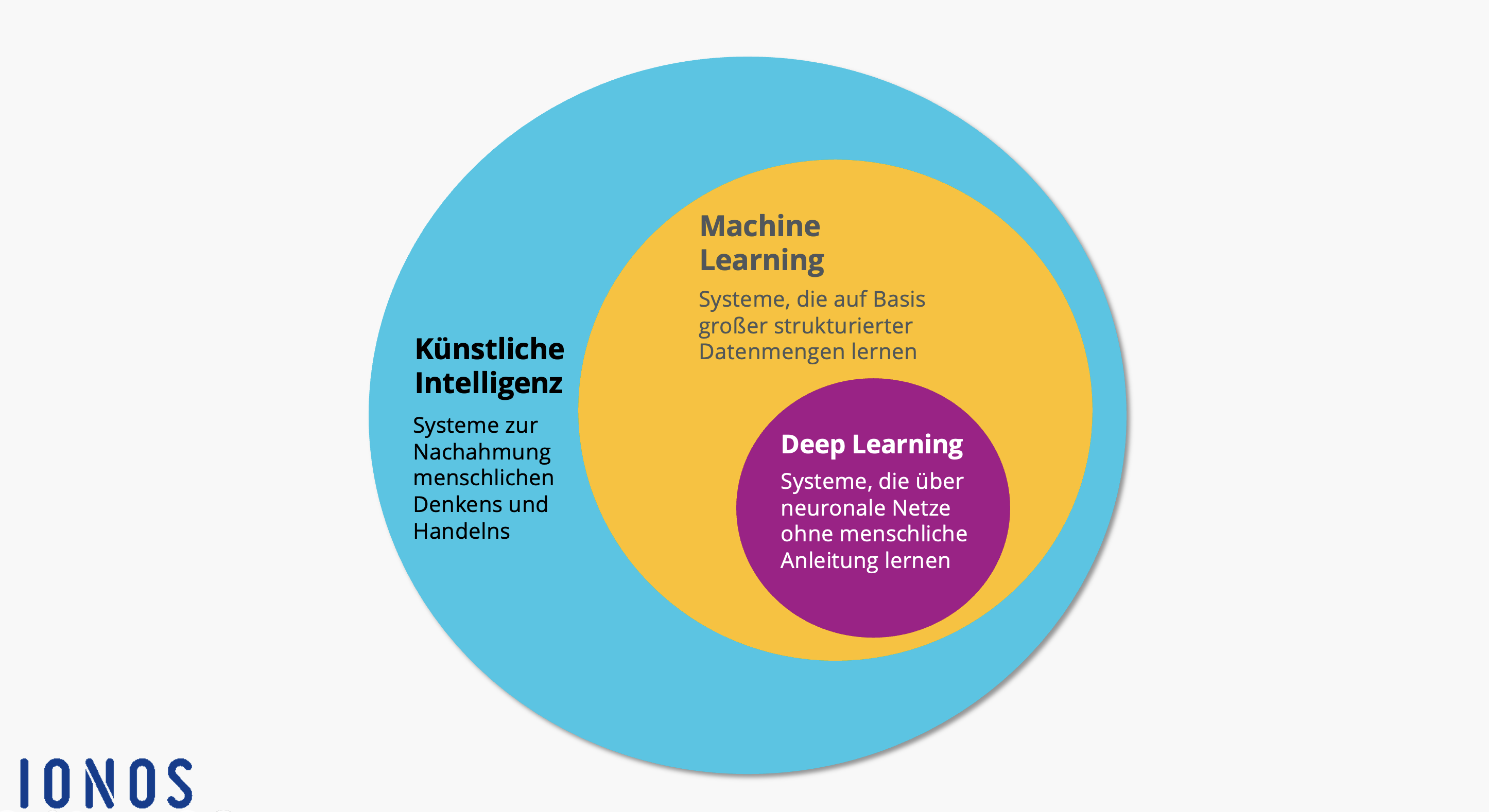
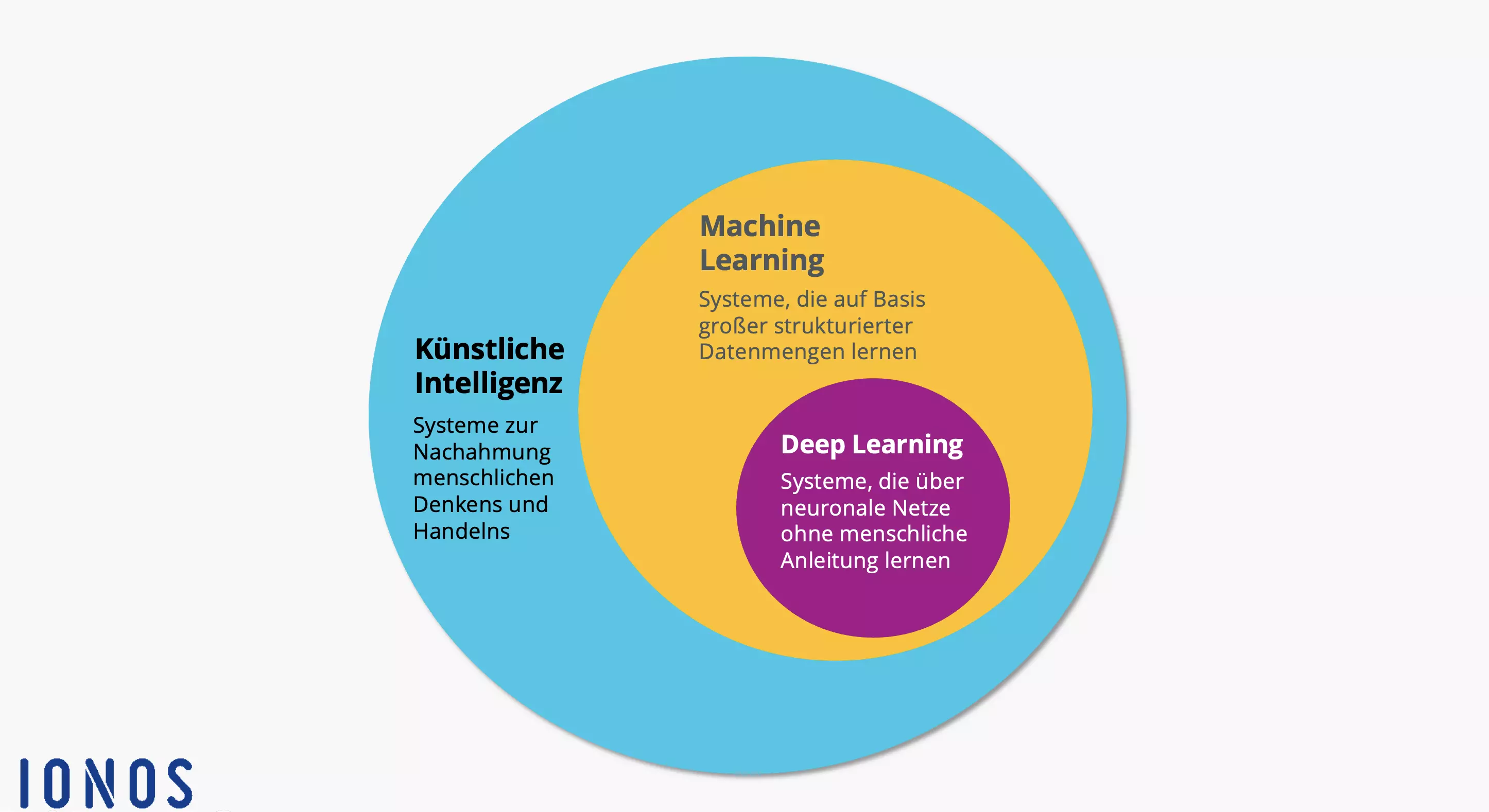
Machine learning and deep learning are subfields of artificial intelligence. Deep learning, a subset of machine learning is based on unsupervised learning.
Both machine learning and deep learning make it possible for computers to make intelligent decisions, however, the intelligence is limited to individual areas. Such types of artificial intelligence are referred to as “weak AI”. Strong AI, on the other hand, reflects a human-like capacity to make intelligent decisions across a wide range of scenarios and contexts.
What are the differences? Deep learning vs. machine learning
Of the two, machine learning is the older and simpler technology. It uses adaptable algorithms that modify themselves based on human feedback. For it to work, it needs structured data. Having structured data that is categorized helps the system to learn how to classify similar data. Depending on the classification, the system carries out tasks specified by the program.
For example, a machine learning system can determine whether a photo contains a cat or a dog and then move the files to the respective folders accordingly. After the first round, human feedback is given to optimize the algorithm. The system is made aware of misclassifications as well as how to correctly categorize the data that was misclassified.
With deep learning, structured data isn’t necessary. This is because the system works with multi-layer neural networks that are modeled on the human brain and combine different algorithms. This approach is most suitable for complex tasks where not all aspects of the data can be categorized beforehand.
Important: In deep learning, the system finds suitable differentiation characteristics in the files by itself, with no need for any external categorization. In other words, it doesn’t need to be trained by developers. The system itself considers whether to change classifications or produce new categories based on new input.
While machine learning can work with smaller datasets, deep learning requires far more data. For a deep learning system to produce reliable results, it should have more than 100 million data points to work with. Deep learning also requires more IT resources and is significantly more expensive than machine learning.
- One platform for the most powerful AI models
- Fair and transparent token-based pricing
- No vendor lock-in with open source
Overview of differences between machine learning and deep learning
| Machine learning | Deep learning | |
|---|---|---|
| Data format | Structured data | Unstructured data |
| Data pool | Manageable datasets | More than a million data points |
| Training | Requires human trainers | Self-learning system |
| Algorithm | Adaptive algorithm | Neural network made of algorithms |
| Field of application | Simple routine activities | Complex tasks |
How do the use cases for deep learning and machine learning differ?
Machine learning can be seen as a precursor to deep learning. In fact, deep learning is capable of doing all the tasks that machine learning is able to do. That’s why it’s not necessary to compare deep learning and machine learning in terms of their capabilities.
Deep learning requires significantly more resources though, making it the less efficient option for use cases where both machine learning and deep learning can be applied. Simply put: If machine learning can be used, it should be used.
Since both machine learning and deep learning are still establishing themselves in standard business settings, using both technologies can provide companies with an enormous competitive advantage.
Deep learning vs. machine learning — Use case comparison
In online marketing, businesses often use marketing analytics tools that employ machine learning. These can evaluate existing data and make reliable forecasts as to the content customers want to read, the type of content that will likely lead to conversions and the marketing channels that most often result in purchases.
Machine learning can also be used in chatbots. Such systems use keywords in a customer’s query, prompts and yes/no questions to guide customers to the information they are looking for. With deep learning, however, chatbots are capable of understanding natural language and do not need to depend on the use of specific keywords. This makes their interactions with people much more efficient, and significantly increases the accuracy of the solutions they provide.
Digital voice assistants like Siri, Alexa und Google almost always use speech synthesis and deep learning nowadays. These digital assistants are also making their way into business environments, where users can use natural language to interact with them to perform a range of tasks, including placing orders, sending emails, creating reports and conducting research. Earlier systems based on machine learning were not capable of understanding nuances in human speech, making them less effective for such use cases.
While machine learning can be used in the realm of business intelligence to visualize important company data and make forecasts easier to understand for decision-makers, deep learning systems go a step further. For example, with generative AI, businesses can create custom graphics and images with simple prompts. Likewise, large language models and natural language processing, both of which use deep learning algorithms, are also helpful for content creation.
- Get online faster with AI tools
- Fast-track growth with AI marketing
- Save time, maximize results