

Design Patents

Have you ever noticed that all products – even very similar ones like bottles, smartphones, and jewelry – come in slightly different shapes and sizes? These subtle variations are of course intended to make sure a design is unique, but they can also make sure that this uniqueness is preserved legally within the United States. The official term for this protection is a design patent, and they’re issued by the United States Patent and Trademark Office (USPTO). But what are these design patents and how do you apply for one?
What is a design patent?
Design patents are legal documents confirming who owns a particular product design. They have traditionally lasted 14 years from the day of registration, but this was increased to 15 years in May 2015. The USPTO is in charge of issuing these patents and determining what is considered a design. In their view, it “consists of the visual ornamental characteristics embodied in, or applied to, an article of manufacture”. Basically, this means that it refers to how a design looks – covering the shape, proportions, and ornamentation of a particular item.
What types of design can be protected?
A design patent can cover the shape and ornamentation of the design of an entire item or just part of it. So if you’re designing a lunchbox with a unique lid, you can choose to take out a design patent on the lunchbox but with specifications that would only refer to the lid. This means that the shape of your main box could be copied but the lid couldn’t be. Since design patents are only issued for designs that are considered to be completely unique this can be a useful solution for protecting a product with one special feature but an otherwise fairly standard design. It’s also possible to take out a design patent on two different features of the same product. So, using the same example, you could patent the design of the lid and the design of the box container for the lunchbox as well.
Design patent claims can only apply to one specific design concept, while multiple designs that are considered to be independent and distinct from one another must be filed as separate requests. So if you’re designing a lunchbox and a hat rack, you’ll need two individual design patents to protect them both. The same would be true if you were designing two lunchboxes with distinctly different shapes and features. But very slight differences, like subtle modifications or separate embodiments of the same design concept may be included as a single design patent application. The USPTO decides whether multiple designs may be classified under a single design patent or not.
How does a design patent differ from other patents?
There are four basic types of legal protection for intellectual property offered by the USPTO: design patent, utility patent, copyright, and trademark. Utility patents work alongside design patents and cover the practical use and function of an item. These two should be mutually exclusive, which means that some design patents will be rejected if they’re considered to also cover a practical use too. An example of this could be a design patent claim for the shape of the inside of a washing machine, as it would also affect the functionality of how many items of clothing it could hold per load. Utility patents also last longer on average, typically expiring up to 20 years after registration. Copyright is more personal than a patent, as it protects the originality of the particular concept. This means that the whole concept of the design must qualify as entirely original, rather than just the appearance of it. Copyrighting often transfers to less physically measurable creations like literary works or songs and lasts for considerably longer than a design patent. Typically, copyright lasts for a lifetime and often longer still. Objects can be covered by both design patents and copyrights: one of the most famous examples of this is the Statue of Liberty. Lastly, trademarks tend to be concerned with slogans, catchphrases, logos, or symbols. These are used to guarantee that a particular product comes from a particular brand. Trademarks can last forever, so they’re a good way to add protection to an expiring design or utility patent if it has become a feature of your brand. The design patent that covered Coca Cola’s unique bottle shape has long since expired, but it became such a hit that Coca Cola took out a USPTO trademark on it, meaning it can never be copied within the United States.
Why are design patents important?
Design patents may be the least protective of the four principle patents and trademark offered by the USPTO, but they still have an important role to play. Simply put, having your design patented offers you the chance to ensure that the ornamentation of it remains unique for 15 years. This guarantees that the specifics of a particular design are protected: so if you’re in the olive oil industry and take out a patent design on the curvature of your flagship olive oil bottle, then your competitors will be blocked from creating anything that is considered to be “substantially similar”. This wording is important – a new design doesn’t actually have to be a like-for-like copy of a patented design, it just has to be similar enough in the eyes of the USPTO that it is deemed to infringe upon the design patent.
Design patents aren’t just for manufacturers, however. By forcing legal restrictions on what designers can and can’t do, design patents encourage variety within competitive markets. This benefits consumers and the industry as a whole.
The design patent application process
As we’ve already discussed, design patents are handled by the USPTO and registration typically takes around 2 years to complete. Each design patent application should consist of the following separate parts:
- The preamble: the preamble is like an introduction to the patent claim, and should contain the claimant’s name, the name of the design in question, and a short summary of the design and its use
- References to other applications: your design patent should contain any necessary cross-references to other applications (e.g. if you’re processing separate patents for two design features of the same product)
- Statement about R&D (if applicable): if your design is federally sponsored for research and development purposes, you’ll need to clarify this here
- Figure descriptions: design patents are governed according to drawings, which must be included later in your design patent application. The figure descriptions for each drawing must be included beforehand, and they should explain which portion, angle, and viewpoint of the design that the drawing describes. This could be something simple, like ‘the front elevation view of the right side of the design’. You may also include lengthier descriptions if necessary. Figure descriptions should also explain the reasons for omitting additional diagrams, e.g. ‘the top plan is identical to the bottom plan and so has not been included’.
- Diagrams: designs should be presented either as drawings or as black and white photos. These should be as clear and accurate as possible – if your designs are unclear, loopholes could be exploited and the designs might be copied without you being able to claim compensation. The USPTO prefers drawings, which should be completed in black ink on white paper, though they will accept black and white photos if drawings aren’t possible for whatever reason. All drawings or photos must be numbered in relation to their figure description, so that it’s easy to piece the design together. In rare circumstances, the USPTO will grant permission for applications to be submitted with color drawings or photographs, but only upon receipt of a formal request. This request should be worded as follows:
"The patent or application file contains a least one drawing executed in color. Copies of this patent or patent application publication with color drawing(s) will be provided by the Office upon request and payment of the necessary fee."
- The declaration: the final section of the design patent application is a declaration that the applicant has the right to use the design and that they’re responsible for the aforementioned application.
Specifics for design patent diagrams
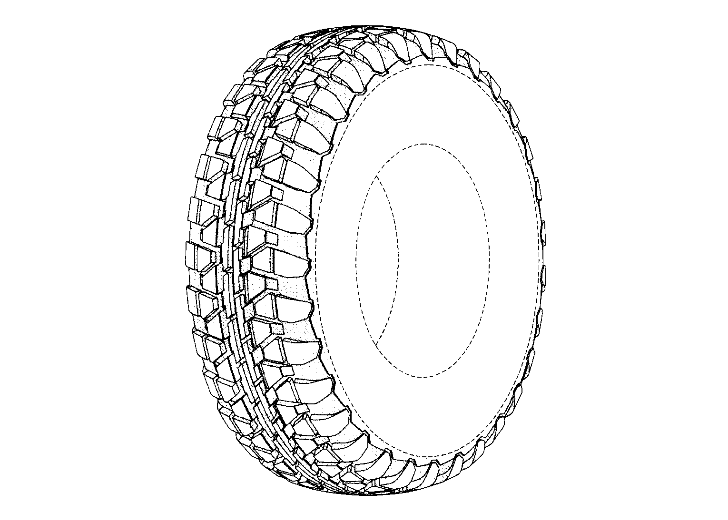
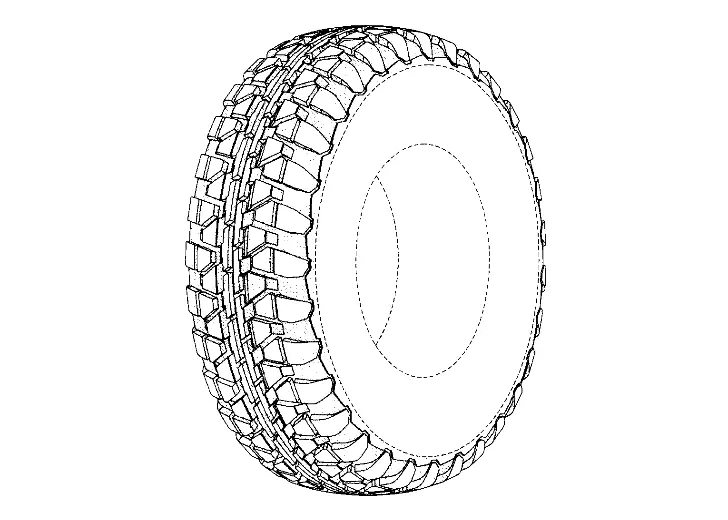
As mentioned above, all diagrams submitted as part of a design patent application should be done so as drawings in black ink on a white background, or black and white photos if necessary. The reason that diagrams are preferred is because it’s easier to specify the elements of the whole design that are to be patented and the elements which would not be covered by the patent. When it comes to separating these different elements, the USPTO requests that lines included in the design patent be drawn as solid blocks, and lines which aren’t covered by the patent be drawn as broken lines. This is best demonstrated with an example:
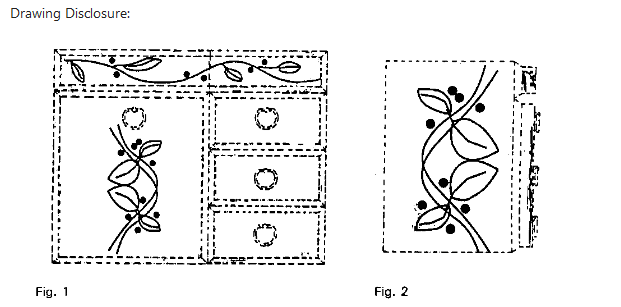
Shading is also permitted to give depth and weight to images:
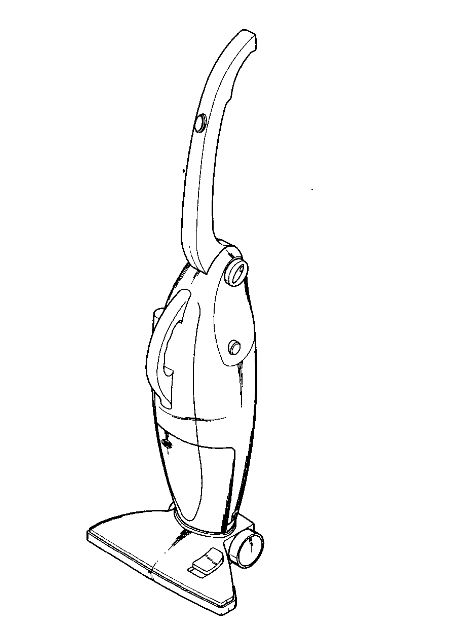
If necessary, broken lines may be used as extras inside of a solid line, to illustrate the area that won’t be covered by the design patent as shown below in this example:
Famous design patents and cases
Almost every famous design you can think of has been the subject of a design patent – especially the most iconic ones. Traditional classic games and toys like Monopoly, Lego, and the Slinky all received design patents, as well as the classic Barbie doll and G.I. Joe. The first design patent ever issued (U.S. Patent D1) was for a new font designed by George Bruce in 1842. Since then, there have been hundreds of thousands of successful design patent applications.
Apple vs. Samsung
One of the most famous design patent battles of recent times became a full on war in 2012. These two technology giants clashed when Apple successfully won a claim against Samsung for infringement by Samsung of Apple’s iPhone design patent. This was particularly noted for the clever ploy by Apple to utilize the different solid and dotted lines to great effect – as the diagram below illustrates, Apple opted not to include the back of their iPhone design on their design patent:
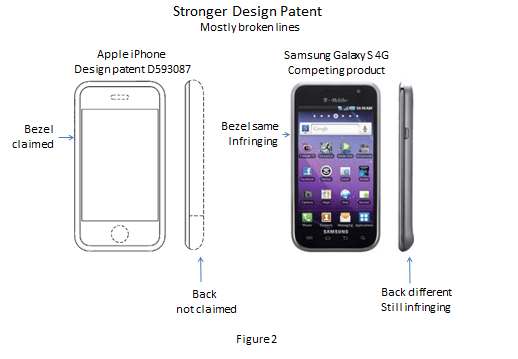
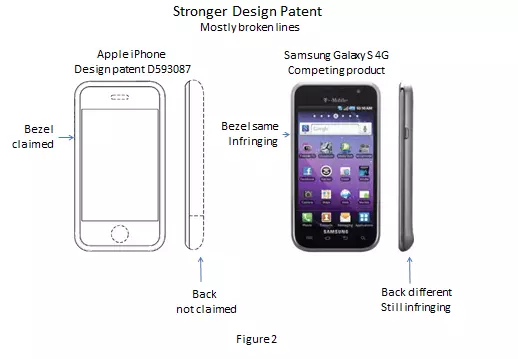
Samsung misinterpreted this design patent and ended up paying the price. The cunning move by Apple was to make the back of their design a dotted line – meaning it wouldn’t be covered by the design patent. If they wouldn’t have made that move, the different back of the Samsung smartphone design would have meant that the two models couldn’t be called ‘substantially similar’. The same is true of the circular home button and the upper front camera panel – if one of those had been included as solid lines in the patent, then the overall Samsung design probably wouldn’t have infringed upon the iPhone design patent. This is an excellent example of how to patent your design effectively to be sure that you keep competitors at bay.
Interestingly, Samsung was actually the global leader in US patents at the time, with over 5,500 total patents registered in 2012, and the South Korean technology developer was also number 1 in design patent registration too with 378 in the same calendar year. Apple, by comparison, had just 1136 total patents, of which 353 of those being design patents. So despite having many fewer patents, Apple’s cleverness over their design patent applications meant that they walked away from the legal battle successful.
Design patent cost and registration time
Design patents usually cost around $1,500 and typically take 2 years to complete. The cost is predominantly made up of attorney fees, with a small filing cost. But with multimillion pound settlements at stake for design patent infringement, the cost is very worthwhile if you have a great and unique design to protect. And as the Apple vs. Samsung battle proves, it’s sensible to check out the competition first, to make sure you don’t infringe on a rival design.