

What is competitor monitoring and how can it help SMBs with SEO and SEM?

Regardless of whether you are doing SEO or SEM on search engines like Google, the way you react to your competition will have a major influence on your business’s chances of being successful online. Don’t just think of your competition as something you need to stay ahead of, they can also teach you a lot — Competitor Monitoring is a vital source of learning and feedback for your digital marketing activities. It will help you to stay ahead of the latest trends in your industry as well as pointing you in the right direction of best practices in digital marketing for SEO and SEM.
- Simple registration
- Premium TLDs at great prices
- 24/7 personal consultant included
- Free privacy protection for eligible domains
Boosting SERP listing with competitor monitoring
Search engine optimization (SEO) is all about ranking for the best keywords on search engines, especially Google. With up to 92% of traffic going to results on the first page. The most competitive aspect of SEO is getting onto this first Google results page. If you haven’t managed to get your site on the first page for the term you are targeting yet, or you are just starting out, take the time to see how your competition on the first page presents itself. The competition for that top ranking is also happening on the results page itself.
Google pays attention to the pages its searchers click on. If a search result gets clicked on by users, it will tend to rank higher, whereas a result that rarely generates clicks is likely to drop out of top search results very quickly. This means that the top results, especially for highly competitive terms, will be optimized to be highly appealing to both users and search engines. Looking at the top ranking results for the terms you are targeting will often demonstrate great examples of SEO best practices that can attract more clicks to your site.


These top-ranking results for the term ‘How to be successful online’ offer some great tips for optimizing the meta title and meta descriptions on your site’s pages. See how the keywords ‘successful online’ are found in both the title and description; also the appealing use of odd numbers in titles, as well as appealing authoritative adjectives such as ‘must-read’ or curiosity arousing words like ‘secret facts’, to present these articles as fresh and entice the users to click on them.
You find these kinds of words used in all kinds of content relating to guides. The use of numbers also helps these results to stand out on the SERP and drive clicks. These persuasive techniques might not be the best choice for the keywords you are targeting, so make sure you do a competitor search on the SERP for keywords you are chasing, you will be sure to find other appealing adjectives and formatting techniques that perform a similar role.
Also, notice how the vast majority of the titles on the front page are short enough to fit the full sentence in the title without being cut off, and that the cut off in the description only occurs at points that still give the searcher a full understanding of the purpose of the page and give a sense that there are more interesting parts to come. For more help with getting this right on your site, check out this article on meta-tags.
For help tracking the SERP for your targeted keywords check out rankingCoach from IONOS.
For those businesses who don’t have time to rise up the rankings with SEO, they can still use Competitor Monitoring on the SERP to help improve their Google Ads. SEM ads such as Google Ads don’t use keywords in the same way as in SEO to secure top rankings. Instead, the positioning of Google Ads is determined by targeting, bid price, and the clickthrough rate, not the Google Algorithm. This means that anyone launching Google Ads can simply focus on getting the right user to click on them. Due to this difference, Google Ads can be more persuasive and rely on many of the classic techniques used in marketing CTAs.
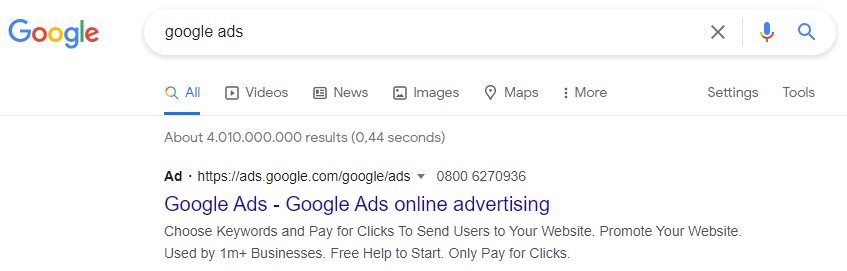
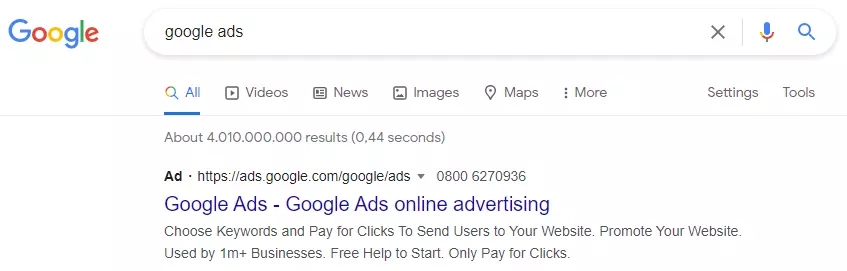
As we can see here in the search engine equivalent of a picture within a picture: the Google Ad for Google Ads does not have keywords in the description. Instead, this space is taken up by strong arguments for Google Ads such as ‘used by 1m+ businesses’ and ‘ Free Help to Start’. Also, note the use of caps on all of the words except prepositions to draw the eyes of searchers.
- Our experts run your campaign
- Increase your online visibility
- Save money thanks to greater efficiency
Picking realistic targets for SEO and SEM
To secure top SEO ranking, you need content on your pages that contains the right keywords and serves the user as least as well as the other top ranking results. To get a good idea of the quality and length of the content you are up against, you should check out the content for as many of the top-ranking pages for the term you are targeting as possible. Each keyword term is different, and the longest content isn’t always the most likely to rank highly, but chances are if all the top-ranking results are 2000+ words — a couple of hundred words probably isn’t going to cut it.
If you need help finding the best keywords for your SEO content, check out rankingCoach from IONOS.
On the other hand with Google Ads, providing you are willing to pay the price, getting the top rankings isn’t the problem but taking a lot of the other competitors who are targeting your keywords will help you to see if you are targeting the right audience. For instance, local stores with one or a few locations might want to focus their ads on more specific regions than the national ads many chains are running.
This locational focus can be reflected in the keywords targeted. For instance, a burger bar in London will have to pay a lot of money for the more generalized term ‘Burger places London’ because of competition from major chains but may get more value from more specific terms like ‘Burgers places near Tower Bridge.
Local business owners who take the time to size up the competition and focus on their ads will have a much better chance of finding the right keyword niche for their business and attracting more of the right customers to their businesses.
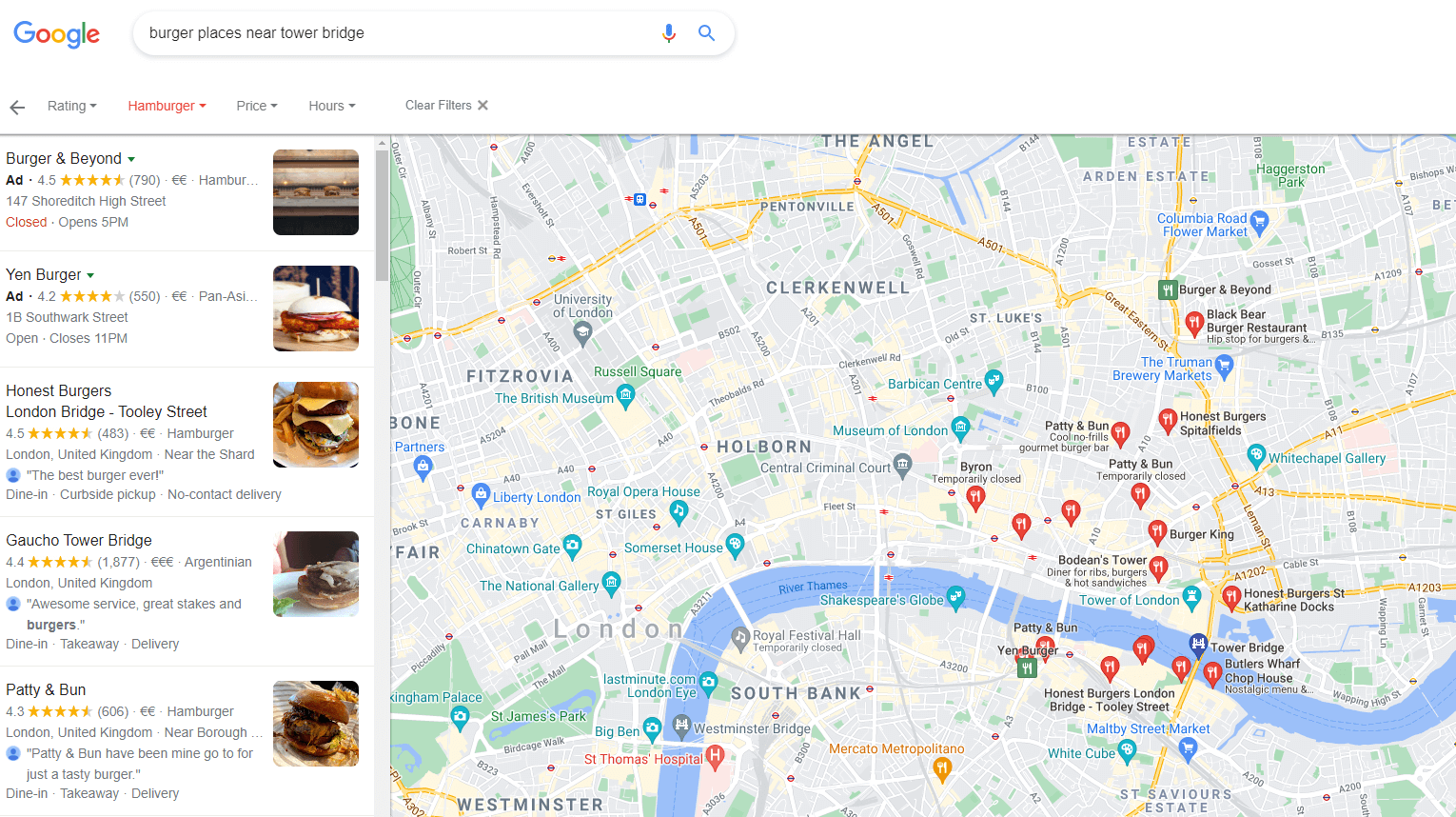
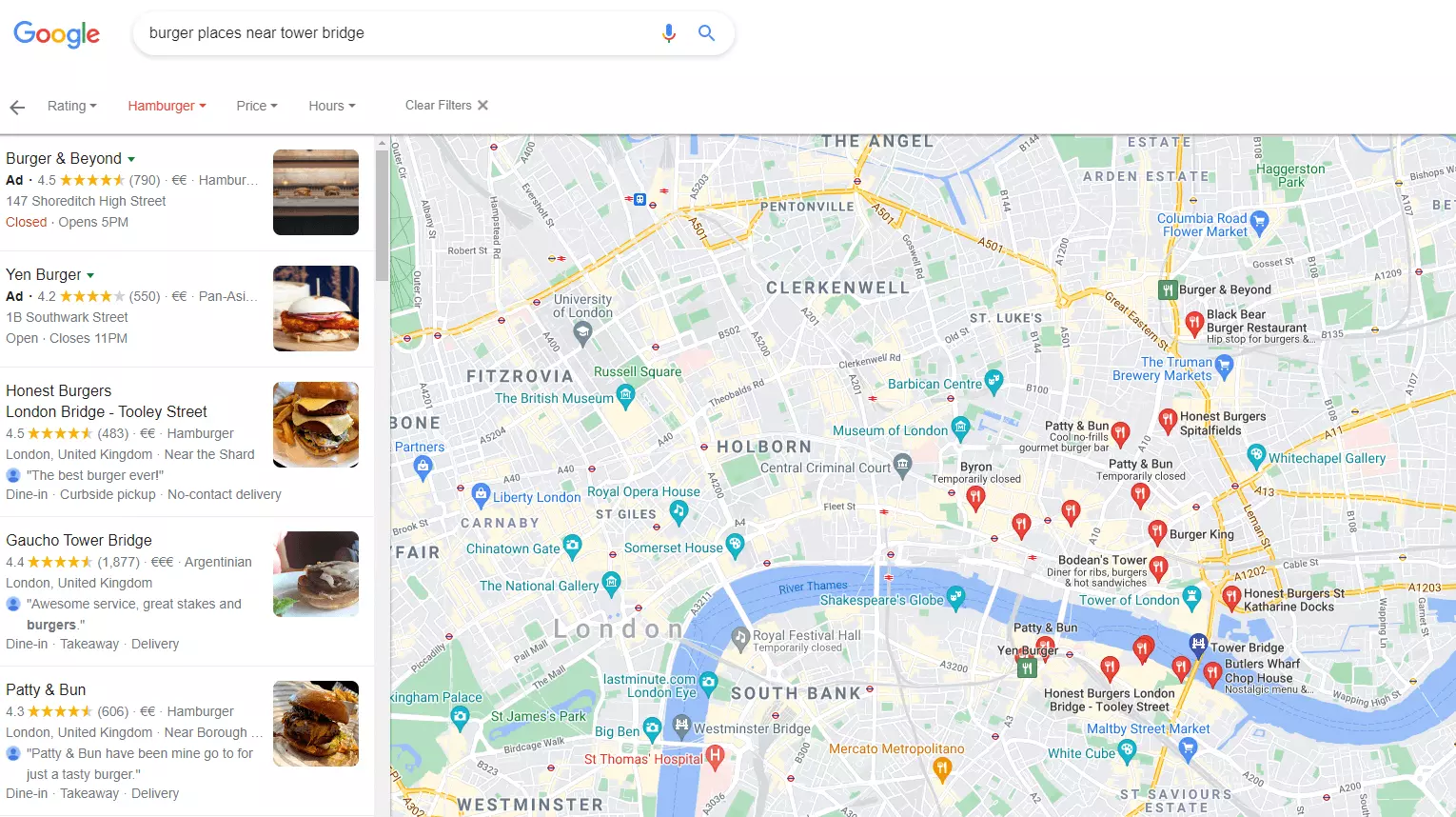
Google Maps also features Google Ads. Notice the two Ads for Burger place nearby.
Competitor monitoring and keyword research
Keywords play an important role in SEO, and SEM competitor monitoring can really help to make keyword research more effective. SEO competitor monitoring can be used to find the keywords your rivals are using that you should also be targeting. The depth of the analysis you do with this will depend on your budget.
Some keyword tools allow you to see the keywords your competitors are ranking for, but you can also get a good idea of the keywords your competitors are targeting by visiting their website and paying close attention to the keywords used in the titles and subheadings on their pages, especially landing pages.
Find out more on how to promote your website in our dedicated article.
You should also make sure that you are targeting any Google Ads keywords that your competitors are getting value from. There are a variety of tools out there that will help you track which ads your competitors are running. It’s also worth typing the keywords you are considering targeting into the search engines to see which ads come up for them.
For instance, with SEO, a large audience may be using keywords that you think are related to your products, but if you check the competition in the results, you might see that they are actually using these keywords to find and search for something completely unrelated to your products.
A digital marketing company could spend a lot of money on Google Ads for the single search term SEA (acronym search engine advertising), but find that many who see these ads are not converting because they are actually just fantasizing about beach holidays, see the example below to understand what we mean by this.
Search engines open up your business to a whole new world of customers. When selecting your keywords, it’s very important to put yourself in the user’s shoes and think about their intention and what they would expect to find when googling a particular term so that you can deliver exactly what they are looking for.
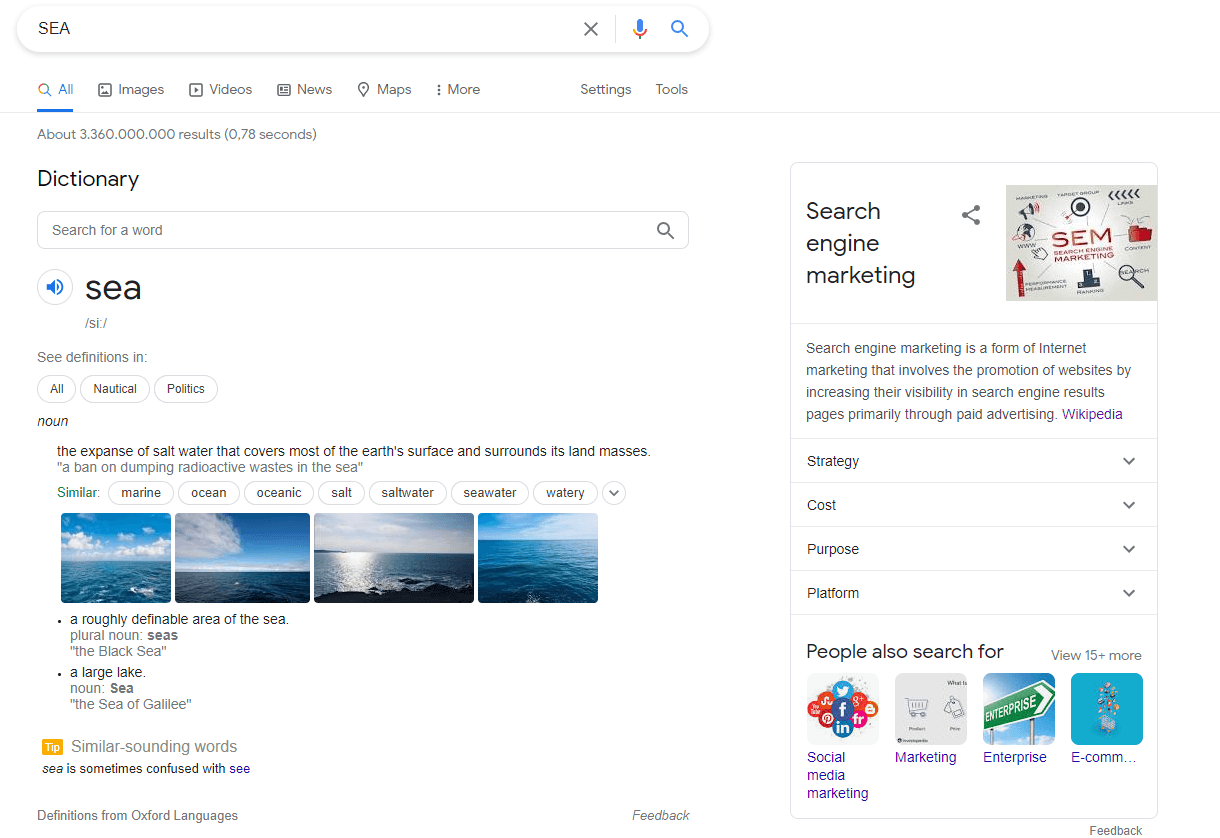
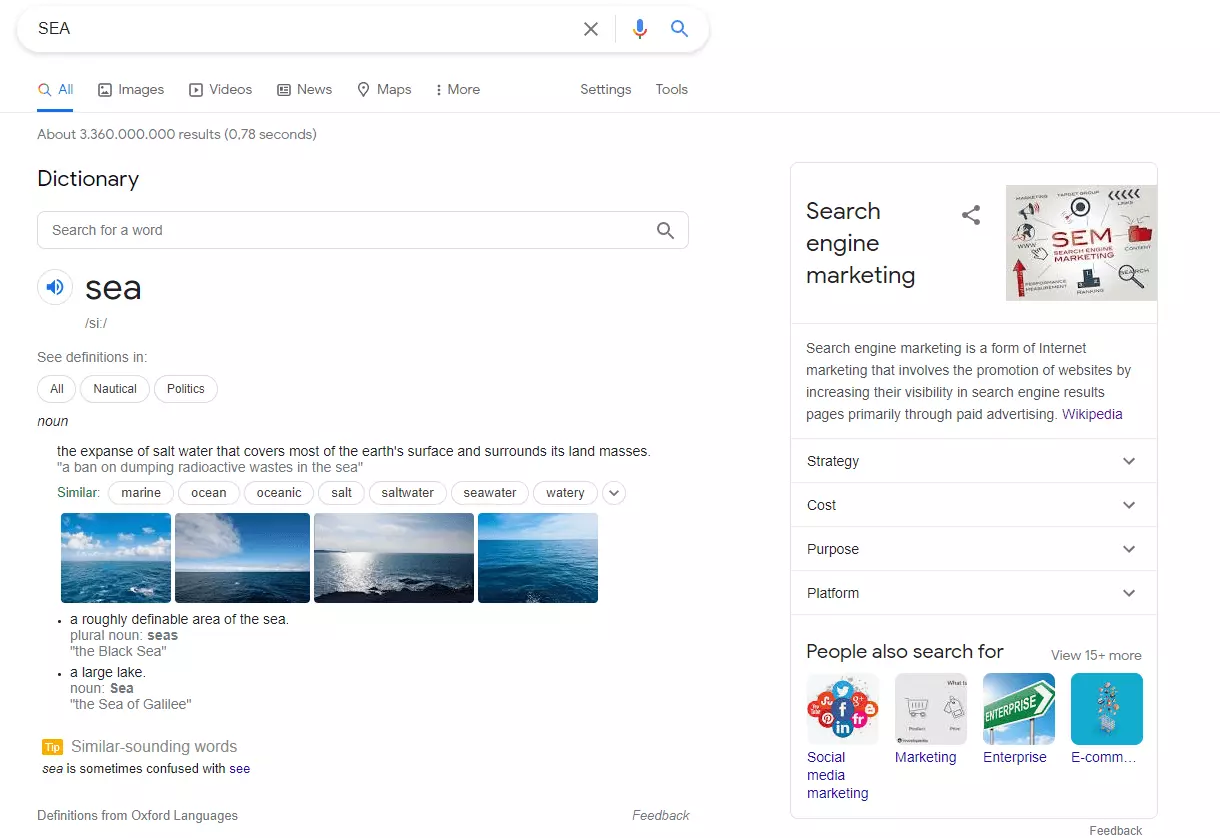
This SERP for SEA shows the importance of making sure you are not picking the wrong competition.
Protecting rankings and Google Ad value
Competitor monitoring is also an important way of protecting the rankings you are holding for your SEO keywords. Monitoring the competition who are chasing your keywords will help you to be on the lookout for other sites that might threaten your top rankings. When we see a page jump up the rankings, we can check out its content and see if it includes any additional themes or contains extra engaging media, such as pictures and video, that we could also add to our content to maintain or even improve its rankings.
We can also use this approach to protect an advantage gained with Google Ads. For instance, monitoring your Google Ads and your competitors’ ads will help you to notice key shifts in strategy as soon as possible. For example, when rivals start outbidding you and pushing you out of prime positions for the terms you are targeting. You may then decide to up your bid to ensure your site still gets the top position, or adjust the settings of your ads so they launch at the time of the day when you get the best value or when your competitor is likely to have already exhausted their ads budget.
- Improve your Google ranking without paying an agency
- Reply to reviews and generate social media posts faster
- No SEO or online marketing skills needed
Social media listening for SEO and SEM
Link building is an important part of SEO and one of the best ways to get links to your website is through content collaboration. This is why monitoring your competitors' social media presence can help with SEO. If another website is willing to do an exchange with a rival from your industry, it’s likely they will also be interested in doing one with you. So using social media monitoring tools to check for your competitors latest collaborations is a good idea.
Social media analysis can also help with SEM since many social media platforms also offer display advertising. Tracking your competitors' activities on social media will help you to discover other channels you should run ads on. It will also draw your attention to the latest events and offers in your industry that you may also want to consider running ads for.
The final words on competitor monitoring
In conclusion, competitor monitoring is a vital source of insight for businesses of all sizes. It can point those learning about SEO and SEM in the right direction of best practices, as well as helping marketers to identify the best value keywords and target their marketing activities as effectively as possible.
Competitor monitoring on other marketing channels such as social media can also be a great way to identify potential backlink providers as well as inspiration for SEM, especially when it is conducted regularly with the help of digital marketing tools and software.
- Intuitive website builder with AI assistance
- Create captivating images and texts in seconds
- Domain, SSL and email included