

Which WordPress shop plugin is the best? 6 options compared

With a WordPress shop plugin, you can transform the open-source software into a fully functional ecommerce platform. Compared to traditional shop systems, this combination gives you more flexibility in designing and expanding your own store.
What are WP ecommerce plugins?
WordPress shop plugins are extensions that add ecommerce functionality to an existing WordPress project. Like other WordPress plugins, both free and paid versions are available. Once installed, a shop plugin allows you to manage the sale of physical or digital products and services through the familiar WordPress backend. You can set up shopping carts, checkout processes, and integrate various payment and shipping options. Depending on the plugin, additional features like coupons, inventory management, or multilingual support for international stores may also be included.
- Stress-free, no matter your skill level with easy AI tools
- Fully customizable with themes and plugins
- Hassle-free updating and less admin
What’s the difference between plugins and shop systems?
Ecommerce plugins expand your current WordPress setup with shop functionalities not included by default. Without an extension like this, it’s not possible to create an online store with WordPress.
In contrast, dedicated shop systems like Shopify or Shopware are built from the ground up for ecommerce. They operate independently of any CMS and offer everything needed to sell products—typically in a closed, ready-to-use environment.
If you’re looking for a pure ecommerce solution, shop systems are usually easier to set up and use. However, if you already run a WordPress website, using a shop plugin requires little adjustment. It’s also a great choice for content-heavy stores (e.g., blogs with integrated product sales).
- Get started with stunning designs
- Grow with advanced marketing and admin tools
- Sell on social and online marketplaces
The best WordPress ecommerce plugins compared
| WordPress Version | Free Basic Version | Best For | |
|---|---|---|---|
| IONOS eCommerce Plugin | 4.4+ | ✗ | Beginners; small stores needing support |
| WooCommerce | 6.6+ | ✓ | Physical and digital products; scalable stores |
| Easy Digital Downloads (EDD) | 6.2+ | ✓ | Selling digital products |
| Ecwid by Lightspeed | 4.4+ | ✓ | Multichannel sales; easy setup |
| SureCart | 6.6+ | ✓ | Digital goods; subscriptions; simple checkout |
| BigCommerce | 5.8+ | ✗ | Large stores; B2B; omnichannel sales |
Information correct as of March 2025
IONOS eCommerce plugin
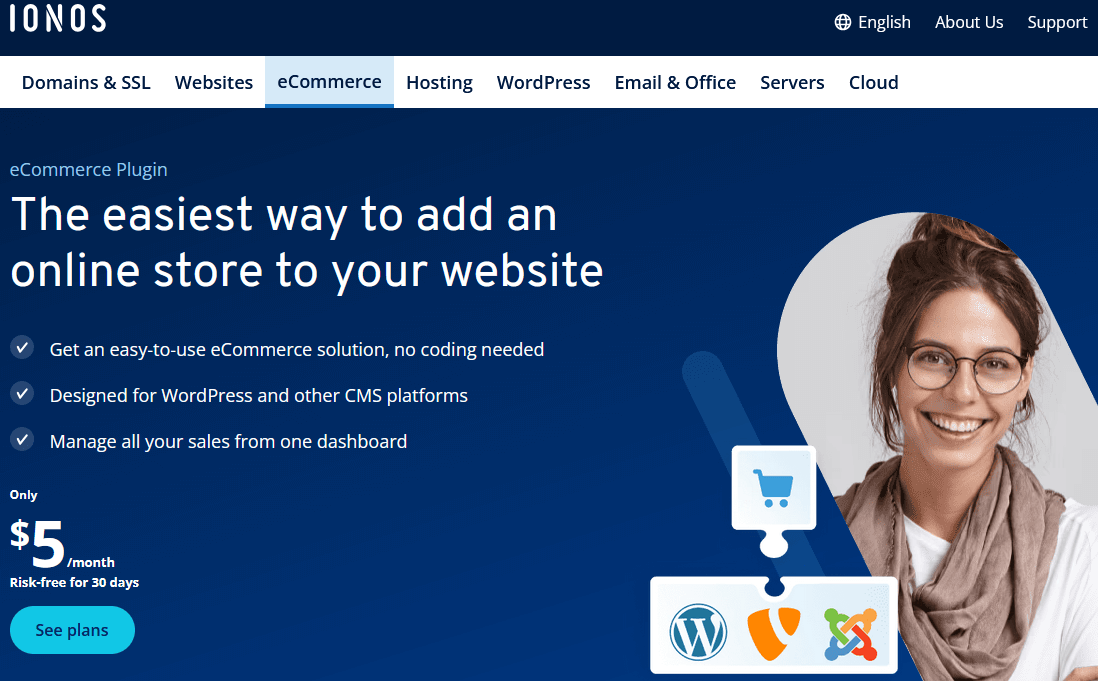
The IONOS eCommerce plugin integrates directly into existing WordPress websites, and is also compatible with other CMS platforms like Drupal or TYPO3. It targets users looking for a simple, GDPR-compliant solution hosted in Europe, or alternatively in the US.. Small businesses and beginners in particular benefit from its intuitive setup and seamless integration. The plugin also connects with platforms like Facebook, Google Shopping, Instagram, and Amazon.
Key features:
- Intuitive setup via IONOS backend
- Sell services as well as physical and digital products
- Integrates with Facebook, Instagram, Amazon, eBay
- Supports over 30 payment providers including PayPal, credit cards, Klarna
- Tax and shipping rules for international markets
While not free, the WP ecommerce plugin is bundled with a paid IONOS hosting plan. Pricing starts in the low double digits per month. Plans vary by available features and product limits. Centralized support is provided by IONOS—including 24/7 phone and email support, and help with store setup and management.
| Pros | Cons |
|---|---|
| ✓ Easy setup for IONOS customers | ✗ Can only be used with IONOS hosting |
| ✓ GDPR-compliant hosting on European servers | ✗ Features depend on plan |
| ✓ Multichannel sales support |
WooCommerce
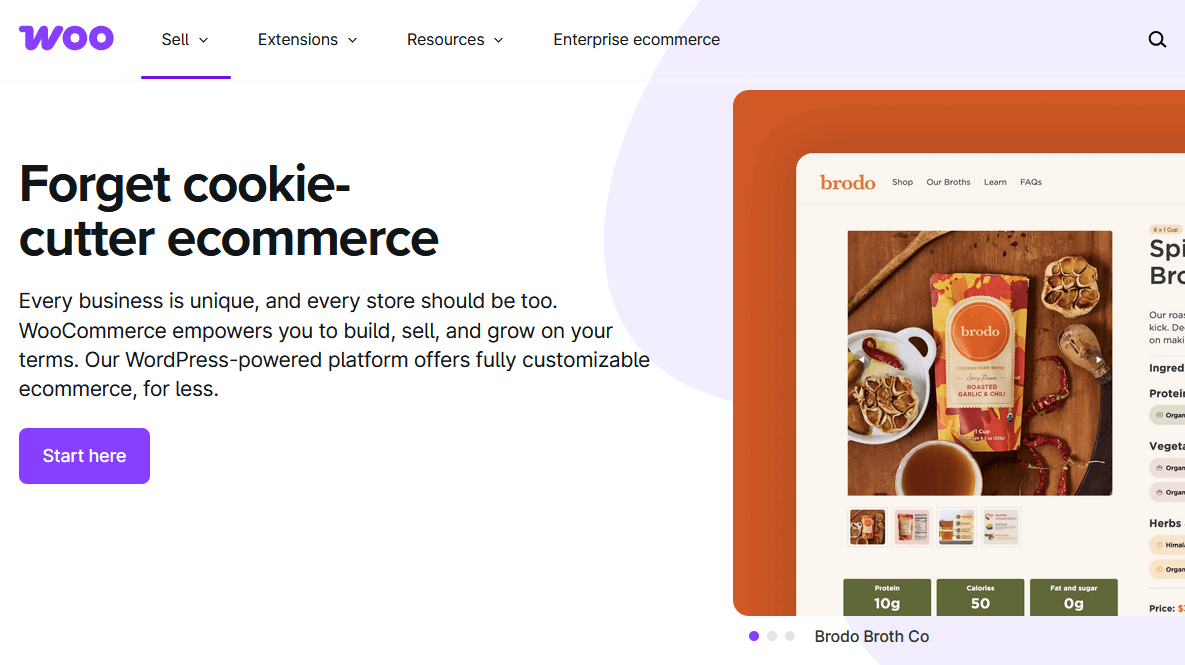
WooCommerce is one of the most popular WordPress ecommerce plugins. It works well for both small stores and large-scale projects. Highly customizable, WooCommerce scales with your needs and offers hundreds of extensions (WooCommerce plugins). As an open-source plugin, it gives you full control over your data, which you can export and migrate at any time.
Key features:
- Sell services and physical/digital goods
- Expandable with hundreds of WooCommerce extensions
- Integrations for PayPal, Stripe, Klarna, and more
- Built-in payment solution available
- Variable products and inventory management supported
- Large selection of themes
While WooCommerce itself is free—unlike the IONOS plugin—many additional features such as subscription sales, PDF invoicing, or bookings are only available as paid extensions. Support is primarily provided through the large community and official documentation, along with optional paid assistance. If needed, you can hire professional experts for your project directly through the official website.
| Pros | Cons |
|---|---|
| ✓ Highly customizable and extendable | ✗ Many key features require paid add-ons |
| ✓ Large community and plugin library | ✗ Steeper learning curve |
| ✓ Seamless WordPress integration |
- Smart, AI tools for any skill level make it easy
- Fast, WordPress platform with optimized databases
- Free SSL certificate for secure transactions
Easy Digital Downloads (EDD)
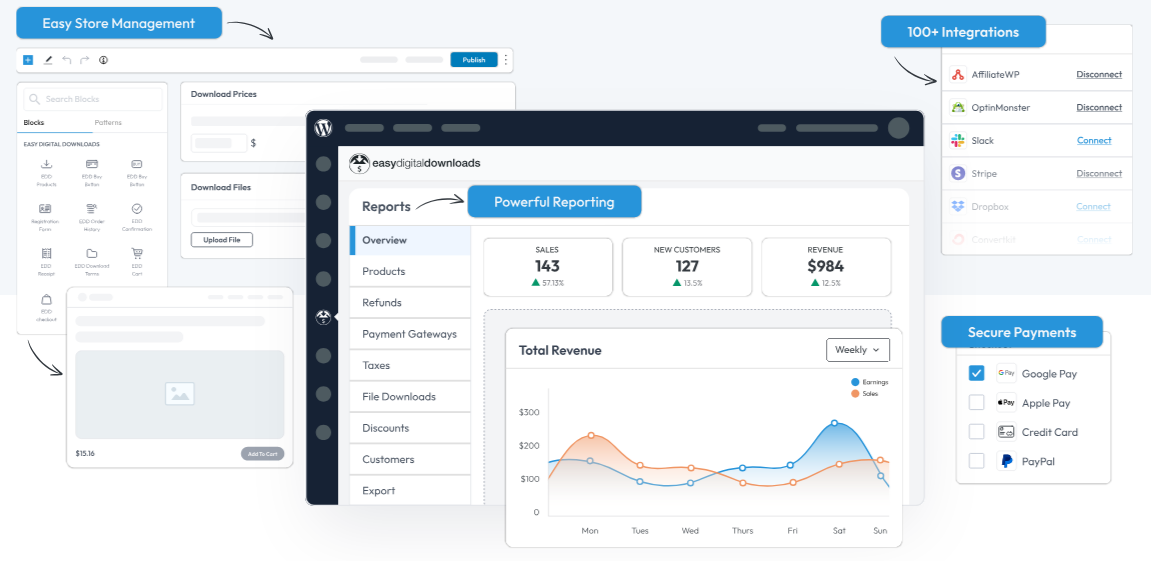
Easy Digital Downloads is a WordPress shop plugin specifically designed for selling digital products like eBooks, software, music, or licenses. It primarily targets creatives, developers, and agencies who don’t need shipping features but want to professionally sell digital content.
Key features:
- Sale of digital products only
- License and file management
- Integrates with PayPal, Stripe, and other payment options
- Discount and coupon tools (All Access Pass)
- Subscriptions, invoices, and more available in paid plans
The basic version of EDD is free, but advanced features (such as subscription models or accounting tools) require a paid annual subscription. Support is available through a central knowledge base and email for paying users.
| Pros | Cons |
|---|---|
| ✓ Ideal for digital product sales | ✗ No support for physical products |
| ✓ Lean and focused solution | ✗ Many essential features require payment |
| ✓ Simple license management | ✗ Limited community resources |
Ecwid by Lightspeed Ecommerce Shopping Cart
Ecwid by Lightspeed is a fully hosted shop solution that integrates with WordPress and other systems via plugin. Its feature set ranges from simple product sales to multichannel commerce. Provider Lightspeed manages hosting, security, and updates—making it ideal for stores without an in-house IT team.
Key features:
- Integration with websites, social media, and marketplaces
- Automatic mobile optimization
- 50+ global payment providers
- Multilingual and multi-currency support
- Manage via Ecwid dashboard or WordPress backend
Ecwid offers a free plan for up to 5 products. Advanced features (e.g., coupons, templates, SEO tools, inventory management) and increased product capacity require a paid subscription. Support is available via email, live chat, or phone, depending on your plan.
| Pros | Cons |
|---|---|
| ✓ Very easy to use | ✗ Limited free-tier functionality |
| ✓ Low maintenance via external hosting | ✗ Less customization flexibility |
| ✓ Multichannel integration included | ✗ Data managed outside WordPress |
SureCart
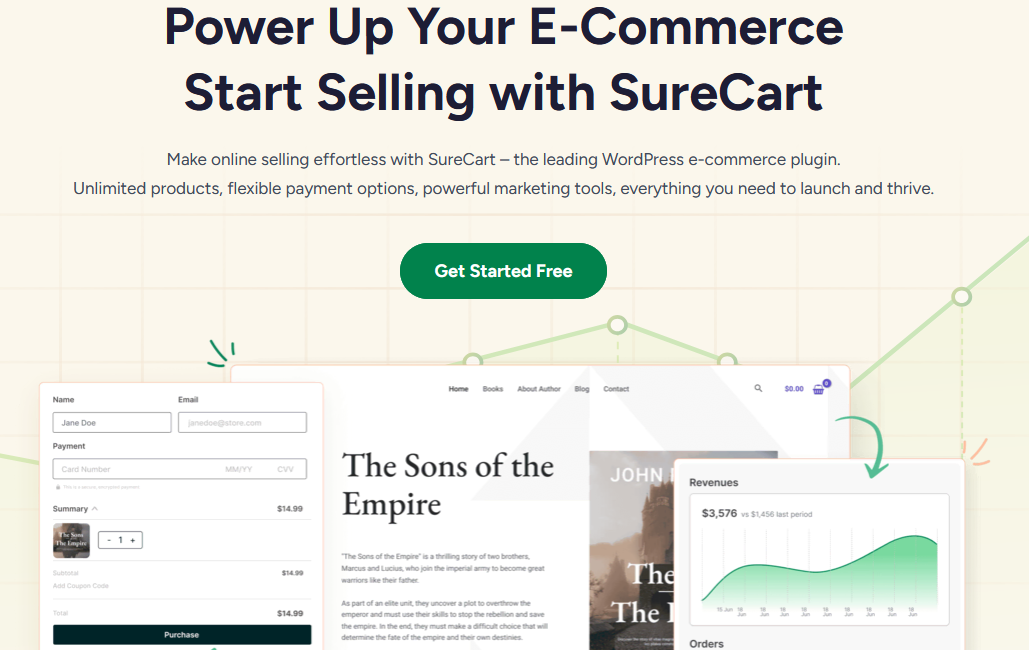
SureCart is a modern WordPress ecommerce plugin focused on digital products, services, and recurring payments. It features a streamlined interface and modern checkout flows, designed with conversion optimization in mind. SureCart is especially suitable for coaching websites and agency or software provider websites.
Key features:
- Flexible checkout forms via shortcode
- GDPR-friendly and mobile optimized
- Built-in support for Stripe and PayPal
- No traditional shopping cart required
SureCart offers a free version with essential features. Premium features like VAT calculations, Zapier integration, or email automation are only available in paid plans. Support is offered via ticket system and a well-maintained knowledge base.
| Pros | Cons |
|---|---|
| ✓ Fast, modern checkout | ✗ Small user base and community |
| ✓ Ideal for digital goods and subscriptions | ✗ No classic shopping cart interface |
| ✓ Easy integration |
BigCommerce
BigCommerce combines a powerful SaaS shop system with the flexibility of the WordPress frontend. Product data, checkout, and order management run through BigCommerce, while the frontend is fully customizable in WordPress—ideal for large-scale shops with complex needs. The plugin creates a WordPress post for each product. A connected BigCommerce account is required.
Key features:
- Headless commerce with external backend
- Manage large product catalogs outside WordPress
- REST and GraphQL APIs for customization
- Built-in support for B2B and international shops
The WordPress plugin is free, but a paid BigCommerce plan (monthly subscription) is required for store operations. Plans include hosting, security, and scalability. Support is provided directly by the BigCommerce team—including technical onboarding.
| Pros | Cons |
|---|---|
| ✓ Excellent scalability for large stores | ✗ High ongoing costs |
| ✓ Frontend and backend separation | ✗ More technical setup than typical plugins |
| ✓ Professional SaaS-level support | ✗ More complex than standard WordPress shop plugins |