

Guerrilla marketing: effective ads in the age of advertising

In this era of modern advertising, companies are constantly trying to figure out the best way to get the attention of the maximum amount of customers. The basics are clear: To increase turnover, you must, with the help of effective marketing, convince customers to buy certain products or services. In order to make your advertisement effective it has to be noticeable. And while this sounds so simple – we live in an era where we are over-exposed to excessive amounts of unimaginative, sometimes even disturbing, adverts – whether online, on television, or in print. This means that it’s getting harder for marketers to bring an ads with a positive message to the masses, while still remaining convincing. This exact dilemma led to the emergence of guerrilla marketing over thirty years ago.
What is guerilla marketing?
The word ‘guerrilla’ (from the Spanish word ‘la guerra’ meaning war) refers to a type of ambush or underground warfare, which attempts to defeat its opponent with the use of surprising, underground fighting methods. ‘Guerrilla marketing’ as a term was originally coined in 1984 by the American creative director and business consultant Jay Conrad Levison in his book of the same title. Throughout this bestseller, Levison discusses marketing strategies that would especially help small and medium-sized businesses attract attention through the use advertising techniques that are cheap, simple, and easy to implement. In short, he wanted to show companies that it was possible to achieve maximum marketing impact without huge expense. Since then it seems guerrilla advertising has primarily become an effective marketing tactic for bigger companies and corporations looking to sell their products, services, and brands. Nowadays the creativity, as well as the budget, of advertisers appears to be almost limitless – as long as the ratio of expense to outcome remains positive. The goal is fairly simple: create a lot of ‘buzz’ for the product/service across all media platforms. So just how does guerilla marketing work in the digital age?
The aims of guerilla marketing
As consumers, we are confronted on a daily basis with thousands of advertisements across a variety of channels. Especially online there seems to be no way of getting away from pop-ups, banners, and newsletters. This leads to us viewing many ads as disruptive or annoying, and as a result, no longer even taking notice of them. An especially original and entertaining advert will distract us from our everyday routine, even for a few brief moments, while also directing our attention onto these products or services. In this current era of multimedia, mobile internet, and social networks, guerilla advertising has become the ultimate discipline; a precise, one-off ‘hit and run’ action that should provoke sustained awareness, while also avoiding the time and financial restraints of a large-scale campaign. Ultimately the end goal is that companies bring both themselves and their product/s into the spotlight. However, there are also some other notable characteristics and aims of guerilla marketing:
- Stand out from the mass of conventional ads with exceptional creativity
- Surprise audiences through the use of unusual presentation
- Remain in people’s memory with originality and creativity
- Create a general ‘buzz‘ to initiate discussion and verbal propaganda
- Spread virally throughout internet platforms
- Strengthen the company and brand image through positive association
- Heightened publicity and coverage leading to increased sales
Guerilla marketing 2.0: viral effect with ‘little’ effort
Central to good quality guerilla advertising is the creative placement and visualization of a concept. This is most effective as an original, almost disruptive eye-catching advert, located in public places, on internet platforms, or on social networks – places where people might expect to be confronted by content. However, the idea is that people will be so surprised and/or amused by the content that they won’t be able to help but look twice, and then subsequently also tell others about it. This is particularly important online, where unique marketing texts, pictures, and videos are reported on, discussed, liked, and shared. This occurs across all social media platforms, blogs and online magazines. Thus viral marketing on websites like Facebook, Twitter or Instagram becomes a central component of the execution of guerilla advertising. Campaigns therefore need to be interesting enough to make sure that they are shared and distributed across as many channels as possible. One unbeatable advantage of viral guerilla adverts is the ease at which they can be spread across the internet – as internet users themselves take over the responsibility of sharing the ads. This type of online ‘mouth-to-mouth‘ propaganda ensures that ads remain part of the collective ‘digital‘ memory. Theoretically this means that they can still be generating millions of views and fans in the years that follow. This also has an impact on SEO: more traffic and coverage for company websites, more online turnover, as well more links to a business’ products and offers. Guerilla marketing also works as a central component of content marketing. Among the most popular forms of guerilla marketing are internet videos, artistic installations, flash mobs, and eye-catching outdoor advertisements – often involving audience interaction. Humorous, entertaining, controversial, and dramatic content with unique character is recognized as being key to viral success. The ability for it to spread via news, social networks, blogs, and video sites adds further to the marketing ploy. Ultimately, it is irrelevant whether the ad is online or in physical form – so long as it is a unique, memorable, and shareable experience.
Examples of guerilla marketing
There is no set standard or method when it comes to guerilla marketing and no limit to the variables either – what’s most important is making an impact. A popular option is the placing and integrating of ad-related objects in public, urban spaces where they can be seen by a multitude of people. This so-called ambient advertising is very useful, as it reaches potential customers in their everyday surroundings without the use of additional media. Mosquito marketing is when smaller firms exploit the weaknesses of competitors’ offers and cleverly differentiate themselves from these competitors. Another example is the accurately named ambush marketing, which is the practice of using public or current events to relay an individual marketing message. Depending on how spectacular or scandalous an individual marketing action is, it may even be referred to as sensational marketing.
Over the last few years there have been several different examples of unusual, guerilla-style advertising techniques, the quality of which has ranged from brilliant to disastrous:
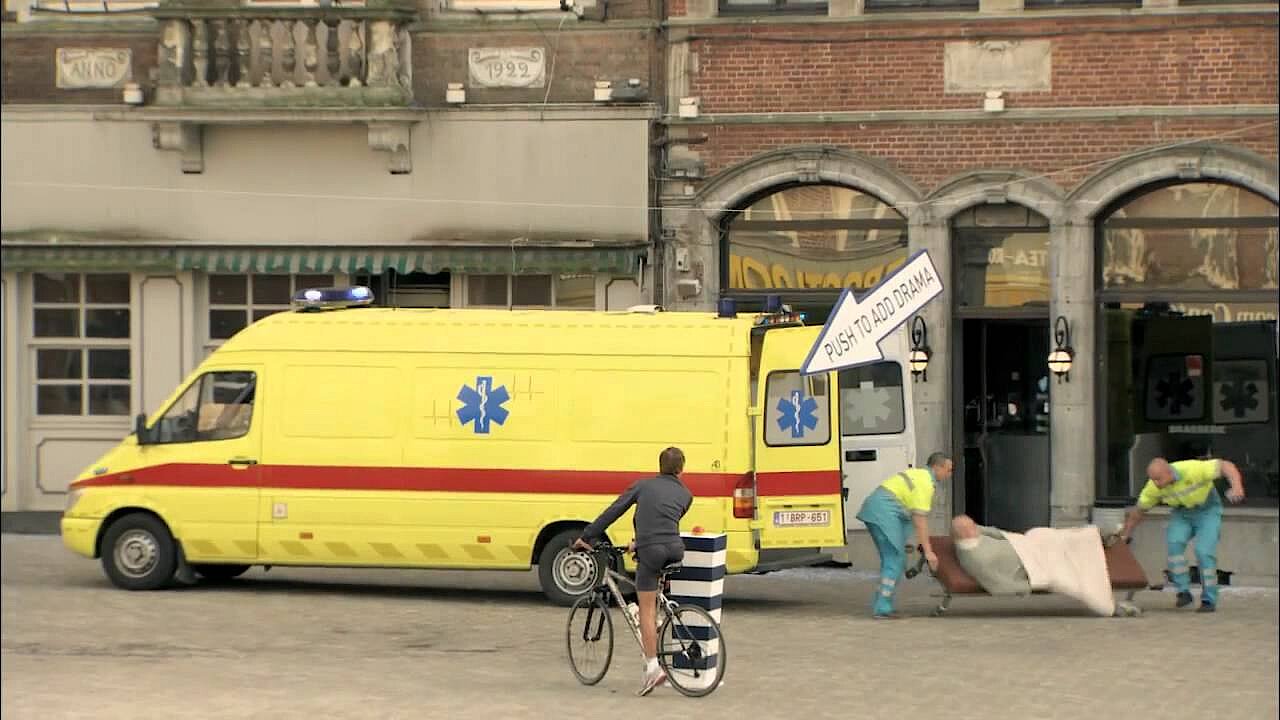
In 2012 the TV channel TNT was looking to attract attention to its entertainment program in Belgium and decided to adopt the guerilla marketing tactic of ambient advertising. This particular marketing ploy saw unknowing pedestrians become involved in a real town square spectacle. By pressing an ominous-looking red button they initiated a spectacle which offered nearly all the action and drama imaginable. The result was a completely flabbergasted mass of spectators looking on speechlessly, as an action-packed film scene unfolded before their eyes. This allowed TNT to create a video that up until now has been viewed over 54 million times on YouTube. And all this just to ‘add a bit of drama to everyday life’:
 To display this video, third-party cookies are required. You can access and change your cookie settings here.
 Betting company Paddy Power have become well-known for their social media activity, but over the years they have also been known to dabble in their fair share of guerilla advertising ploys. In 2005 they were forced to withdraw billboard adverts which depicted a parody of Leonardo da Vinci’s ‘Last Supper,’ wherein Jesus and his Apostles were seen playing poker. Then at the 2012 European Football Championships, they paid Danish footballer Nicklas Bendtner to celebrate a goal by lifting up his shirt to reveal the Paddy Power logo emblazoned across his underwear. While Bendtner received a €100,000 fine, the betting company gained huge publicity globally. Today, the video of the celebration has nearly 40,000 views on YouTube:
 To display this video, third-party cookies are required. You can access and change your cookie settings here.
 Charities have also been known to get involved in guerilla marketing. Summer 2016 saw AACD, a Brazilian charity for disabled children, launch a highly-emotional video campaign with the aim of increasing donations. Passersby on the street were invited to sit in a ‘Problem Saving Machine,’ basically a photo booth, and watch a short video. They would then see numerous AACD assisted children giving deeply-moving, but also very simple, tips on how to forget your problems and be happier all round. On YouTube alone the video has up to now been watched over 94,500 times and is a superb example of an authentic video campaign achieving viral status:
 To display this video, third-party cookies are required. You can access and change your cookie settings here.
 Two major beverage companies have succeeded in coming up with particularly original guerilla campaigns on social media. In Brazil, Heineken managed to generate one million likes on their Facebook page with their simple and humorous campaign ‘1 Like, 1 Balloon,’ wherein for every like they got they would inflate a balloon in their office. During the live video stream of the event, the original ‘like’ target of 10,000 was greatly exceeded, while at the same time the Heineken offices quickly filled with green balloons:
Heineken used Facebook, Coca-Cola used Twitter to launch its guerilla advertising campaign ‘Papertweetos’. During the 2011 Copa America, the company called on Argentinian fans to tweet best wishes to the national team. In total, around two million tweets were sent and these were subsequently printed out and used as confetti in the stadium:
 To display this video, third-party cookies are required. You can access and change your cookie settings here.
 T-Mobile combined a flash mob and the singing of some classic songs in their 2010 advert ‘Welcome Home.’ The video showed people entering the arrivals hall in Heathrow airport in London to be greeted by singers, dancers, and musicians, who proceeded to give them a spectacular welcome. The mix of great music, humorous antics, and fantastic reactions meant the video instantly went viral and today has amassed over 15 million views on YouTube
In 2015 passengers on the Stockholm underground were given the opportunity to have fun with interactive billboards from the Swedish furniture company IKEA. Finger touch technology enabled passersby to set a domino sequence in motion, which would then be displayed across multiple advertising displays along the platform. This was especially enjoyable for children, at whom the campaign was mostly directed, given that it promoted the new range of toys LATTJO. The campaign advert would go on to be watched over 23,500 times on YouTube:
 To display this video, third-party cookies are required. You can access and change your cookie settings here.
 It must, however, also be remembered that bad guerilla advertising can go viral just as quickly. For all the numerous examples of successful marketing campaigns out there, there are also some that have gone fatally wrong. The extent to which a guerilla marketing tactic can backfire is seen in the example of the 2007 campaign by the American broadcaster Adult Swim to promote their new cartoon series ‘Aqua Teen Hunger Force’. Adult Swim decided to place specially-made LED indicator lights around Boston’s streets. However, these were then falsely interpreted as being explosive devices and subsequently removed by local police. Not only this, but the artists responsible were arrested and the media corporation Turner was forced to pay two million dollars as compensation for having causing a city-wide bomb scare. Although the campaign can maybe be deemed a PR success, financially it was a disaster. Something similar also happened the previous year during the promo campaign for the film ‘Mission Possible III’. Around California, devices were placed in 4,500 newspaper boxes, which upon opening, were intended to play the movie’s theme song. Unfortunately, many of the devices failed to work, and once again, bomb disposal teams were called in to deal with the suspicious-looking objects. In 2005, the juice company Snapple also attracted negative publicity with its guerilla marketing attempt in New York. What started as an advertising ploy attempting to break the world record for the largest popsicle, in the summer heat, turned into a large molten pool of strawberry and kiwi sludge. The city cleaning department had to be called in, and instead of a world record, the company achieved nothing more than making a fool of itself.
The two sides of the guerilla war
If it is the case that a guerilla marketing tactic is original, unique, and surprising enough to remain in people’s memory, then this will increase not just the interest of certain target audiences, but also the appeal and popularity of a brand, too. If it manages to acquire event-like status, i.e. by incorporating passersby, it can quickly become a viral hit. As the above examples have demonstrated, a longer life on the internet and on social media can mean reaching an audience of millions. The biggest advantage of successful guerilla marketing, then, is a potential for a high return on investment (ROI) with relatively low overheads. This is difficult to achieve via print, TV, and outdoor advertising. Consequently, anyone who through limited means and guerilla advertising succeeds in reaching a large audience has the ability to bring their company forward leaps and bounds. But bear in mind that these examples also demonstrate that not every radical advertising idea is destined to be a success – and in some cases can even cause considerable damage. Given that viral activity cannot be controlled, concepts and measures must be well planned and implemented. The expense and effort involved must be worth it, regardless if it is a short or long campaign. And if it is the case that the guerilla marketing does backfire, e.g. by angering or confusing customers, or causing the police to be called, then there is the danger of damage to the company and brand image, as well as expensive compensation or amendment costs. One other possible peril is that the guerilla action may cause the actual product and accompanying advert to be misinterpreted or possibly even forgotten. This is of course quite disastrous, and also contradictory to the whole aim of the campaign. Nevertheless, an assessment of the potential risks still shows that guerilla marketing is an exciting and demanding challenge, requiring unusual and creative ideas alongside great courage. And the likelihood that you do succeed in making your product unforgettable is still quite high. The photos from some of the best campaigns speak for themselves; here you will find a compilation of 100 creative and enjoyable guerilla advertising campaigns.