Monero (XMR) – the anonymous cryptocurrency

Nowadays, there are so many altcoins on the cryptocurrency market that it is easy to lose track of them. Although many still consider blockchain-based digital currencies to be an incomprehensible gimmick, others have turned this business with speculation objects into a major source of income. There are other useful digital currencies on the trading exchange besides the major flagship Bitcoin. One of them is Monero. This cryptocurrency, which is always near the top but never quite at the top, poses no threat to Bitcoin or Ethereum. It also does not provide the advantage of a high exchange rate. So what sets Monero coins apart from other cryptocurrencies?
What is Monero?
Monero (traded under the symbol XMR) was created in 2014 through a fork in the cryptocurrency Bytecoin and is thus open source like its predecessor. Developed in 2012, Bytecoin was the first cryptocurrency to use CryptoNote (a protocol designed to prevent sender identification). As a result, Monero offers a higher degree of privacy than many other cryptocurrencies. Bitcoin, for example, is commonly described as an anonymous currency. However, this is not quite accurate. The basic principle of Bitcoin is that every transfer can be publicly viewed by anyone in the ledger. It is impossible to delete transactions and their details from the blockchain afterwards.
Bitcoin’s transparency is intended to guarantee security. Nevertheless, only the personal Bitcoin address is displayed initially. The true identity can only be determined if the person behind the address can be identified during a transaction. However, it then becomes possible to determine which transfers the person was involved in. Monero takes a different approach to protecting the privacy of its users.
When using Bitcoin, it is recommended to change your personal Bitcoin address regularly. This makes it much more difficult to track any transactions and the balance.
Monero is also based on the idea of a blockchain. It uses a long hash chain which is regularly extended through transactions. This requires complex calculations which are then executed by miners. Monero is trying to set itself apart from its major competitors in this area since this should make mining much more efficient. Efficiency and privacy are their driving factors. Even the petition platform Change.org has its own Monero miner now. Users can freely download a screensaver which will mine XMR through their computers on behalf of the organization.
Monero has one of the highest degrees of anonymity among altcoins. This is why XMR is being used more and more among criminals. However, this does not mean that Monero itself is illegal. Its high degree of security can also be used to protect your data from cybercriminals or oppressive governments.
How does privacy work with Monero?
Monero is based on CryptoNote, which is a privacy protocol for cryptocurrencies. To prevent the transaction sender from being traceable, their identity must be hidden. This means concealing not only the actual person behind the public key but also their entire presence within the blockchain. CryptoNote groups the sender with several other senders. This makes it impossible to tell who transferred which amount. Other cryptocurrencies work with a pair of public and private keys.
Encryptions cannot ever guarantee absolute security. There are already cryptographic researchers investigating how to trace Monero transfers back to their source. They have been successful to some extent. Whenever Monero tries to improve its encryption, the other side tries to crack it again.
Ring Signature
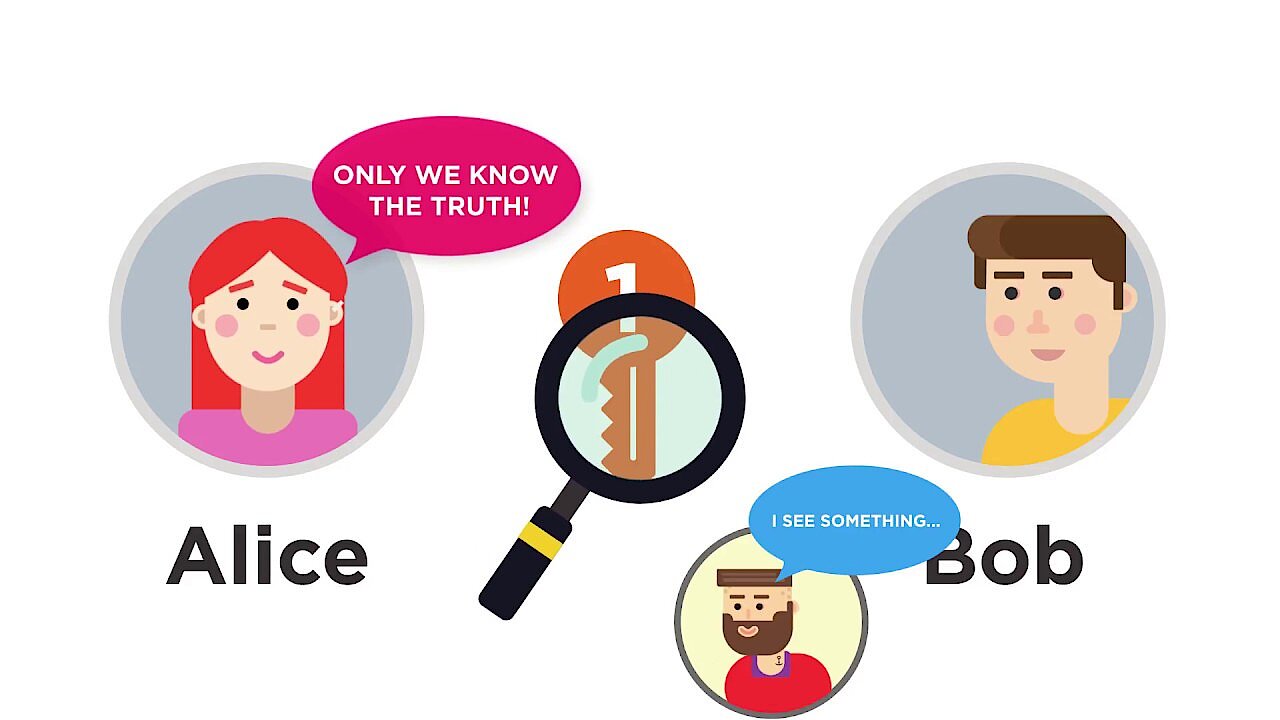
CryptoNote and Monero use a ring signature. In the group of senders, each sender has both a public and private key. Only one member of the group actually endorses the transaction, but this group member remains anonymous. All possible senders referenced in the transaction are equally probable. The actual sender uses a unique key that is automatically generated by their Monero wallet. The other members of the group are automatically selected from the blockchain and used as camouflage. The issue is that since the transaction is not publicly viewable, Monero coins could theoretically be sent twice. No one would be able to prove that the money had already been transferred.
When it comes to transactions, Monero is more about outputs than monetary values. For example, if person A sends XMR to person B, a new output is created in the wallet of person B that has a value of 5 XMR. If person B then wants to send 4 XMR to person C, two new outputs are created: one in the wallet of person C and one for person B themselves as change.
This is why Monero has implemented key images. Key images are cryptographic keys which are unique for each transaction. These keys cannot be faked and are not traceable back to the sender. Key images allow miners to verify that a transaction has not already taken place since there would then be two identical key images in the blockchain.
It is possible to voluntarily disclose one's identity as the sender in order to appear more trustworthy.
 To display this video, third-party cookies are required. You can access and change your cookie settings here.
 Stealth Address
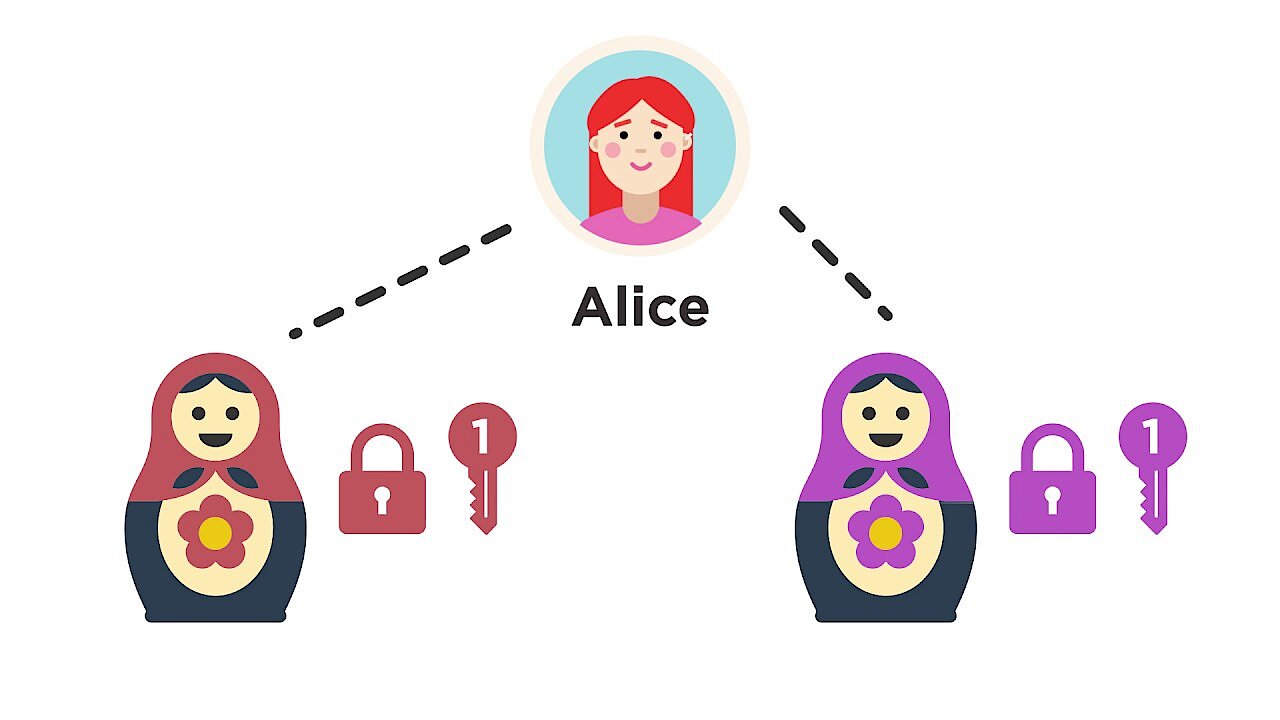
Monero does not just ensure the privacy of the sender. The recipient can also remain anonymous by using stealth addresses. The sender does not transfer the Monero coins directly to the recipient. Instead, they send it into the blockchain without an actual recipient. For identification purposes, a key is generated from the recipient’s two keys (i.e. the spend key and view key) as well as random data. The recipient, and only the recipient, can then search for the transfer using the view key in the blockchain and add it to their wallet.
 To display this video, third-party cookies are required. You can access and change your cookie settings here.
 RingCT
Additional protection is provided with regard to the value of a transaction. Monero uses Ring Confidential Transactions (or RingCT for short) for this purpose. In this case, only just enough information about the transfer is disclosed for a miner to be able to confirm whether the sender has the correct value. This is based on the basic idea that whatever goes out must come back. Miners can use the sums to check whether everything is as it should be.
Kovri
There is one final mechanism which is used to ensure a user’s anonymity as much as possible. It is called Kovri. It is not a part of Monero’s blockchain, but it is a program developed by the same people. Kovri ensures that IP addresses are not visible to third parties on the network. To do this, an anonymous layer for accessing the internet is used. This is based on the open source technology I2P (Invisible Internet Project). The Monero network and its nodes function normally over the internet. Therefore, it is possible to access IP addresses at the nodes. Kovri relies on Garlic routing, which is a more secure version of the better-known Onion routing. Multiple transfers are encrypted together and then sent through tunnels.
Kovri is still in the development phase. However, the software will be permanently integrated into the Monero network in the future.
 To display this video, third-party cookies are required. You can access and change your cookie settings here.
 How do you mine Monero coins?
Anyone who has mined Bitcoins before has also heard about mining farms which consume a lot of power and use specialized hardware with very powerful GPUs (or ASICs). Cracking these mathematical puzzles for Bitcoin requires more and more effort. Monero, on the other hand, has taken a completely different approach which allows average users to use a standard home PC to effectively mine the cryptocurrency. Monero uses a proof-of-work algorithm to verify blocks. Unlike other cryptocurrencies which use SHA256 or scrypt, Monero uses CryptoNight.
The CryptoNight algorithm is known for relying on memory rather than computing power. Therefore, having a strong CPU is as effective as focusing on the computing power of the graphics card. The required hardware can be found in any of the latest home PCs. This means that average users can participate in mining. The mining is decentralized and is thus not controlled by the major players. However, its simplicity also attracts criminals. It is possible to use a website’s JavaScript to hijack a website visitor’s computer and use its computing power to mine XMR without the user’s knowledge.
In addition to the PC, you need a software program. To choose the best software, you need to consider what hardware you are using and whether you want to use your computer’s CPU or its graphics card. There are programs which work for a variety of configurations. It is also recommended to join a mining pool. This is a combination of multiple miners.
Mining is more effective when resources are pooled over a network so the profits are generally equally distributed among all participants. Furthermore, a mining program is usually directly linked to one's own wallet. Thus, profits can be directly transferred to the right wallet.
Currently, a new block is generated approximately every two minutes.
The number of Bitcoins is finite. At some point all Bitcoins will be in circulation. This is not the case with Monero. Monero plans to keep increasing the number of XMRs. However, the difficulty associated with mining new coins continuously increases while mining. Simultaneously, the reward for miners decreases until it reaches a limit of 0.6 XMR per block. The reward for mining halts at this value. Due to the increasing degree of difficulty, it is assumed that the creation of new coins will approach zero. It is believed that a balance is maintained with the user generating new coins and losing existing XMR creating a stable currency.
 To display this video, third-party cookies are required. You can access and change your cookie settings here.
 Before you start mining to make money, be sure to check out your tax obligations!
How to buy Monero: a guide
If you want to work with Monero, whether you want to use the cryptocurrency as a money substitute or just as a speculation object, you need to know how to obtain the altcoins. Needless to say, you could just start mining, but you would have to be patient because your income would be steady but low. You can get Monero coins faster by buying them, in other words exchanging for them. You spend fiat money (e.g. euros) to receive the cryptocurrency.
Before you can buy Monero, you will need a wallet to store the crypto coins. Every digital currency has a wallet. All your coins are stored on this private account. The wallet provides the address which you need to have XMR sent to you. You will also receive a private key (for purely online transactions). This is a password for logging into your digital wallet. This key is extremely important. Unlike with other web services, you cannot request for the password to be resent if you forget it. If you lose your private key, you will no longer be able to access your Monero coins. The money will be gone forever.
A popular provider of Monero wallets is My Monero. This wallet operates entirely online. Creating an account takes just a few clicks, and you do not have to download anything. This option is strongly recommended for beginners.
Keep in mind that when using an online service, you are putting your money in someone else’s hands. In the past, various providers (specifically for other cryptocurrencies) have experienced security breaches. If cybercriminals hijack the service, your money will be at risk. If you plan to deal with large amounts of money in the form of XMR, you should not put too many Monero coins in your online wallet. Instead, you can store Monero directly on your computer or smartphone.
For another method, you can check the Monero website. Here you can download the program Monero GUI which can be used with various operating systems. You should also exercise caution with the software when it comes to security. Choose a highly secure password and try to prevent criminals from accessing your computer to the best of your ability. Since Monero coins for this wallet type are not stored in the cloud but are instead stored directly on your device, the security of your hardware is also important. If your laptop is stolen or your hard drive dies, your money will be lost.
If you choose Monero's official program, you will also become a full node. This means that the entire Monero blockchain is stored on your device. This requires a lot of storage space and bandwidth. That is why many users use a virtual private server (VPS). There are already hardware wallets for other cryptocurrencies. At the moment, there is no specific solution available for Monero, but the manufacturer Ledger is busy working on one. This type of wallet is a small device with a secure chip which you can connect to your PC or laptop via USB to transfer coins.
If you already have a digital wallet for XMR, you can start buying Monero. To do this, you must go to an exchange service. There are quite a few to choose from. CoinMarketCap, an analysis website for everything to do with cryptocurrencies, lists almost 100 different websites. On this list you can see an important piece of information: which currencies you can exchange for Monero. While some platforms allow you to exchange euros or US dollars, others require you to exchange Bitcoins. This means that you must first purchase Bitcoins, if you do not already have coins in this cryptocurrency, before you can purchase Monero coins.
To choose the best exchange service for your situation, you need to consider various factors: Which cryptocurrencies and fiat currencies can be exchanged? How secure is the platform? The country in which the company is located may also be a factor. And finally, how high are the fees? Most marketplaces keep a percentage of the transaction to cover their own costs.
If you would like to exchange dollars directly for XMR, there you can use marketplaces like the well-known Kraken. This website allows you to work with Monero along with the other major cryptocurrencies: Bitcoin and Bitcoin Cash, Ethereum and Ethereum Classic, Litecoin, Dash, EOS and even Dogecoin. To use it, you must first create an account on the platform. The second step involves a bit more effort as Kraken requires verification before you can start exchanging currencies. This is to guarantee the security of everyone involved.
There are several verification tiers. The first tier defines the limits of what you can do. To purchase Monero, you will need at least Tier 2 verification and to provide your name, date of birth, phone number and address. The verification process may take several days. You can then transfer dollars to your Kraken account via a domestic wire and ACH transfers.
You can then use this money to buy Monero. You will then have Monero coins in your exchange account. From there you can and should transfer the coins to your wallet. To do this, enter the address of your digital wallet on the exchange platform and initiate a payout.