
Bare metal server

We are currently seeing IT infrastructures shifting into the cloud as an increasing number of businesses choose to outsource their hardware resources and use a more flexible rental model. Specialized web hosts offer a diverse range of models for private users and businesses alike, often establishing them under new terms – but what lies behind it is not always such an innovative concept.
More often than not, creative ideas coming out of the hosting sector might sound good in theory, but in practice leave users feeling perplexed. However, one of the marketing terms that gained greater popularity in the course of ‘cloudification’ is the concept of the bare metal server. In this article, we explain the idea behind the bare metal server and what projects are suited to this web-hosting product.
- Dedicated enterprise hardware
- Configurable hardware equipment
- ISO-certified data centers
What is a bare metal server?
The term ‘bare metal’ suggests that this product is related to the physical side of web hosting – the hardware. In principle, a bare metal server is the very same concept as what was formerly known as a dedicated server, also known as a ‘single tenant server’. This is a computer in a hosting provider’s data center, whose resources are available to a single customer. This distances bare metal from traditional shared hosting products such as the virtual server, where multiple web projects are hosted within separate virtual machines on the same hardware basis.
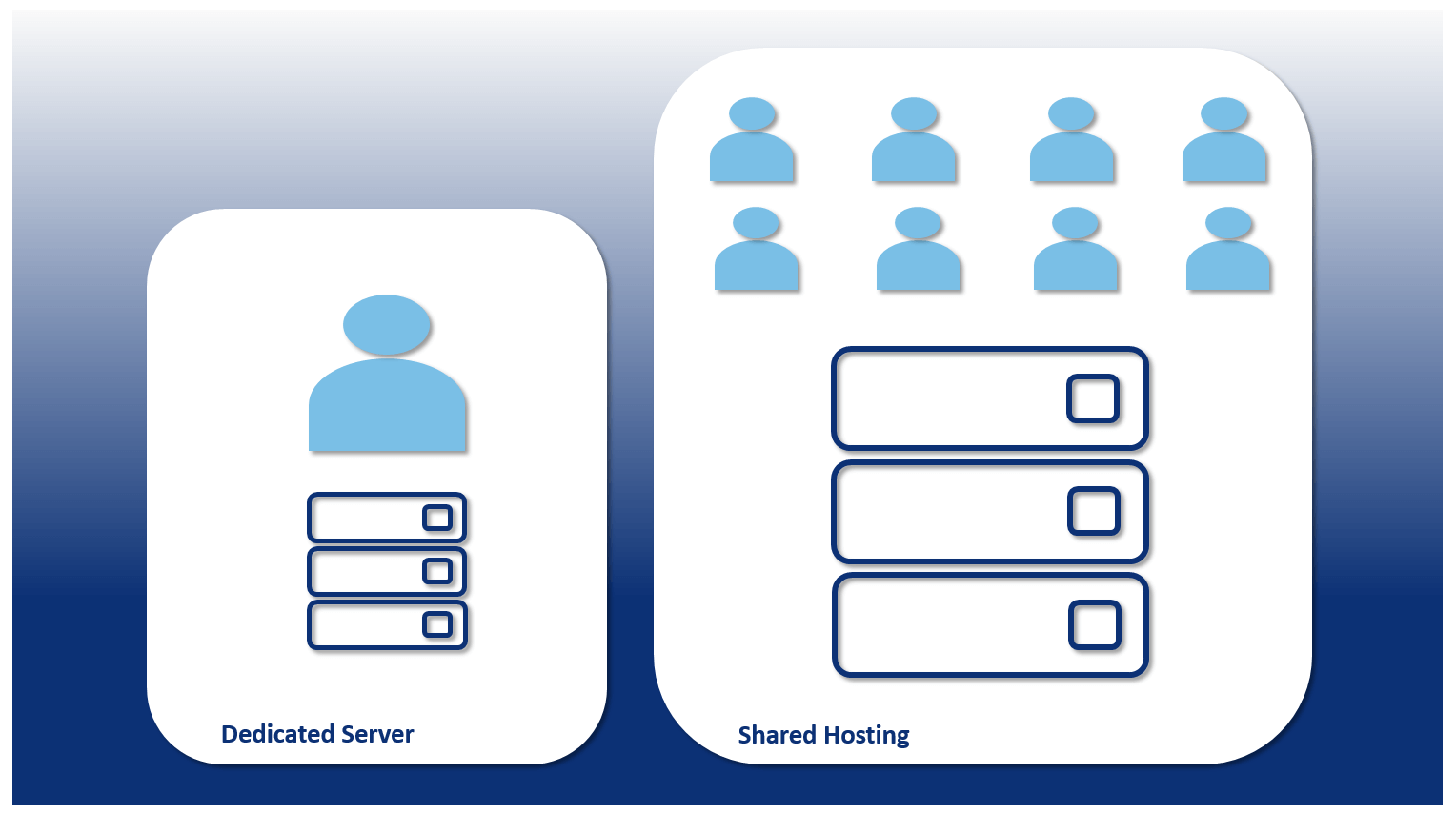
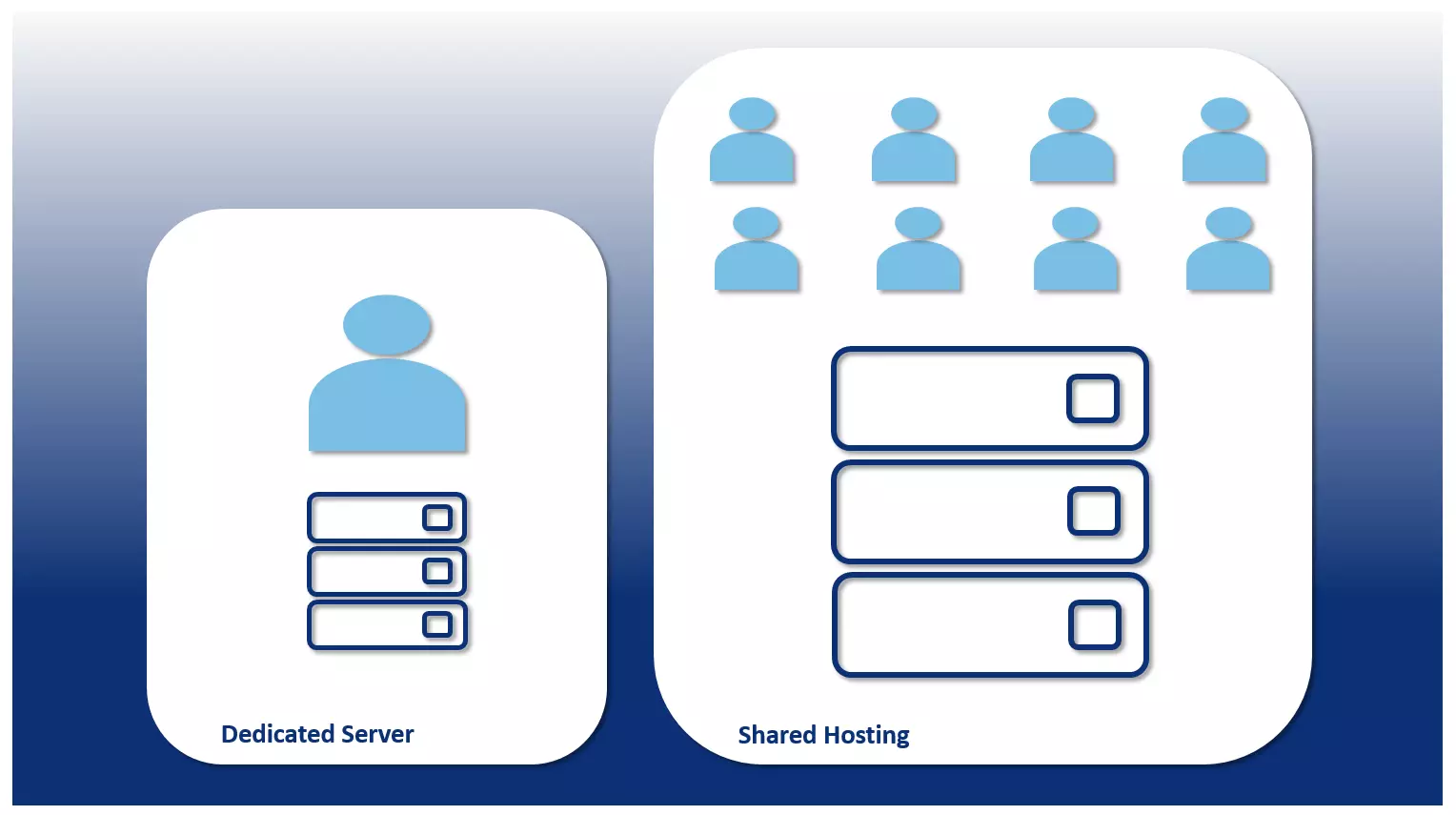
There are many advantages to dedicated web hosting:
- Root access: Unlike multi-tenant servers, bare metal servers are offered along with root access. With shared hosting, it is generally undesirable for a user to be able to make changes in the root directory of the shared hosting platform. Administration is therefore limited to project folders. The bare metal server, on the other hand, offers unlimited administration options. This grants users the greatest possible freedom when installing software components and server configuration.
- Dedicated hardware: Virtual machines on shared hosting platforms are largely independent of each other. However, there is a chance that this hosting concept could theoretically cause a website to be affected by non-responding scripts or vulnerabilities in other web projects on the same physical machine. Bare metal servers exclude disturbances of the performance and stability of a virtual server caused by neighboring web projects – an effect known as the noisy neighbor effect. Only the server’s tenant has access to hardware resources such as hard disk space, CPU, and RAM.
Bare metal servers are primarily suited to a demanding web project with a continually high requirement for resources. Projects that need to meet specific compliance requirements should also be hosted on dedicated hardware.
Bare metal server structure
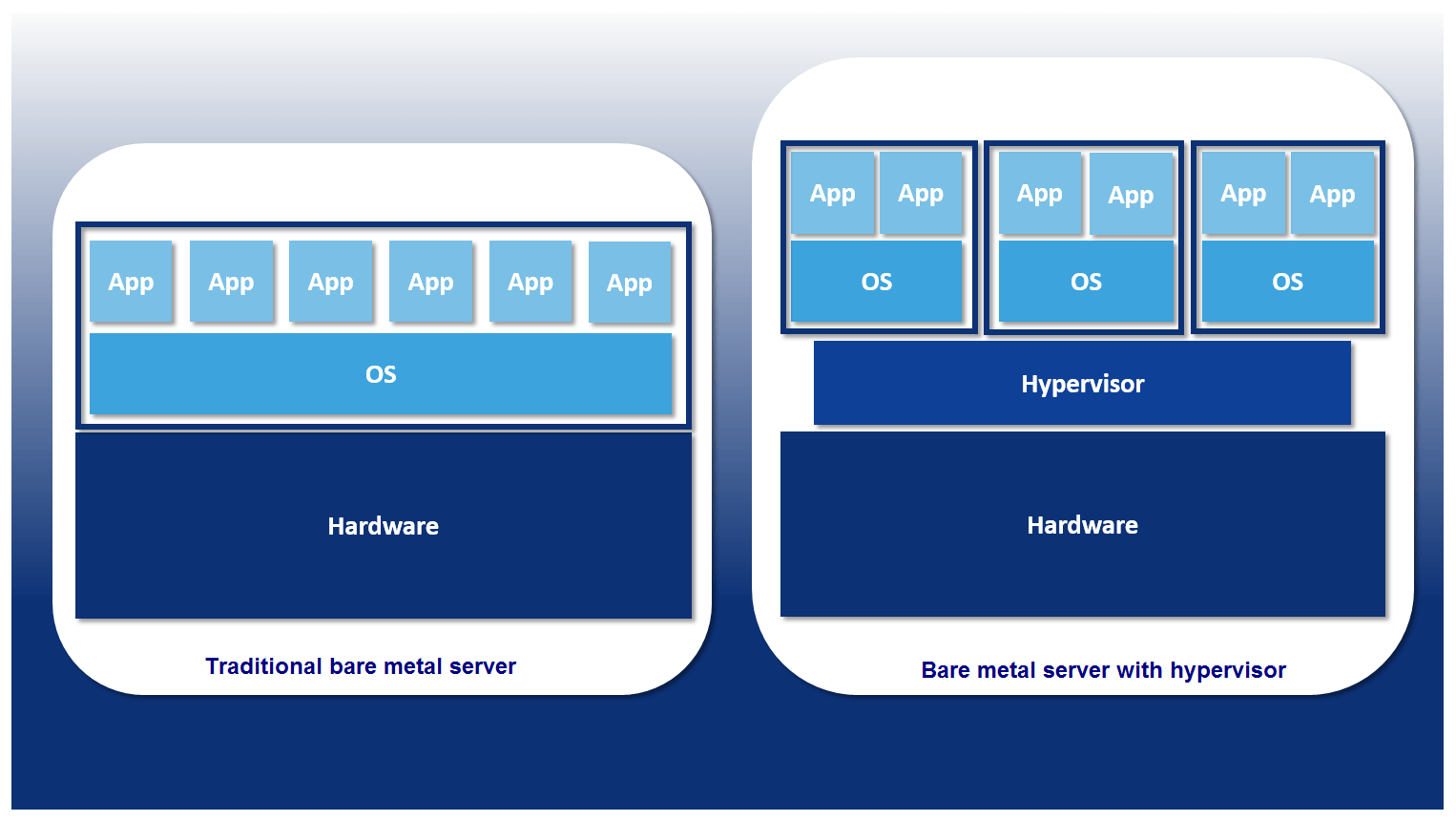
The structure of a bare metal server is geared towards the user’s specific requirements. Essentially, there are two varieties: traditional bare metal servers and bare metal servers with hypervisor.
A hypervisor (also known as a virtual machine monitor or VMM) is a piece of software that enables the use of guest systems called virtual machines (VMs). Depending on the type of hypervisor, the software is either based on an operating system (a hosted hypervisor) or on the hardware for a native hypervisor. When it comes to bare metal servers, however, native hypervisors are used. The hypervisor communicates directly with the physical machine without the need for an intermediate server operating system.
- Traditional bare metal server: Traditional bare metal servers are dedicated servers where the user-administered operating system (OS) – such as Windows Server, Ubuntu, SUSE, Red Hat, Debian, or CentOS – relies on the hardware. All user applications then run directly on the operating system. Traditional bare metal servers include both dedicated rental servers and self-hosted servers for companies within their own premises.
- Bare metal servers with hypervisors: Bare metal servers with hypervisors can also be used in a cloud environment. This model is based directly on the hardware (native hypervisor) and provides users with an administration interface for managing virtual machines. User applications run separately in virtualized guest operating systems, rather than directly on the hypervisor. Common hypervisors are KVM, the native virtualization feature of the Linux kernel, Microsoft Hyper-V, vSphere from VMware, or Citrix XenServer.
The following graphic shows a schematic representation of both concepts:
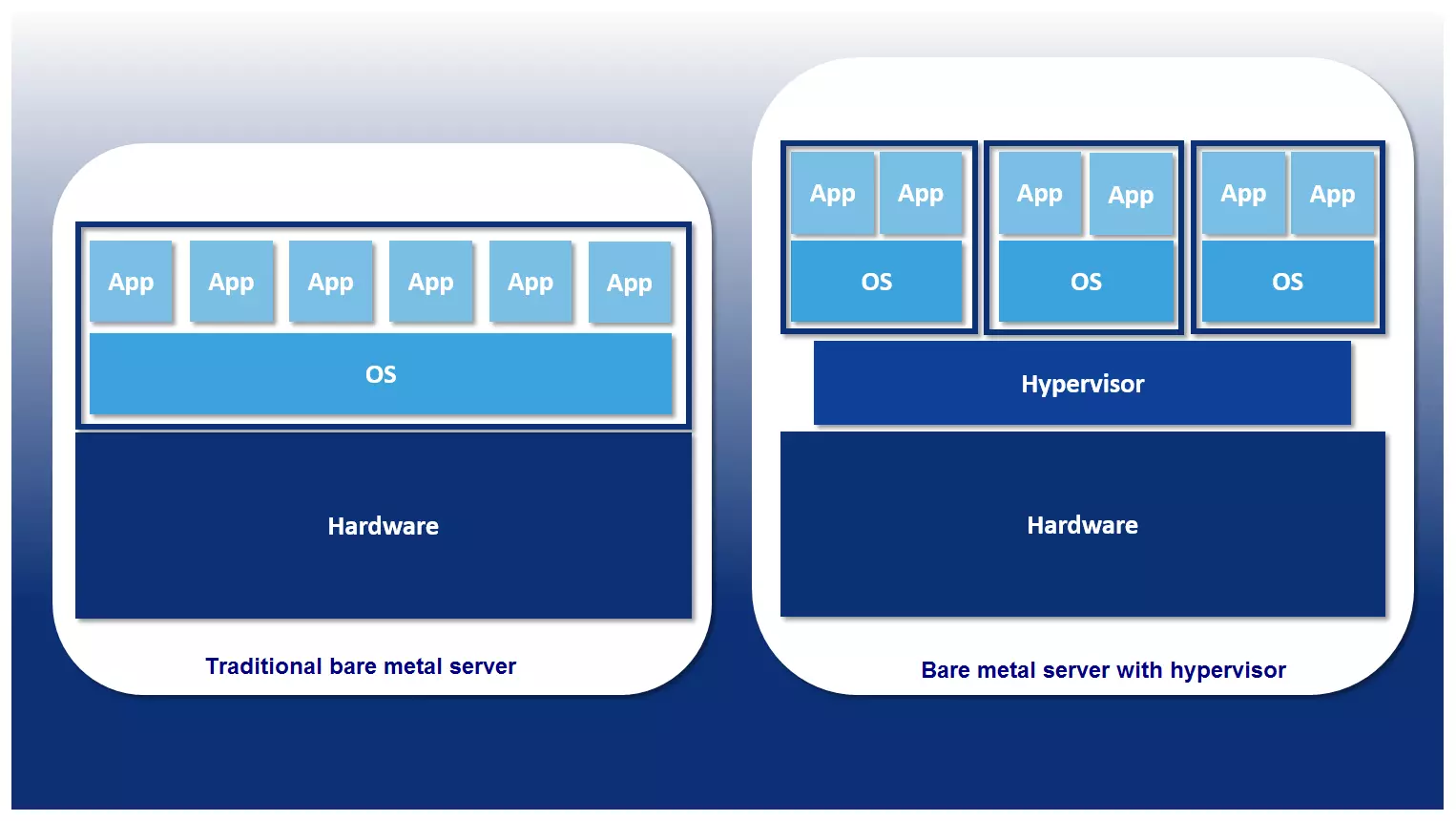
When the hardware resources of several dedicated servers are available to the user as part of a bare metal hosting, this is known as a bare metal cloud. The hosting product, bare metal, grants users extensive access rights to the server; while a shared hosting customer is limited to controlling a single virtual machine, the user-managed software component (OS or hypervisor) of the bare metal server relies on the hardware. There is therefore no abstract level managed by the host between the hardware resources of the server and the user.
The most important product in the market of bare metal devices is the hypervisor-based usage scenario. Through the user-driven virtualization software, this hosting concept allows fast, simple supply of virtual machines. A bare metal server with a hypervisor therefore offers a flexible alternative to the traditional dedicated server, which is often associated with time-consuming manual configuration.
What sort of projects are bare metal hosting products best suited to?
The bare metal server is primarily geared towards users that want to implement sophisticated web projects on a customized hosting platform. A server with dedicated hardware is recommended for online shops and websites with consistently high traffic. However, bare metal servers are also the preferred hosts for database and application servers with specific security requirements.
Root access allows individual configuration without compromise. Depending on the project in question, users can decide whether they want to allocate the server's hardware resources to a single operating system or whether they want to distribute them across multiple systems using self-managed virtualization software.
Like shared hosting packages, there are also different kinds of bare metal server available that offer various levels of performance. However, while the traditional virtual server primarily serves the mid-range price segment, the cost of providing dedicated hardware is usually reflected in higher costs. Bare metal is aimed at business customers and professional web projects. Individuals who run hobby websites or semi-professional web shops, on the other hand, are usually better off using shared hosting.
A root server offers experienced administrators extensive options to adjust software components to individual demands. This requires sound specialist knowledge. Therefore, website operators who are unfamiliar with the technical side of web hosting should consider managed hosting instead of a bare metal server, as this allows the provider to take over the administration of the hosting platform.
Advantages and disadvantages of bare metal servers at a glance
If you’re not sure whether the ‘bare metal’ hosting model is the optimal solution for your web project, consider this table of pros and cons:
| Pros | Cons | |
|---|---|---|
| ✓ The server’s dedicated hardware is exclusively available to one user | ✗ Sound knowledge of server administration required | |
| ✓ Root access enables individual implementation | ✗ Higher cost than other hosting products | |
| ✓ Operation of multiple guest systems using a user-managed native hypervisor |