

Website under construction? How to create a coming soon website

If your website is still under construction, your domain can still be online and offer content. A website coming soon page promotes your upcoming web presence. A website under construction message is also helpful for maintenance work. Find out here what to consider when designing and setting up these types of pages.
- Free Wildcard SSL for safer data transfers
- Free private registration for more privacy
- Free Domain Connect for easy DNS setup
What is the purpose of a coming soon website?
It’s not unusual for weeks or even months to pass between registering a domain and launching a website. Still, it pays to submit your URL to Google for indexing and to keep visitors informed with a coming soon page. Whether you’re preparing an online store, a blog, or a company site, this page builds anticipation, boosts visibility, and gives users a reason to return.
If a website is not under construction but rather being remodeled, the homepage will typically display an “under construction” message. This page is similar in structure and purpose to a coming soon page but has a different focus. Instead of sparking curiosity, it primarily informs existing customers why the site is temporarily unavailable and how long the interruption will last.
| Criterion | Coming soon website | Under construction website |
|---|---|---|
| Goal |
|
|
| Content |
|
|
| SEO |
|
|
| Duration |
|
|
| Marketing |
|
|
How to set up a website under construction
If you are building a completely new online presence, you can simply create a new page for the coming soon website, design it, and set it as the homepage. Once all the content is ready, replace the page with the actual homepage.
The potential of a coming soon website is often underused. Simply displaying “website under construction” or “a new website is coming soon” with a stock construction image isn’t wrong—but it doesn’t spark curiosity or give visitors a reason to return. It also wastes a valuable chance to introduce yourself in advance. Below, you’ll find an overview of the most effective content and elements for coming soon pages.
Introduce yourself or your vision
What will happen on your website in the future? The information you provide here doesn’t have to be as detailed as on an “About Me” or “About Us” page, but it should give an idea of what users can expect here in the future.
When your site is “under construction,” give visitors a reason why. Maybe it’s a website relaunch —or maybe you’re just clearing out stock for the new season. The latter adds a fun, playful twist that explains the downtime in a charming way, even if it’s not the actual cause.
Discover your new business name, check its availability, and claim it for yourself!
- Name suggestions
- Domain check
- For any industry
Establish your corporate identity
At least include your logo or company name, even if your page is under construction. Ideally, you already have colors, fonts, and other design elements determined that you can use on the coming soon page. This way, you can convey a visual impression of your future web presence.
Inform visitors when the construction will end
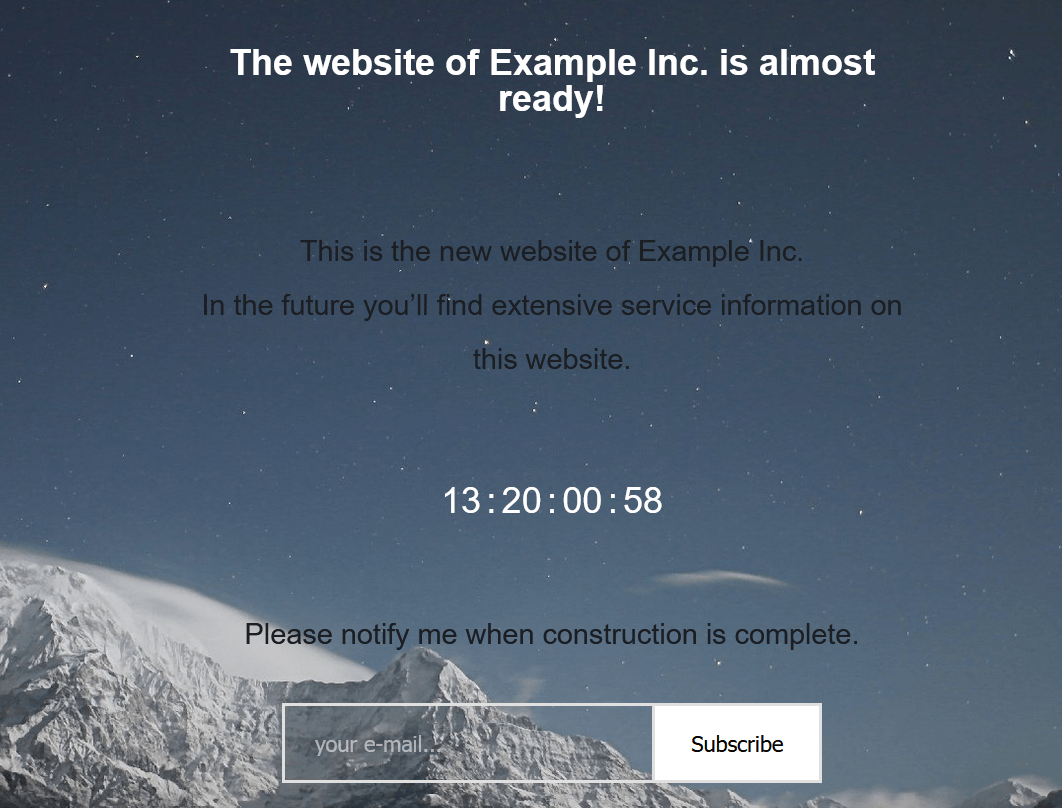
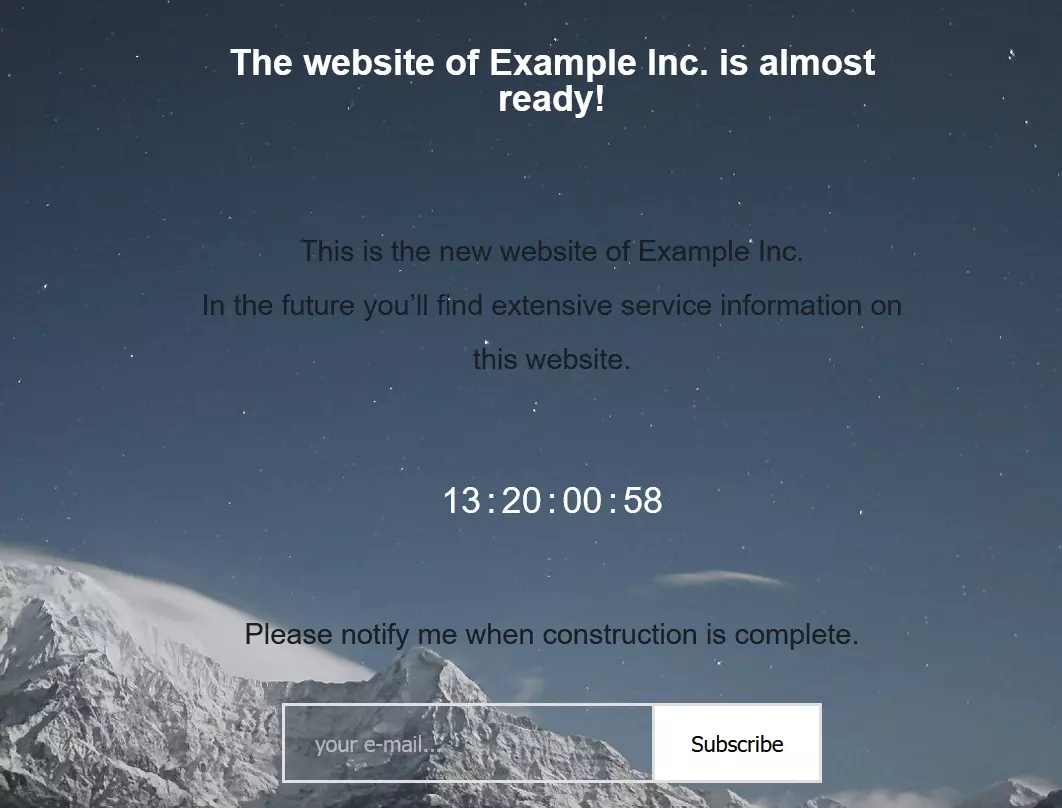
Many sites use a countdown to show when they’ll be back online. The tricky part? You need to stick to the deadline—or risk letting visitors down. A better approach is to give a looser timeframe, like “in August,” “this fall,” or “end of the year,” so you have some wiggle room. You can also offer an email alert so users know the moment your website is live again.
Integrate current contact options
Link to an existing contact form, provide an email address or phone number, and, if applicable, include links to social media profiles (provided there is already content to see).
Collect newsletter subscribers
Also popular on coming soon pages is the integration of newsletter sign-ups, depending on the website type, combined with the promise of discounts for first-time subscribers. You might even send these out before the launch or during the construction phase. Or you can use the launch for an initial mailing.
The right style for your website coming soon page
A memorable “website under construction” page isn’t just about features and content—it also comes down to how it’s written. Depending on your brand voice and target audience, the style can be lighthearted and playful or more straightforward and informative. Ideally, it should tie into your website’s theme—for example, an online store could use the metaphor of a warehouse being cleared out.
If you sell furniture online, you could describe it creatively as: “Our interior designer is remeasuring our online store to make sure all the furniture really fits.” If you run a restaurant, fitting alternatives might be: “We’re currently rewriting our menu” or “We’re still perfecting the tastiest pasta creations north of Italy, so please be patient a little longer.”
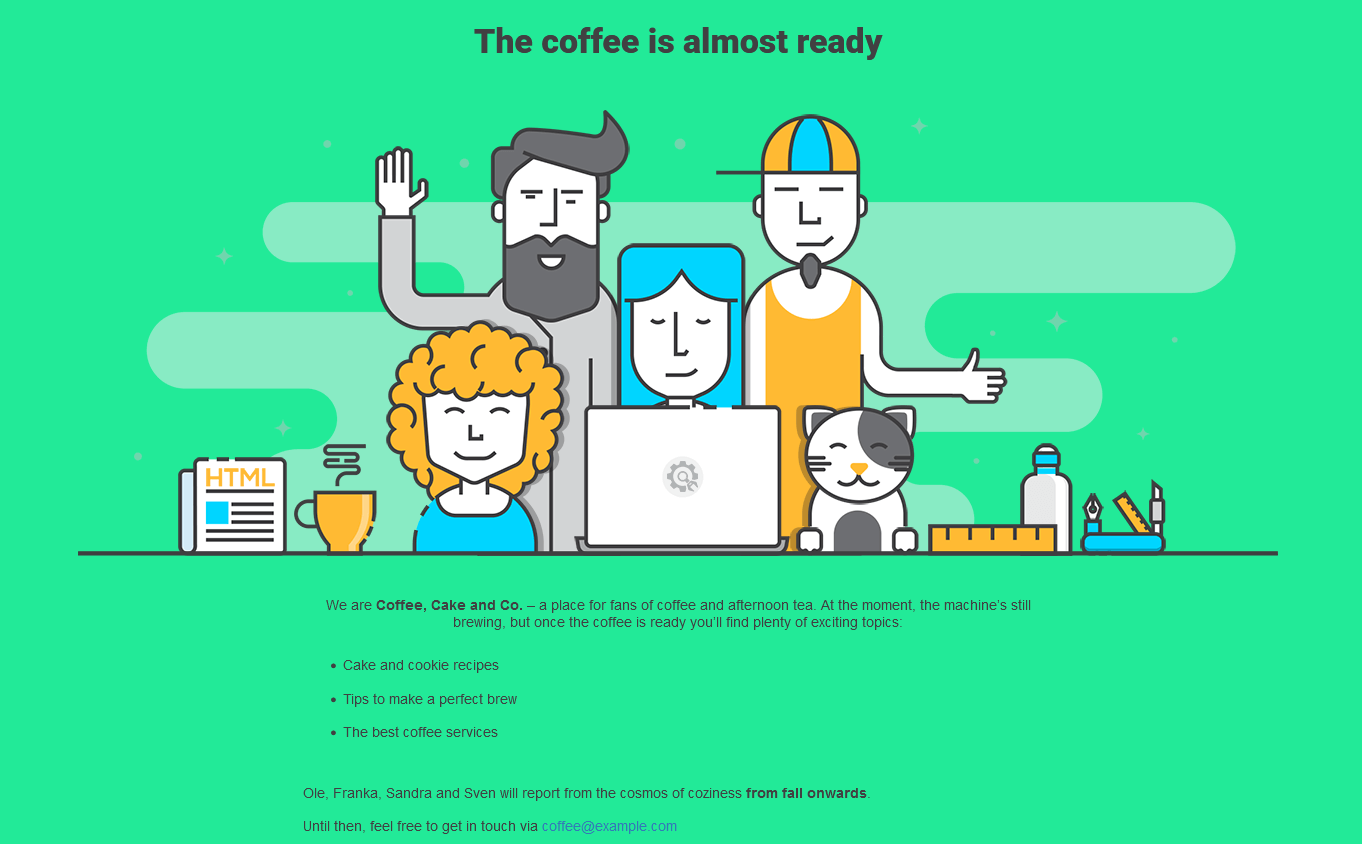
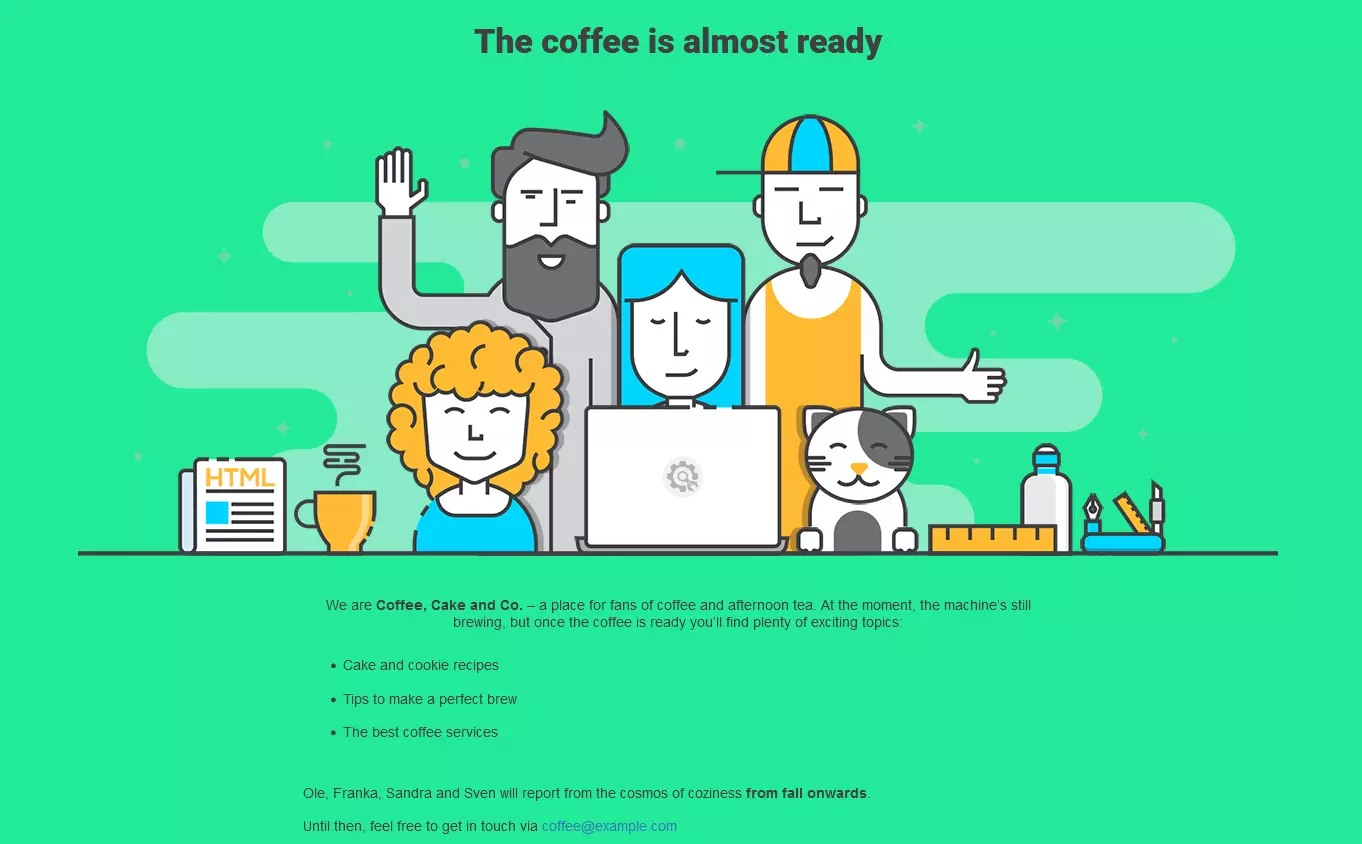
3 examples of a successful coming soon website
Humorous company introduction
Countdown & newsletter
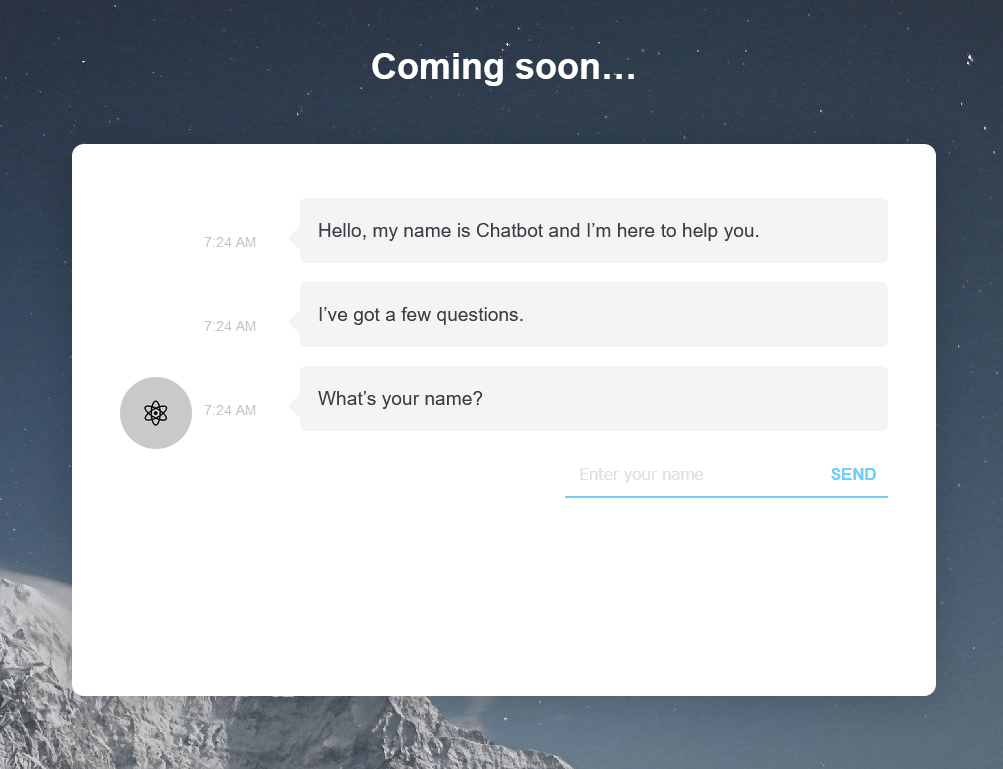
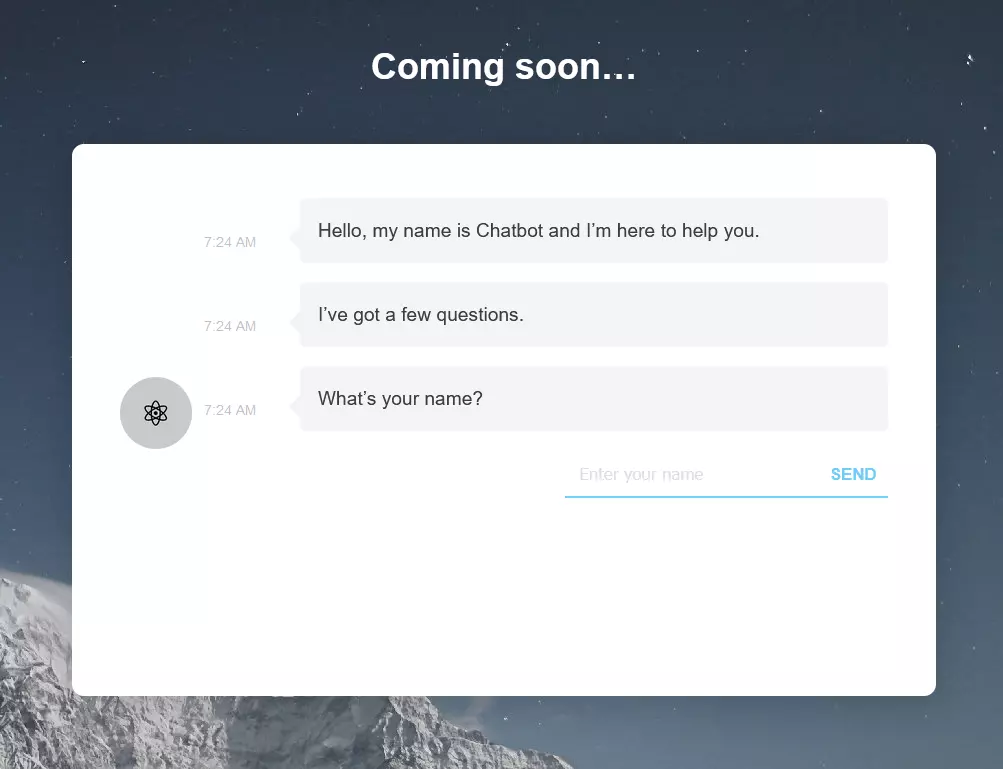
Chatbot
- Easily get your business online
- Integrated online booking tools
- Professional templates & 17,000 stock images
How long can a website be under construction?
If you are launching a completely new website, you can theoretically keep the coming soon page active indefinitely. For an under construction page, however, the situation is different: keep it as short as possible, ideally no longer than a few days or a week. Whatever timeline you communicate, it’s important to stick to it—otherwise, you risk losing credibility with your visitors.
What should you keep in mind about SEO for under construction websites?
While SEO doesn’t play a major role for a coming soon page—since Google hasn’t yet indexed much content—it is far more critical for a website under construction. If Google’s crawler visits your site during maintenance and only finds a placeholder page, this can be interpreted as a negative signal and lead to a ranking downgrade. Repeated or prolonged maintenance phases can amplify this effect. That’s why it’s essential to keep such phases as short as possible to reduce the risk of crawlers arriving at the wrong time.