

Shopify alternatives

Online stores are now part of our day-to-day shopping behaviors. Never has it been so easy to order goods online. Just open your laptop or smartphone, add a product to the virtual basket and hit the order button. A few days later, the delivery service comes knocking on your door.
A growing number of retailers are catching up with the trend and creating their own online stores. Once the decision has been made, the question of which is the right platform arises. Shopify has emerged as a beginner-friendly option. But there are some good free alternatives to Shopify, and some fee-based options. Find out what the best Shopify alternatives are in this guide.
- Simple registration
- Premium TLDs at great prices
- 24/7 personal consultant included
- Free privacy protection for eligible domains
E-commerce software: Shopify alternatives
Shopify scores because of ease-of-use: The software makes it simple to launch a web shop online in just a few steps. Shopify takes care of all the trimmings, such as web hosting and design templates, for a monthly fixed price and transaction fees based on percentages. The page itself can be set up using drag-and-drop without any programming knowledge. The e-commerce platform is a great place to start when you’re launching your own shop but don’t know how to program. However, there are numerous alternatives to Shopify that each have their advantages and may be even more suitable for you.
The most important Shopify alternatives include:
- BigCommerce
- Shopware
- WooCommerce
Each has different strengths and weaknesses. Read on to find out more.
- Get started with stunning designs
- Grow with advanced marketing and admin tools
- Sell on social and online marketplaces
BigCommerce
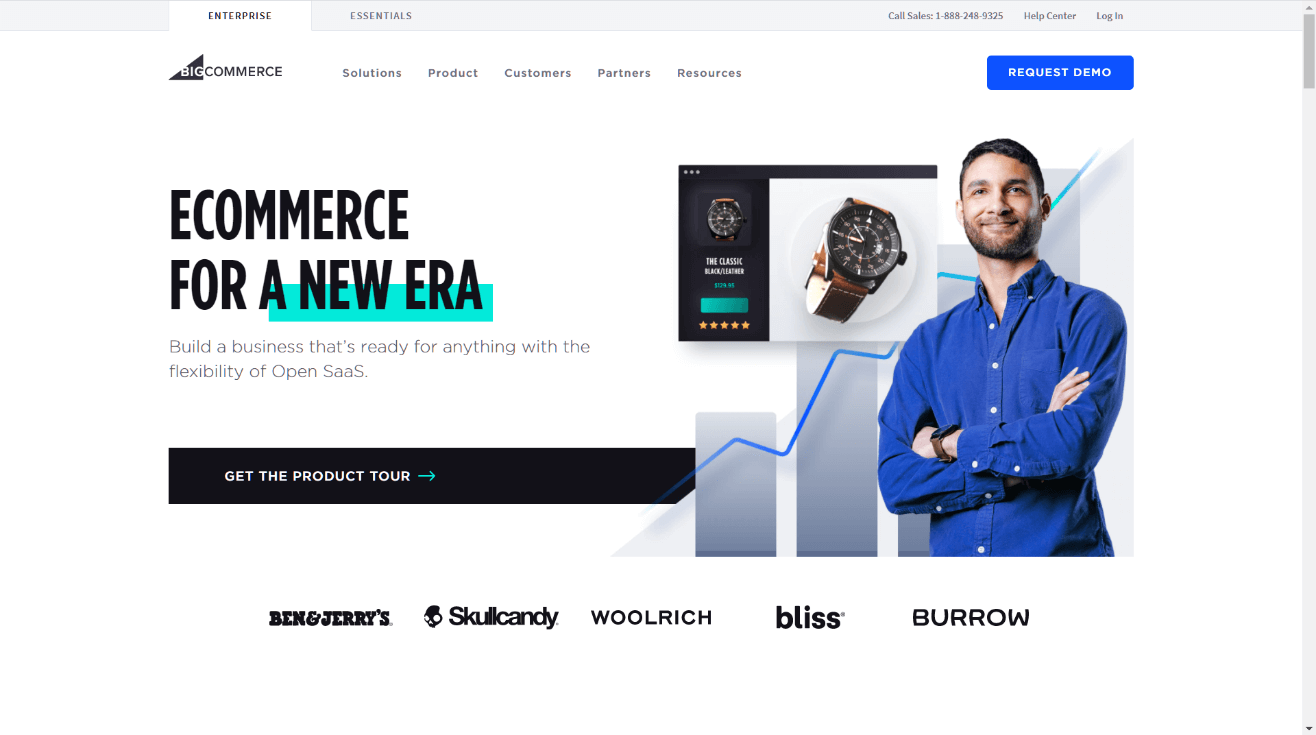
While Shopify focuses on a simplified user experience, the Shopify alternative BigCommerce, is geared towards functionality and flexibility. Many features and add-ons are already included in the package. In addition, this e-commerce provider is more flexible in terms of structure and pricing than its competitor Shopify.
 Jacob LundShutterstock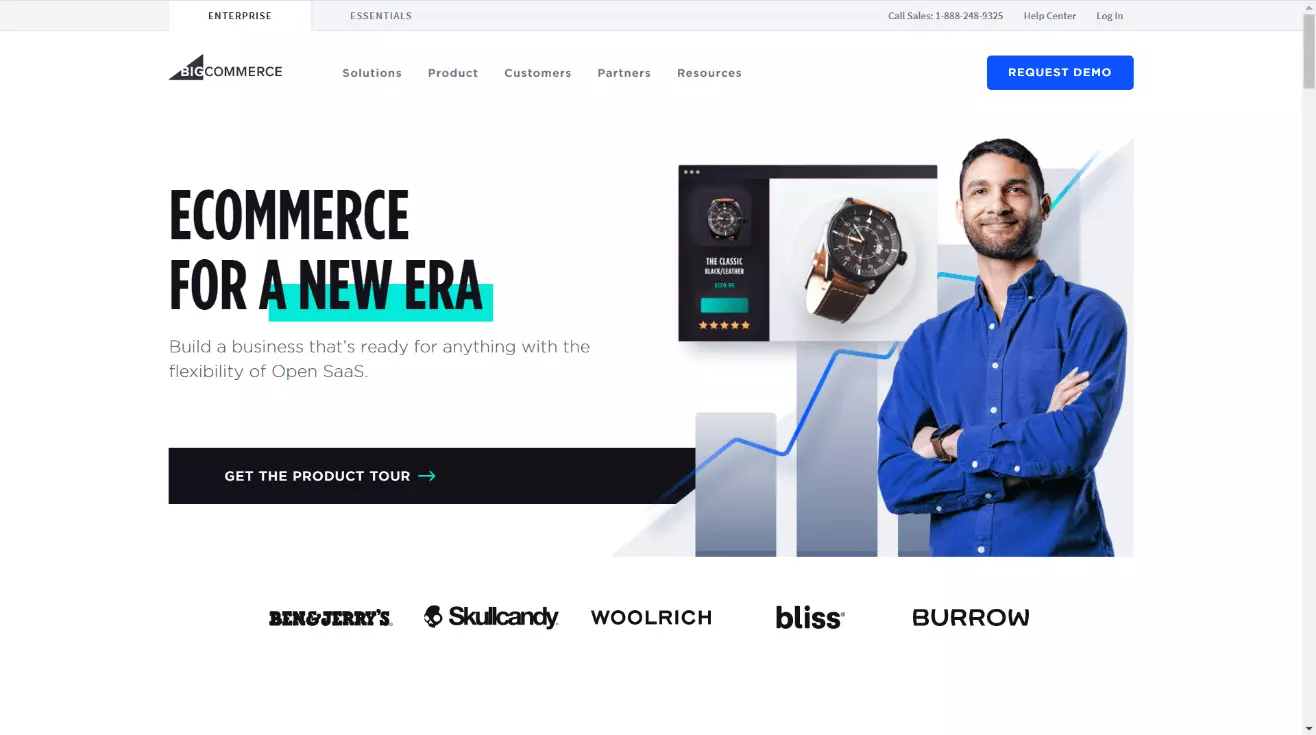
BigCommerce relies on fixed and unscaled pricing, which makes this alternative to Shopify particularly suitable for small and medium-sized businesses. As your business expands and orders increase, you won’t have to deal with higher costs. So, when your shop grows, BigCommerce's pricing model leaves you with more of your hard-earned cash by the end of the month.
What’s more, BigCommerce provides greater flexibility when it comes to pricing your own items. Products can be priced according to country and currency, which is important for businesses with an international focus. You can also connect various payment service providers, which gives you greater control of your online store. In addition, BigCommerce's pricing can be fanned out according to customer groups, which makes it easier to set up a B2B (business to business) shop. Different discounts can be awarded depending on the customer, which is great for bulk buyers.
APIs (Application Programming Interfaces) are interfaces between different programs. With the help of these interfaces, data is exchanged and compared. When launching an online store, this is often overlooked but becomes a major problem later down the line. BigCommerce begins at around 400 accesses to the API per second, which is sufficient even for medium-sized online stores. This is particularly important when synchronizing between inventory and the dashboard. Synchronization speeds are up to 200 times faster with BigCommerce than Shopify.
Another big advantage of BigCommerce as a Shopify alternative are the product options. Up to 250 product options can be stored with up to 600 article numbers (SKUs). It’s a great feature for a wide range of product categories such as clothing.
Search engine optimization (SEO) is a must for any online store. With the right SEO basics you can position your shop successfully in the long run. As a Shopify alternative, BigCommerce integrates all the necessary SEO options. For example, the URL structure, which is an important feature for search engines, can be adapted. In addition, the integration of Akamai, an image software, ensures that uploaded product images are effectively downscaled. This decreases the loading speed of the shop, which is another important – if not the most important – criterion for search engines.
No platform is perfect, and neither is BigCommerce. The provider regularly launches new features and continues to grow as a software provider, but that can have disadvantages. BigCommerce's plethora of features makes it harder to use. This shouldn’t be a problem for experienced e-commerce retailers and for some it may even be desirable, but it can quickly become overwhelming for beginners. Users should plan on a steeper learning curve and longer implementation time for this Shopify alternative.
Another thing that should be considered is BigCommerce’s pricing, because there’s a catch: the monthly package is tied to the number of sales. If this limit is exceeded, the next higher package must be selected. Dealers are forced to upgrade and are less flexible in the long run.
The dashboard cannot be used as administrative surface for POS right away, and added plugins aren’t comparable with those provided by Shopify. For store owners, this can be a reason to keep looking for alternative e-commerce software.
| Advantages | Disadvantages |
|---|---|
| ✓ No transaction fee | ✗ More complicated user experience |
| ✓ More flexibility in pricing and B2B | ✗ Fewer design templates |
| ✓ Robust API integration | ✗ Fewer choices in plugin store |
| ✓ More product options possible | ✗ Higher sales lead to more expensive package |
| ✓ More SEO options | ✗ Fewer POS possibilities |
As a Shopify alternative, BigCommerce does well in the important areas: there are no transaction fees, which can quickly become a problem when your business is growing rapidly. It provides stronger developer options, be it the more robust API connection or the more extensive options for designing products and prices. While this platform is more complicated to use than Shopify, it’s a good alternative for merchants looking to grow faster.
IONOS provides a dedicated e-commerce solution. The IONOS e-shop conforms with privacy regulations and combines an online shop with the easy-to-use website builder. It includes plenty of useful features for merchants and supports sellers through its excellent customer service. Create your online shop with IONOS securely and in just a few clicks.
Shopware
Shopware is an alternative to Shopify that originates from Germany. The platform conforms to GDPR privacy regulations which is particularly relevant if you tend to sell internationally. The software is available as a cloud solution (similar to Shopify) or a standalone open-source software.
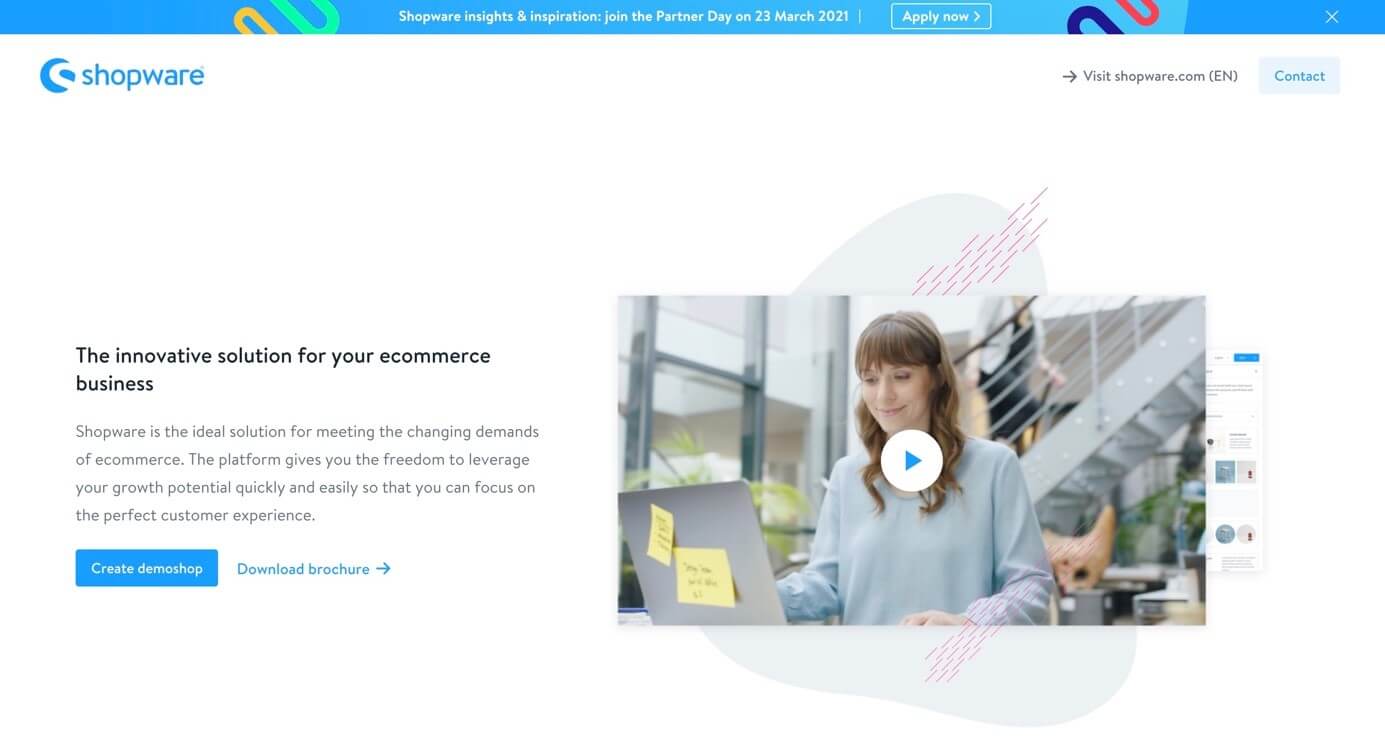
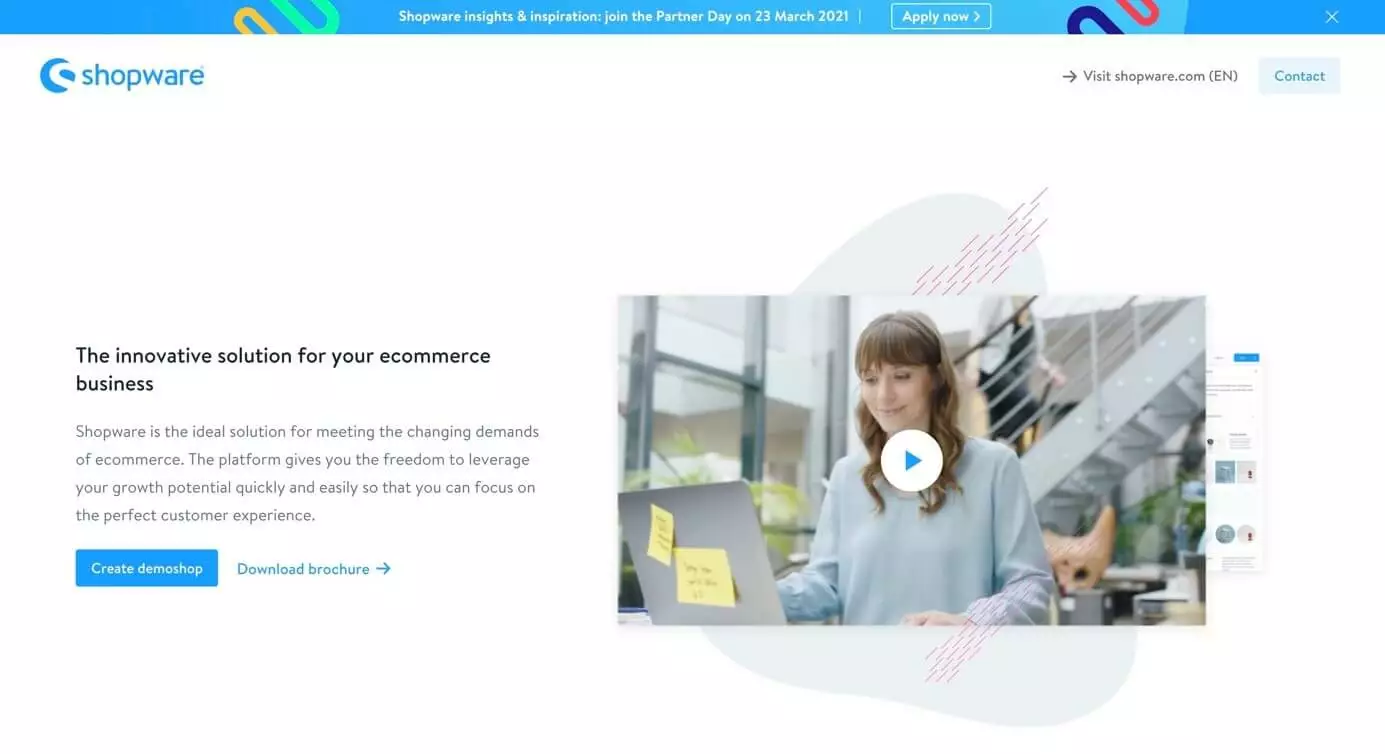
Shopware is an e-commerce software and Shopify alternative that is well-known in Germany and is gaining popularity. It can be used to effectively implement both small and large stores. One of the biggest advantages of the provider is the open source nature of the software, which enables programming of your own modules, plugins, and other elements. In addition, with the cloud variant, hosting in the EU ensures that all GDPR regulations are complied with.
When it comes to pricing, Shopware offers two packages: the cloud solution at a monthly fee and a fixed revenue share or the hosted version of the software, which can be purchased either at a monthly cost or a one-off fee. Both packages are available as free entry-level versions. That makes this alternative to Shopify particularly suitable for beginners testing the waters.
The software is suitable for both B2B and B2C shops. Functions such as tiered prices, theme page structure design or the integration of a storefront are included with every package. With the paid variants, additional sales channels such as Instagram or shopping feeds can be created.
Even new users will quickly find their way on the user interface: it’s simple and functional and highlights the most important functions at a glance. The simplicity is maintained even in the product detail pages. This makes working with the backend more pleasant.
Even if the community is growing, its plugin store is a weak point. Though the included apps are certified, and thus fully functional, the selection is much smaller compared to Shopify and important features have to be purchased as plugins. That includes search engine marketing and the same applies to point-of-sale connections or design themes. However, one positive aspect of its plugin store is that each plugin and design template needs to go through an extensive certification process in order to be listed. This maintains their quality.
| Advantages | Disadvantages |
|---|---|
| ✓ Free access available | ✗ More complicated for beginners |
| ✓ Open Source (as standalone software) | ✗ Comparatively small community |
| ✓ Hosted in the EU (as cloud software) | ✗ Plugin store with limited options |
| ✓ Suitable for B2B and B2C | ✗ SEO not integrated (Plugin available separately) |
| ✓ Functional interface | ✗ POS not integrated (Plugin available separately) |
Shopware is a hidden gem within the e-commerce sector: it is available as self-operated open source software and as a cloud solution. The latter should offer a suitable option for most retailers. Both variants have free entry options that already contain important basic functions. However, Shopware is not as established as other alternatives to Shopify and therefore has a smaller community, which is reflected in a relatively small number of plugins and themes.
WooCommerce
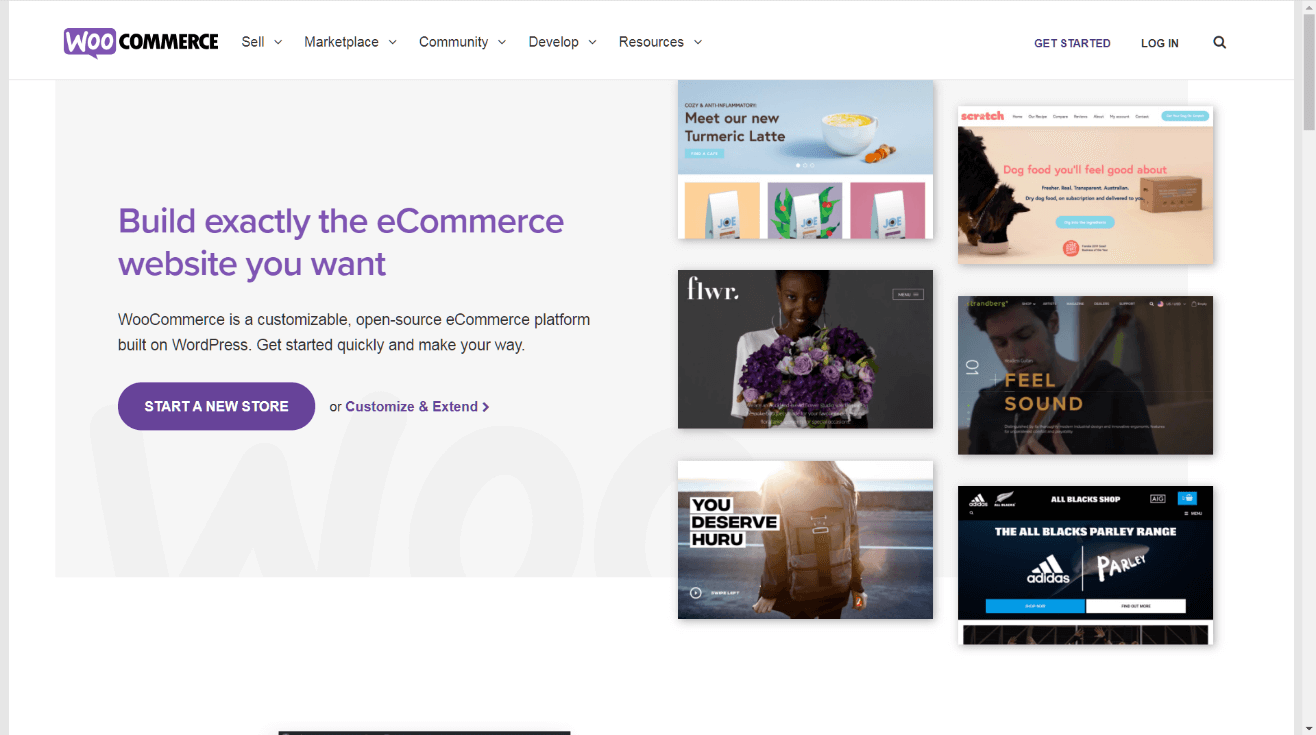
The WooCommerce plugin lets you create an online shop in WordPress. WooCommerce benefits from the huge popularity of the blogging software and has various strengths and weaknesses.

- Sell on social media in minutes
- Manage it all from one platform
- Works with any product or service
The main advantage of WooCommerce is its price because the plugin is free. In contrast to Shopify and its alternatives, there is no fixed price and no monthly fee. This makes WooCommerce one of the most cost-effective alternatives to Shopify.
Another advantage is the nature of the plugin. It is open source and because it is based on WordPress, it has a large developer community. This gives you full control over your online shop and allows you to flexibly adapt its design and functionality.
With WooCommerce, you’re the manager of your online store. This means that you retain independence from operators and can be sure that your store stays online. In addition, the website and the resulting traffic can be used for marketing measures.
For ideas that are difficult to implement using standard software, WooCommerce can be a good Shopify alternative. The software ensures you maintain flexibility and can implement your ideas – even subscription models and member areas are possible. You get to realize your own business ideas.
But WooCommerce may not be suitable for your shop ideas. One disadvantage is a limited number of payment service providers, which binds you to their conditions and transaction fees. You need to keep this in mind when planning sales.
Many basic functions are missing in WooCommerce. Features that are readily included with Shopify need to be purchased as add-ons here. This could significantly increase the price of the solution.
It also creates various issues with the technical implementation. The functionality and quality of the add-ons aren’t always guaranteed because there is no certification process. To solve problems, you will need some technical know-how or to hire someone to help you.
There’s another disadvantage once you’ve installed multiple plugins: compatibility issues can arise with each update of the individual plug-ins. That’s because many plugins interact with others, and a problem with one plugin can lead to a disrupted payment process. These issues are a lot less likely when using Shopify and other alternatives.
| Advantages | Disadvantages |
|---|---|
| ✓ Free software | ✗ Limited payment service providers |
| ✓ Open Source with large community | ✗ Basic functions missing |
| ✓ Own management of online shop | ✗ Technical issues have to be sorted by shop owner |
| ✓ Flexible realization of ideas | ✗ Plugin updates can lead to disruptions |
WooCommerce is one of the most popular solutions for online shops, and there are plenty of good reasons why: entry costs are low, and it is based on one of the most popular blogging tools globally – WordPress. WooCommerce allows great flexibility when it comes to implementing your ideas. However, this freedom can lead to challenges: WooCommerce and added plugins are not certified standard solutions. Should technical problems arise, you require sufficient know-how to keep your online store running. Because many basic functionalities are missing, plugins and their updates are a constant source of disruption that you need to be aware of when opting for this Shopify alternative.
IONOS offers simple and fast WooCommerce hosting. This package contains the domain, the necessary SSL certificate, email accounts, fast hosting, and web space as well as a WordPress installation with WooCommerce. Your WooCommerce shop is just a few clicks away.
Summary: the best alternatives to Shopify
| BigCommerce | Shopware | WooCommerce | |
|---|---|---|---|
| Year released | 2009 | 2004 | 2011 |
| Open Source | ✗ | ✓ | ✓ |
| Cloud hosting | ✓ | ✓ | ✗ |
| Server location | USA | Germany | - |
| Monthly fixed price | ✓ | ✓/✗ | ✗ |
| Transaction charge | ✗ | ✗ | ✗ |
| Community | + | + | +++ |
| Plugins | + | ++ | +++ |
- Sell on social media in minutes
- Manage it all from one platform
- Works with any product or service
Each of the three Shopify alternatives offers something for a wide variety of retailers. Beginners and professionals can easily implement their online shop with platforms such as BigCommerce, Shopware, or WooCommerce. Shopify is now the largest platform in the world, but it is not the only one that may be suitable for your online store. The great advantage of Shopify lies in the standardization and simplification of all processes, from installation to maintenance of the shop. However, this also has a major disadvantage: individual ideas aren’t as easily implemented or can only be added in a roundabout way; some design elements such as the payment process are firmly prescribed. Therefore, when planning out an online store, ask yourself whether you require full control and flexibility or simplicity.
There are plenty of other alternatives to Shopify. The open source project PrestaShop is one of them. IONOS provides a hosting package specifically for the Shopify alternative. The package includes a domain, the necessary databases, email accounts, fast hosting, and web space as well as the pre-installed online shop solution. Thanks to PrestaShop hosting your web shop can go online in a few simple clicks. Find out more about the solution and others in our extensive comparison of shop systems.