

Mobile commerce: a mall in the palm of your hand

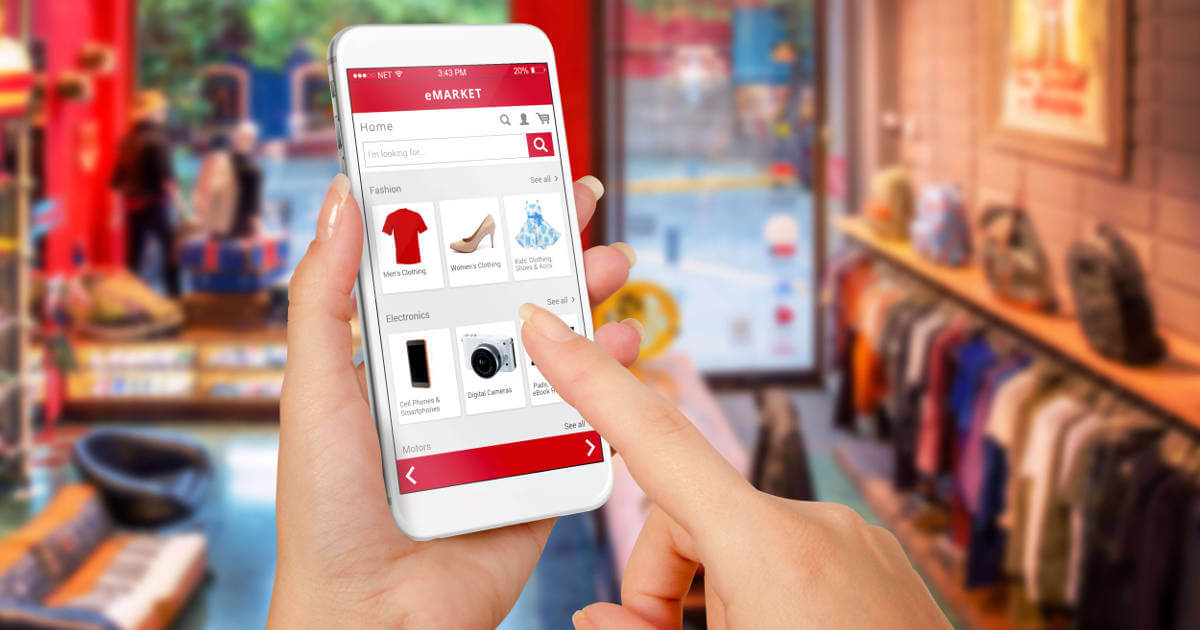
Now more than ever mobile devices such as smartphones and tablets play an indispensable role in our daily lives. The newfound prevalence of this technology has spawned a new area of e-commerce, known as mobile commerce, or m-commerce for short. For web store operators seeking to profit from this fast-developing sector, optimizing your web store for mobile devices is paramount, as user-friendliness is a crucial factor in the success of an online store. The main challenges here are keeping in mind how user behavior differs depending on the device used, and catering to each device’s specific features as well as the customers’ needs.

Mobile commerce in the US
Thanks to the widespread use of smartphones and tablets and generous mobile contracts, more and more people can access the internet whenever and wherever they choose. But users aren’t just using their phones to access messengers and social media platforms; indeed, the current mobile boom is changing the world of e-commerce, making it an increasingly popular method of purchasing goods and services.
- According to PEW Research Center, 67% of US adults own a smartphone.
- A study by 2016 Mobile 500 suggested that by August 2015, mobile commerce amounted to 30% of all US e-commerce for that calendar year.
- Research carried out by eMarketer shows that US consumers spent $74.93 billion on goods and services with their mobile devices in 2015.
These figures speak volumes: m-commerce offers web store managers a huge audience and the opportunity to make a greater profit. However, creating a mobile-friendly version of your website requires a lot of time and effort. Meeting the demands of the mobile user is an increasingly challenging task, as they can close a poorly optimized site with a single swipe.
Website to go: what you need
To see a mobile store as a ‘mini version’ of a web store is to disregard many important aspects of mobile commerce. A smaller screen size is not the only difference between mobile devices and laptops. There are other crucial differences to consider.
The most important aspects at a glance:
- mobile stores are operated by touchscreen technology
- users navigate with fingers, rather than the more precise mouse
- the display is much smaller, meaning the visible area is also reduced
- the loading times are often slower, as LTE 4G is not always available
- many devices experience problems with Java and Flash
Although it’s easy to lump tablets and smartphones together in the same category, it’s important to remember that user behavior varies depending on the device they are using. This is particularly true for mobile e-commerce. For many people, tablets have replaced desktop computers as a means of browsing the internet. This gives retailers the opportunity to tap into user behavior and encourage them to make impulse purchases. Smartphones, on the other hand, are generally used to look for specific products, and purchases are usually planned.
Mobile web store – different solutions
To get started, store owners need to decide which solution is the best fit for their project. There are generally three options: mobile websites, responsive websites, and a native app or web app.
Mobile website
Mobile websites were developed specifically for m-commerce and so are specifically adapted to the requirements of mobile devices. The processes and display are fully optimized. Typically, mobile websites do not completely mirror their desktop counterparts, and some pages are even omitted so as not to impair the website’s performance. The mobile site should be considered a separate and parallel branch of your web store. As a result, the mobile site requires a completely separate template or a shop system installation. The biggest advantage of a mobile website is that it focuses on usability for the customer.
Advantages of mobile websites:
- Mobile advertising opportunities
- Implementation of technical features (HTML5 rather than Flash)
- Better performance
- Independence from the user’s operating system
Responsive web design
Responsive web design entails adjusting existing websites so that they adapt automatically to any device. This kind of web design works with a dynamic structure and reacts responsively on different mobile devices. If your web store is well set-up (for example, with a clean template), you can implement a responsive design without much effort. Unlike the app, this is independent of the user’s operating system. This method has been criticized for long loading times and poor usability, but this depends on the quality of the implementation. If you possess the technical know-how, responsive web design might be perfect for your needs.
Advantages of responsive web design:
- One version for every device saves time and money
- Recognition thanks to similar presentation on desktop and smartphones
- Independence from the user’s operating system
Mobile apps
The third technical solution is the development of an independent app, which users can download from the app store. The development process here requires far more effort than mobile and responsive websites, so you should ask yourself if it really makes sense to create the app, and what advantages it offers over the other, easier options. Ideally, there should be some bonuses to using the app, such as an offline mode or push notifications. If your goal is simply to make your products available on mobile devices, a mobile or responsive website is perfectly adequate.
Advantages of mobile apps:
- Added value to customer experience through special features
- Allows developer to integrate device functions (i.e. camera)
- Totally independent from website
Experienced programmers also have the option of creating a web application as well as the native app described above. This is used in a browser, but the structure and operation has the appearance of a native app. Unlike the native app, the web app is independent of the operating system used. The downside to this is that access to certain device functions can be restricted.
Mobile commerce in the context of SEO
Mobile optimization is a key factor in gaining a good ranking in search engine results pages (SERPs), so search engine optimization (SEO) also plays a vital role in m-commerce. Since Google’s 2015 mobile update, having a website that isn’t optimized for mobile devices has a negative impact on your ranking in the SERPs. Even if a website is optimized, its ranking and traffic can still suffer if it doesn’t offer users an optimal experience on their smartphones or tablets. To avoid these losses, Google offers a service that enables you to test how well your website is optimized for mobile devices.
Usability is everything
These days, having a mobile version of your online shop is an absolute must. Only by zeroing in on the needs of your mobile users can you really take advantage of the sales opportunities presented by mobile e-commerce. Remember, usability should always take center stage, so take time to consider which platform best suits your venture, be it a mobile website, a responsive website, or an app.