

How to write an effective meta description

A meta description is a short text that summarizes the content of a webpage. By having short summaries of webpages, webcrawlers and internet users are able to better navigate online content. A good meta description should be unique and ideally follow a formula, such as the AIDA model. SERP Snippet Generator, Screaming Frog und MarketingTracer are all great tools that can help you optimize your meta description for search engines and website visitors alike.
Why are meta descriptions important?
If you set up a website, sooner or later you will come across the term search engine optimization, or SEO for short. An important part of SEO is metadata, which includes title tags and meta descriptions. These often serve as the first point of contact between a website and its potential visitors. As such, it’s important to craft them well, because they can have an impact on the long-term success of your website.
You have a WordPress website and would like to create meta descriptions for individual webpages? Discover different ways to write meta descriptions in our article about WordPress meta descriptions.
What is the purpose of a meta description?
A meta description is a meta tag that is displayed to users in the search results of search engines, like Google and Bing. The purpose of a meta description is to pique people’s interest by providing insight into what users can expect to find on a webpage. The quality of a meta description can strongly influence whether users decide to ultimately visit your webpage or not. Ideally, it should encourage people to visit a page and generate as many clicks as possible.
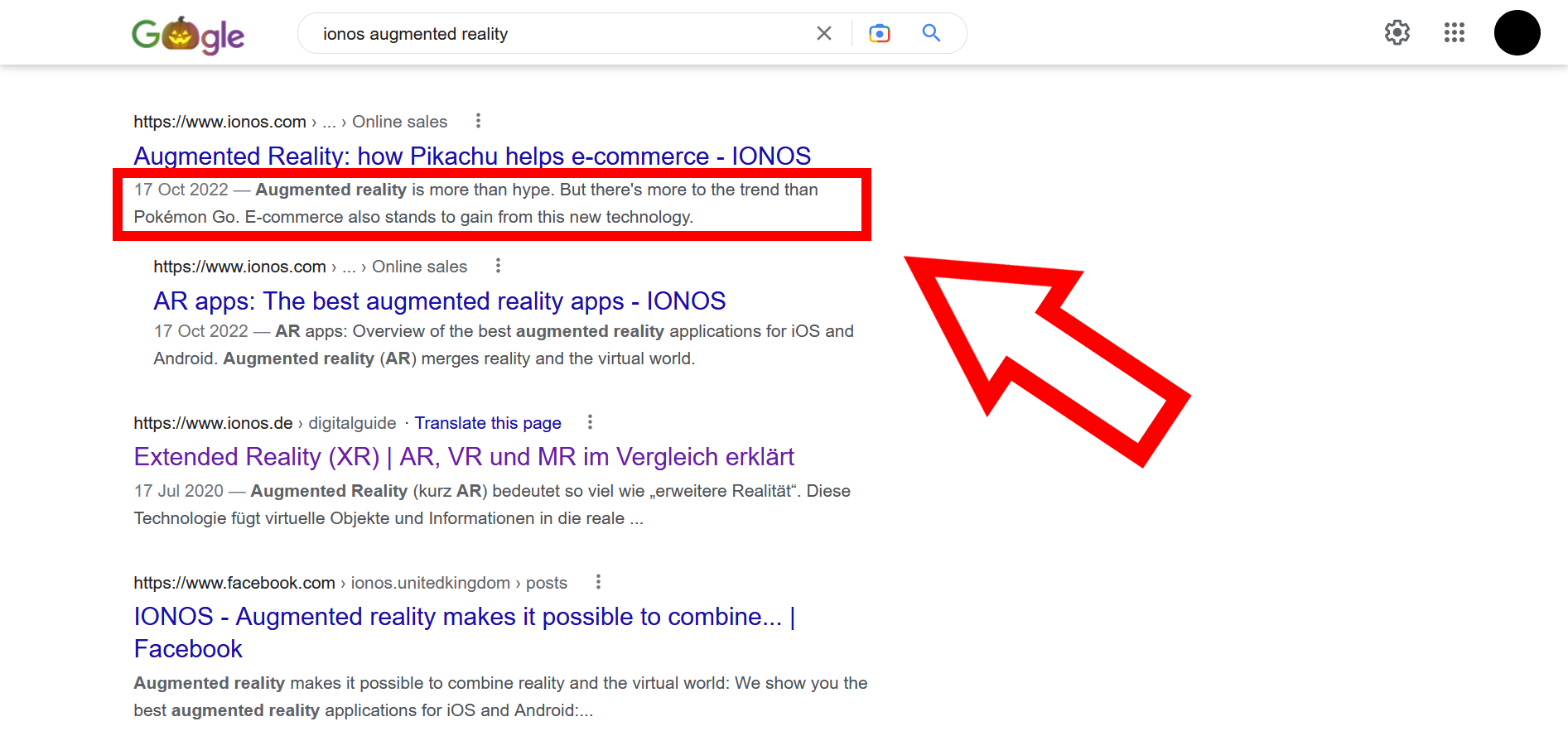
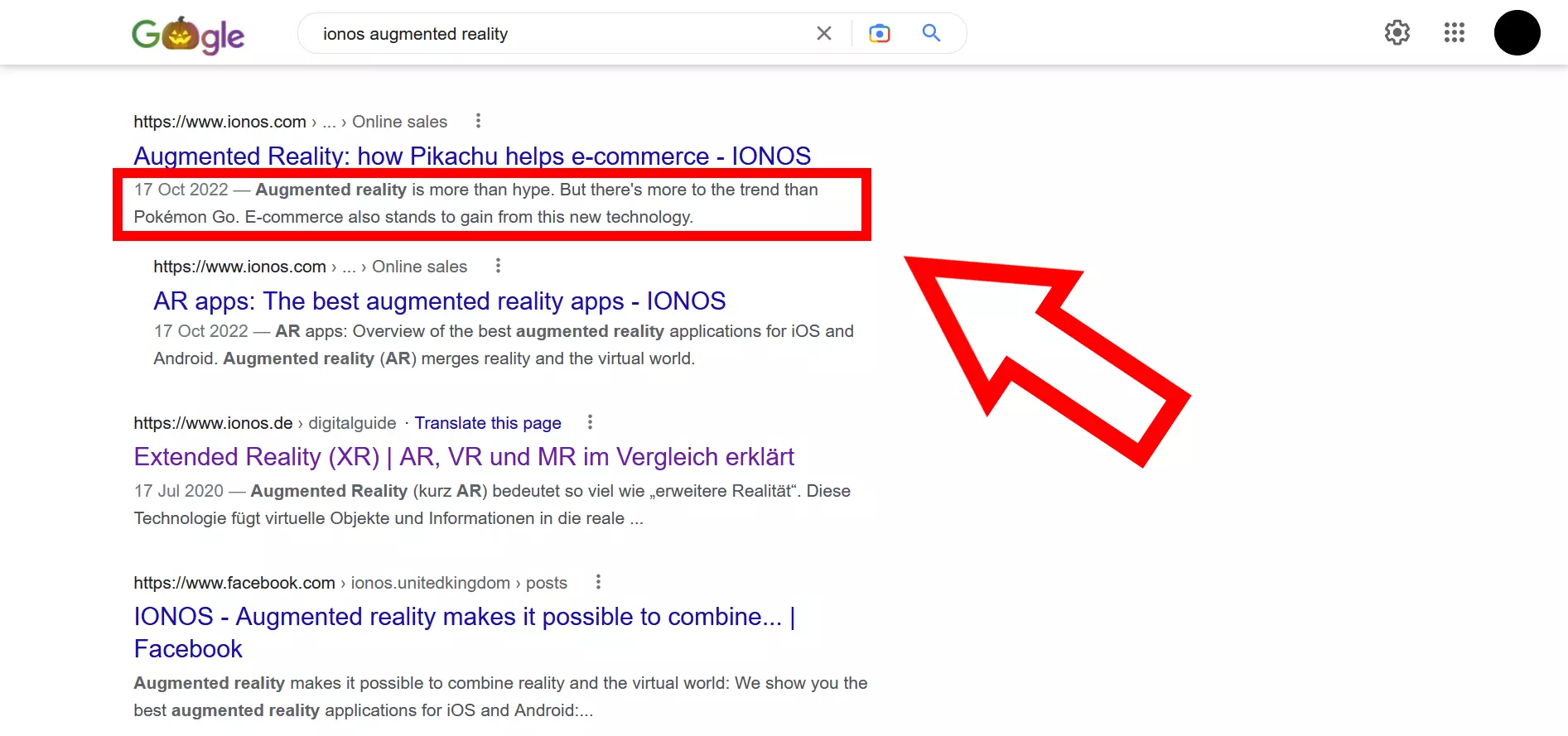
5 tips for writing effective meta descriptions
Use the AIDA model
The first tip for writing an effective meta description is to follow the AIDA formula, which has four steps: attention, interest, desire and action.
Attention
First, you need to attract the attention of users by including some sort of eye-catching element in the text. These can be keywords or symbols such as checkmarks.
Interest
Next, you need to generate interest. For this, try to choose words and phrases that are positive and highlight advantages.
Desire
After that, you want to cultivate desire for your website or a specific product. You can achieve this with a persuasive advertising claim.
Action
Finally, the description should encourage people to go to your website. At the end of your meta description, add a call to action (CTA). These are phrases that prompt a specific action. For example, if your goal is to sell a product, your CTA could be “buy now”.
Be consistent with the information in the meta title and H1
The meta description appears together with the meta title in search results. As such, they should complement each other. Likewise, the H1 heading should reflect the information in the meta title and meta description, as it is usually the first thing that users read when accessing your website. Although the wording should exhibit thematic consistency, it’s important to avoid identical wording.
Tailor your message to your target audience
When writing your meta description, you should also be aware of your target audience. Use a style of writing that your potential readers or customers will easily understand and relate to. It is also helpful to keep the search intent of said users in mind and state the intent briefly in the description.
Pay attention to the length of the meta description
It’s important to pay close attention to the length of your meta description. You should aim for a total of 150 characters (including the empty spaces between the characters). This length, however, is not set in stone, because Google actually measures the pixel width, not the characters themselves. The maximum description length is 900 pixels for desktop computers and 1,300 pixels for mobile devices.
If the description exceeds this amount, Google will shorten it by replacing the remaining text with three dots. This is why it’s important to put essential information and keywords at the beginning of the description. At the same time, the information that is placed in the space provided should be relevant to the user. Sistrix ’s SERP snippet generator is a great way to check the length of a meta description and adjust it accordingly.
Meta descriptions should be unique
Meta descriptions should be a unique piece of content. This means writing an individual description text for each page of your website. It’s important not to write the same thing twice, because duplicate content can have a negative effect on search engine rankings.
Your main concern when writing your description, however, should be the user. At the end of the day, a unique and accurate meta description can convince potential website visitors that the answer to their query is contained within your webpage. If there are multiple pages with identical meta descriptions, users might become frustrated and leave the website quickly. This can, in turn, have a negative effect on your SERP rankings.
There’s no need to worry if you can’t keep up with writing meta descriptions for your website. Search engines can automatically insert a relevant excerpt of a webpage until you are able to create your own. Whether this is beneficial is something that needs to be determined on a case-by-case basis. Generally speaking, it’s always better to formulate your own descriptions.
Increase your client base and your company’s success with Google Ads Management Service from IONOS. Our experts will develop a Google Ads strategy that is tailored specifically to your business needs and goals.
What are some helpful tools for writing meta descriptions?
Get a preview of your metadata with Sistrix’s SERP snippet generator
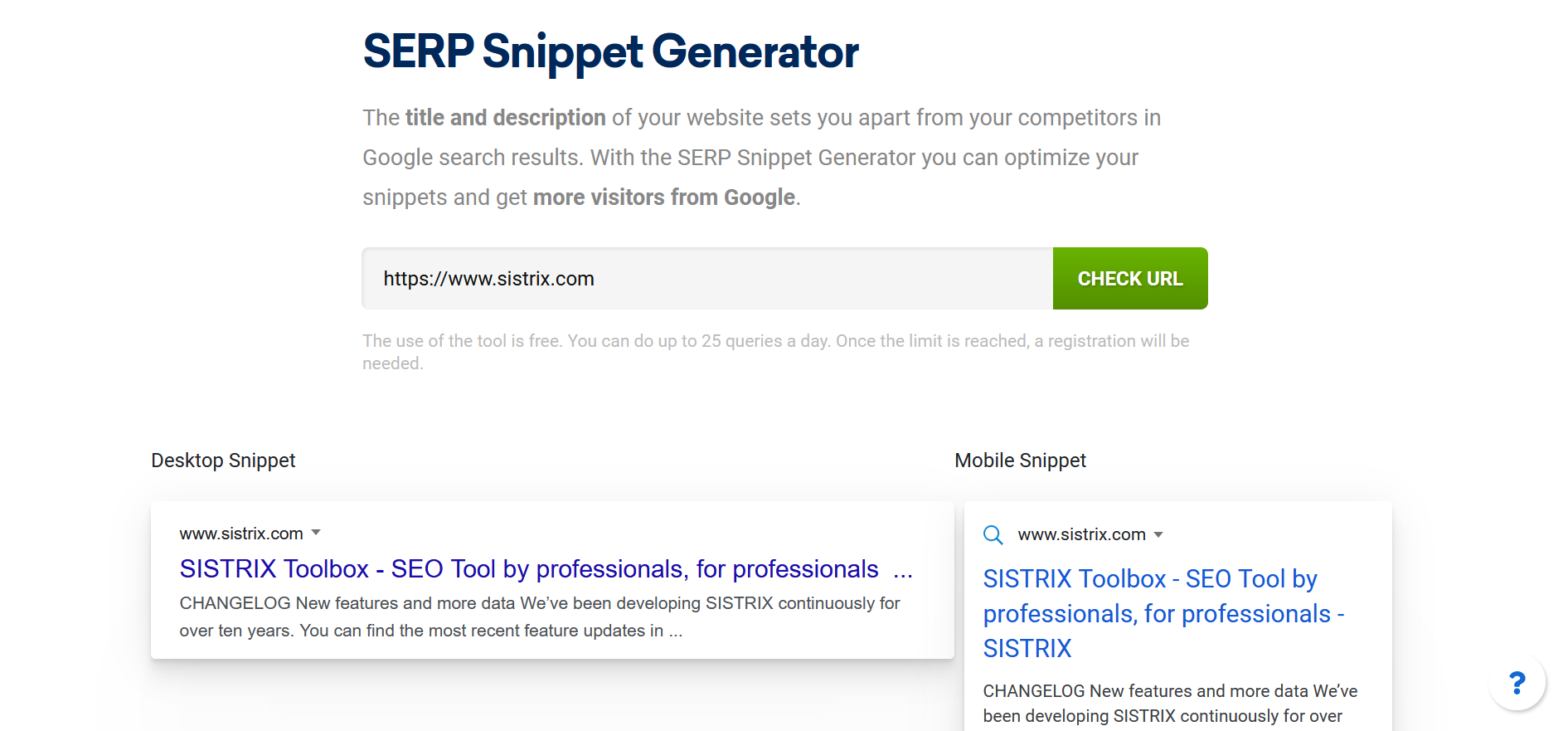
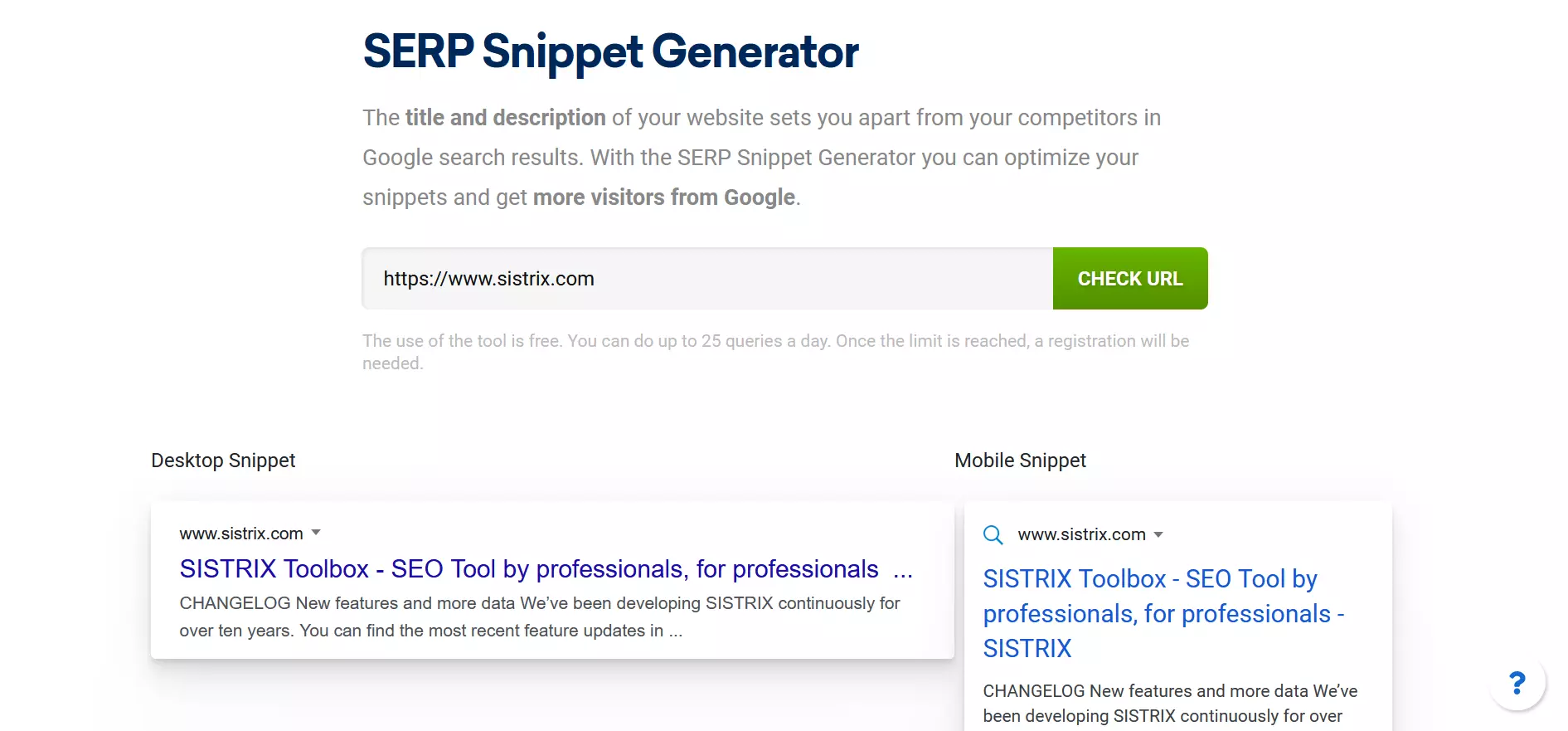
The SERP Snippet Generator from Sistrix is a helpful tool for checking the length of metadata and seeing how it will appear on a search results page. Simply insert your title and description in the corresponding fields on the webpage and you’ll be able to see what the desktop and mobile snippets look like. Optimizing websites for mobile devices, also known as mobile SEO, is an important factor for SERP rankings.
Identify duplicate content with Screaming Frog
Screaming Frog’s SEO spider tool is a website crawler that can help you improve on-page SEO and check if your webpages contain duplicate content. Once their SEO spider is done crawling your website, any duplicate content will be listed under the tab Content. For information pertaining to duplicate meta descriptions, or descriptions that are otherwise suboptimal, consult the tab labelled meta descriptions.
To learn more about how to use Screaming Frog to check for duplicate content, you can read through the tutorial on their website.
Find webpages that are missing meta descriptions with MarketingTracer’s SEO audit tool
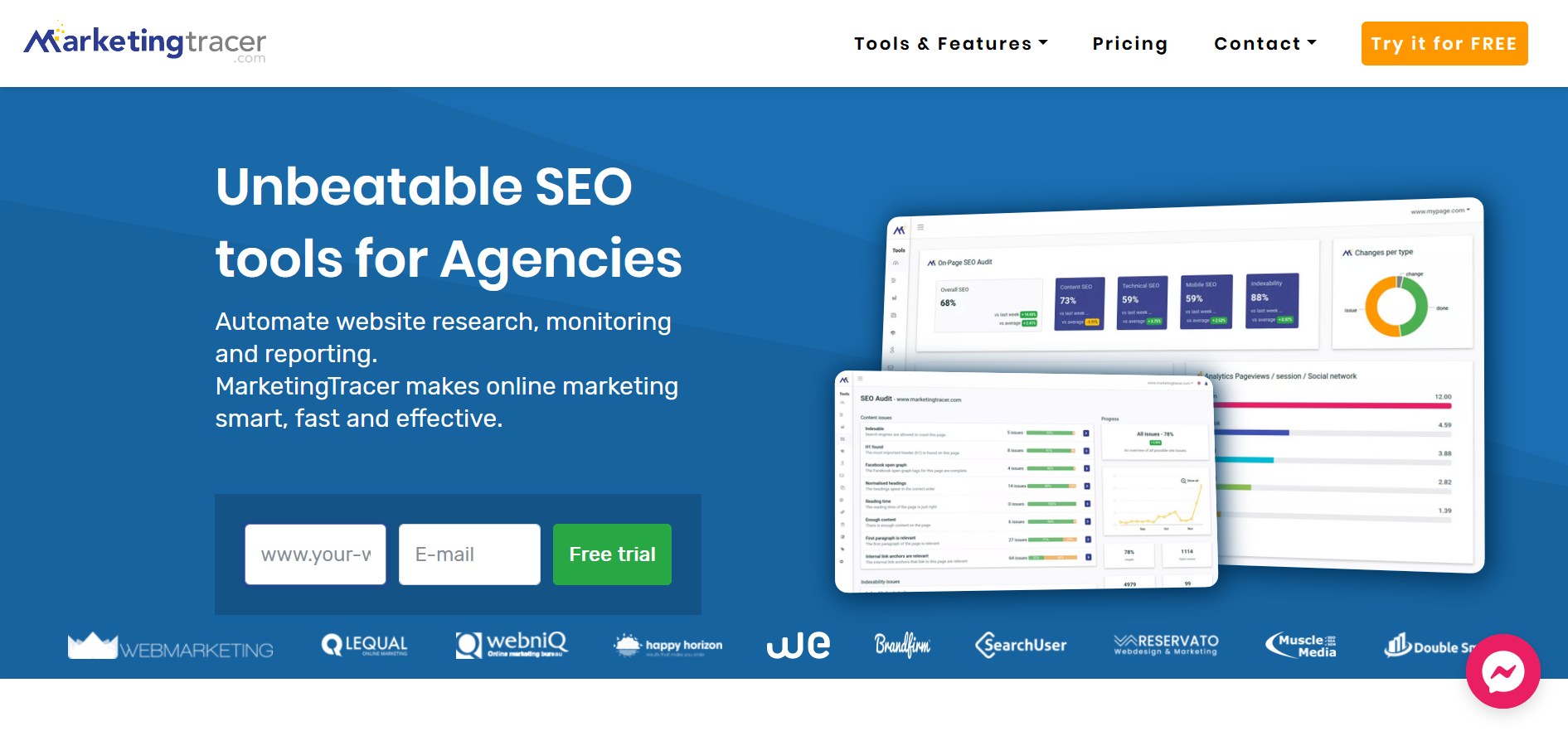
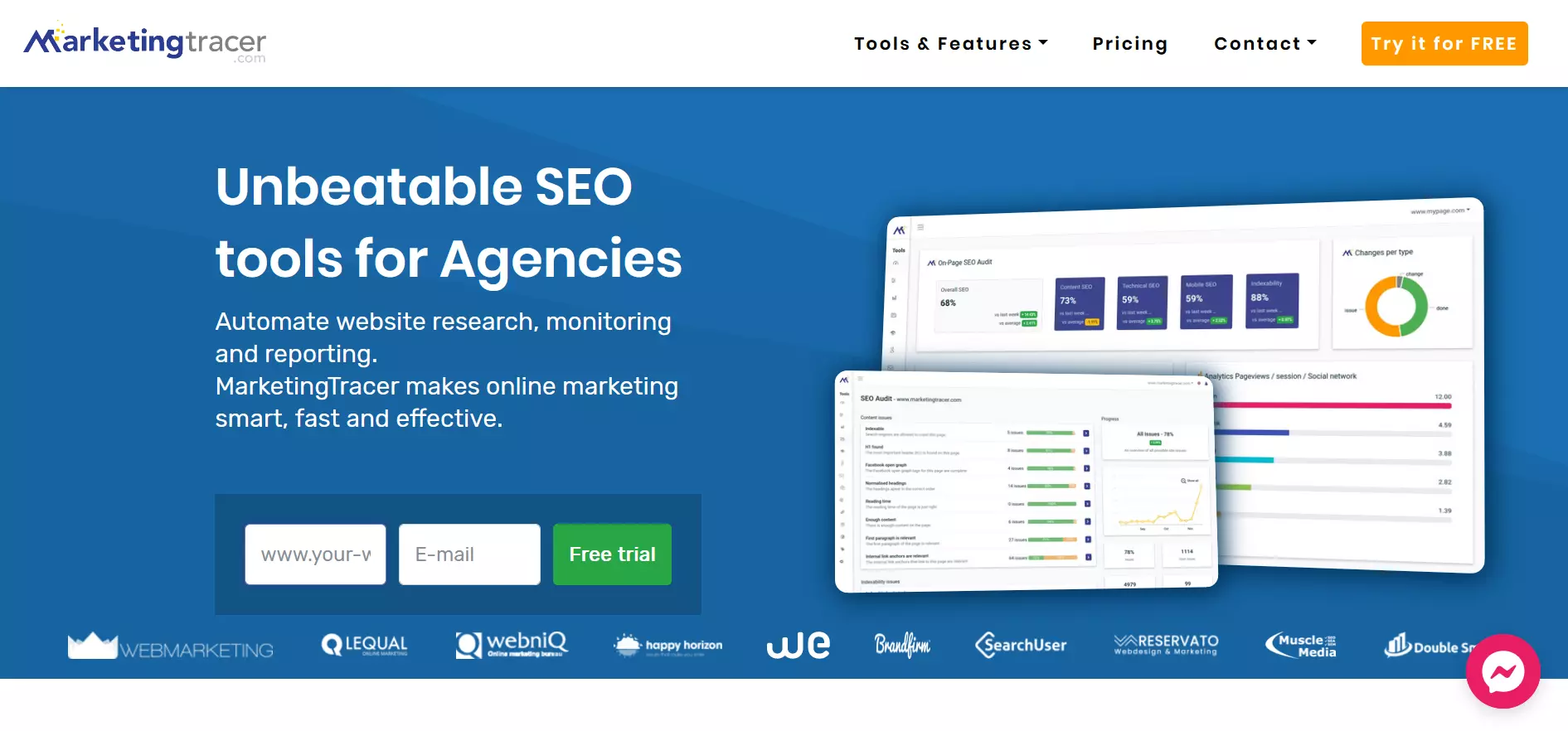
MarketingTracer offers many tools to help you optimize SEO content. One of them is the SEO audit tool, which identifies pages on your website that don’t have a meta description. The online marketing platform also clearly lists other errors and flaws so you can continuously work on improving your website.
Learn how to professionally optimize your website for search engines with rankingCoach from IONOS. For additional tips on how to how to increase your website’s visibility, check out the SEO lexicon in the IONOS Digital Guide.
Summary
If you have a website, we recommend creating a meta description for each individual webpage. By doing so, you can inform potential visitors to your website of the content that awaits them. With accurate and well-written descriptions, you can increase the number of clicks you get and potentially win over new customers.
In our Digital Guide, you can find various articles about different topics within online marketing. Here is a short reading list to get you started: