

Micro-moments: Delivering answers when it matters

Consumers are bombarded with marketing content every day, whether via email, social media or online advertising. Even though most people voluntarily spend several hours a day on their smartphones, they’re still oversaturated by this flood of content. It’s becoming increasingly difficult for companies to capture the attention of consumers. But this change in consumer behavior also presents an opportunity.
A growing number of people are accessing information via digital channels and search the web using their mobile devices to act on an immediate need. Companies that adapt their marketing strategies to meet consumer demand during these micro-moments will gain a competitive edge in the future.
What are micro-moments?
Google coined the term micro-moments and conducted studies on the subject. It’s been a buzzword in the marketing world in recent years. But focusing on micro-moments doesn’t mean revolutionizing your strategies. It mainly means gearing your content marketing to mobile searches and the needs of customers in those moments.
Micro-moments are intent-rich moments when a person turns to a digital device to act on an immediate need and make a decision. They’re essential “moments of decision-making.”
 To display this video, third-party cookies are required. You can access and change your cookie settings here.
 Micro-moments are most important during mobile searches. These are the moments when people look up sight-seeing tips during a day trip, consult restaurant reviews while searching for a place to eat, or search product recommendations right before buying a new mattress.
In these moments, people are less critical of brand content than usual. They’re open to useful content. Companies that present content that is helpful and easy to understand in these moments will leave a positive first impression.
You can dramatically increase your chances of successful marketing by incorporating these micro-moments into your content marketing strategies.
Which types of Google micro-moments are there?
Google identifies four key micro-moments. For the best results, you should tailor content to the specific needs of searchers.
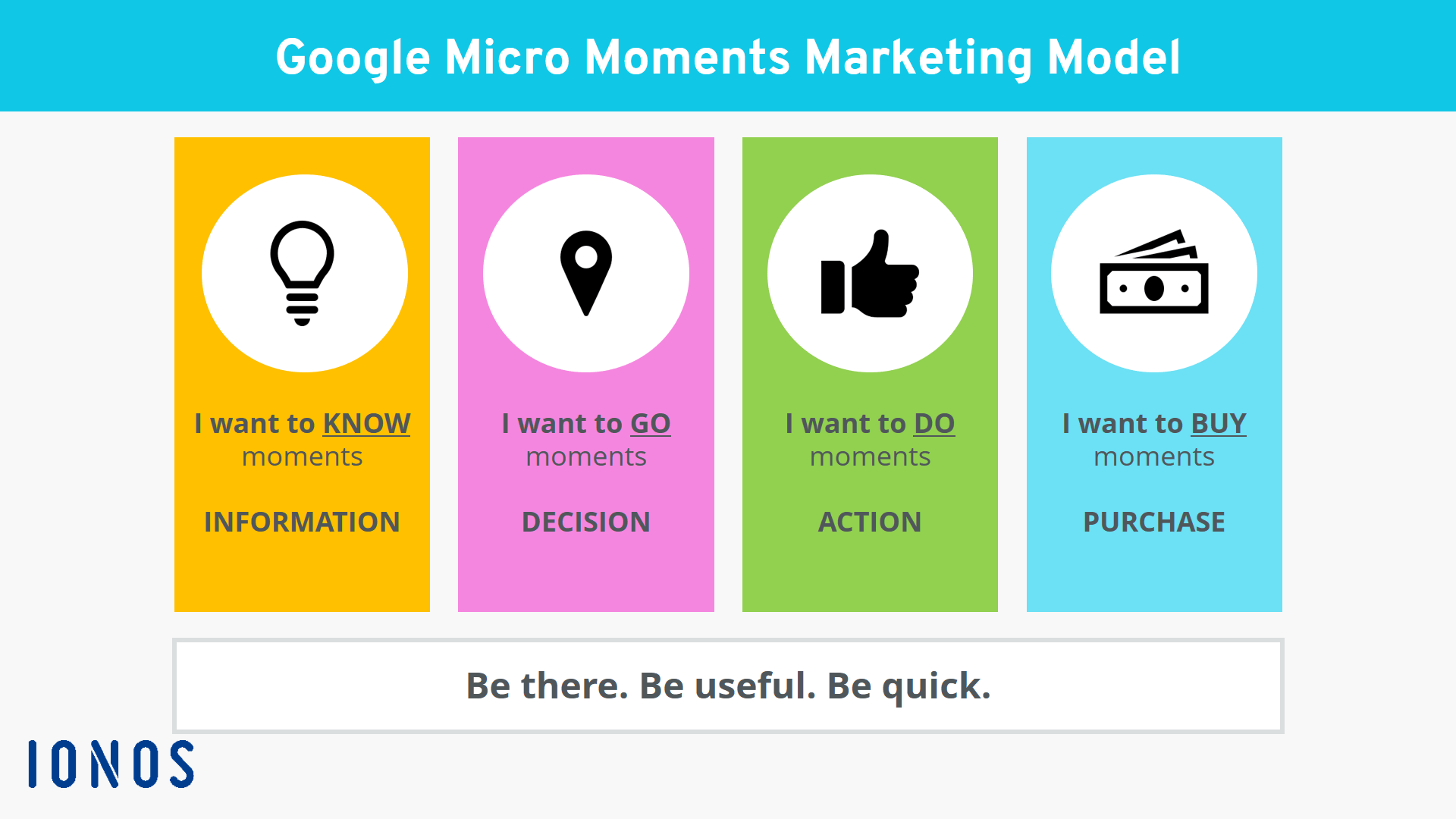
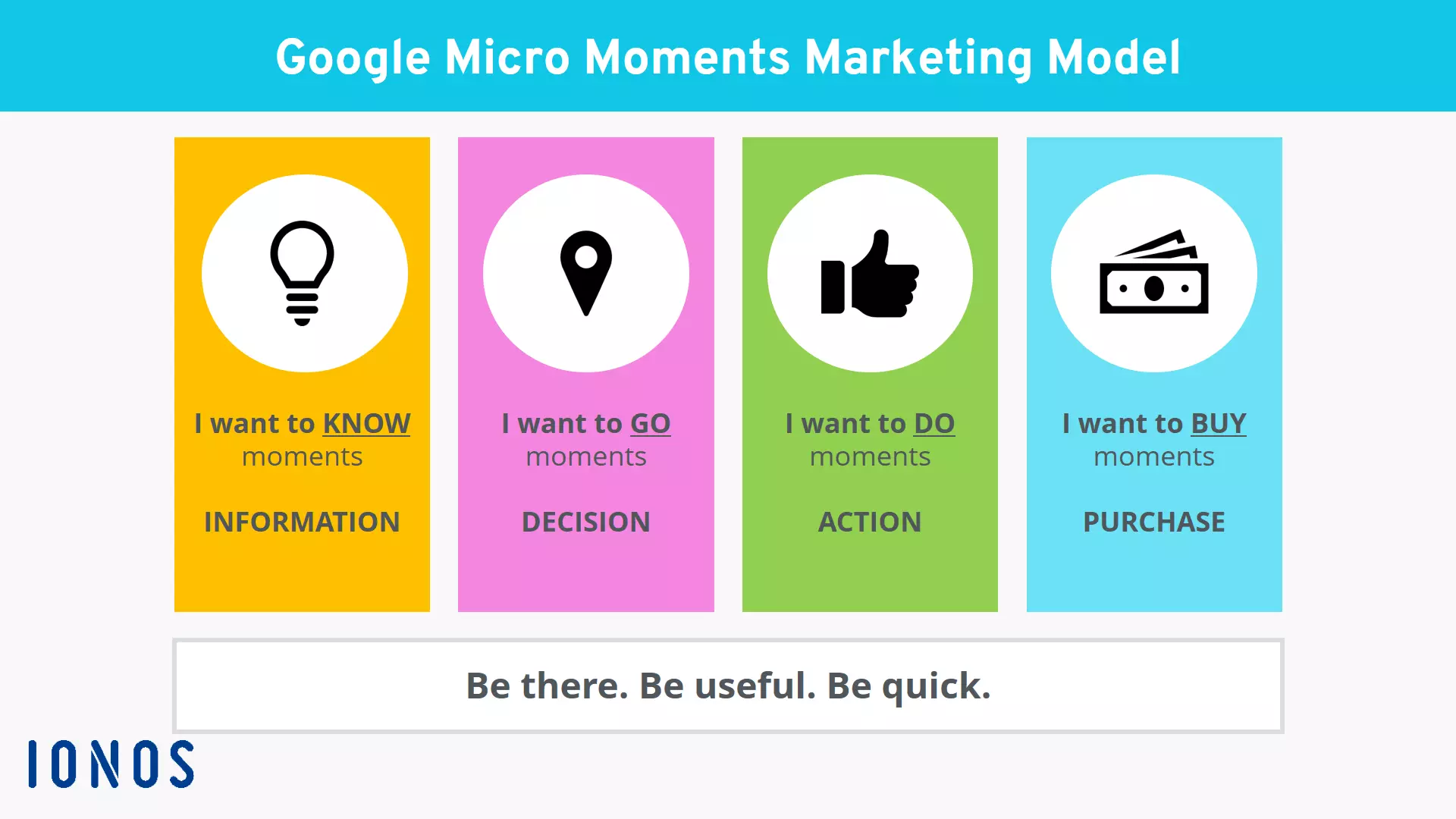
Moment 1: I-want-to-know moment
A situation where customers search for specific information. For example, they want to learn more about certain treatment options right before going into the dentist’s office so they can ask specific questions during the appointment.
Moment 2: I-want-to-go moment
Situations where customers search for a local business because they want to go there right now. Where’s the nearest Vietnamese restaurant? Is there a locksmith whose open nearby right now? If your business appears prominently in the search results, you’ll quickly capture the user’s attention and have the best chance of winning a new customer.
Moment 3: I-want-to-do moment
Situations where customers seek instructions for solving an immediate problem. A customer may need help building a cabinet or may want to learn the art of networking or search for tips on how to get rid of a nasty cold.
Moment 4: I-want-to-buy moment
Moments during which customers are about to make a purchase. Many consumers consult Google whilst in-store to find out whether a product is cheaper online, or they search the web directly for a product and buy it from the seller with the most persuasive content. They conduct their search directly using their smartphone or desktop.
The micro-moments described above all have one thing in common: users who need a quick answer and are making a choice within a few seconds. The business that provides the quickest and clearest answer will make a positive impression on the user. Even if an interaction doesn’t lead to a transaction, these companies stand a better chance of continuing their relationship with the consumer when another opportunity arises.
How to optimize your content marketing micro-moments
What’s the best way to incorporate micro-moments into your strategic thinking? Google recommends three strategies in its research report: Be there. Be useful. Be quick.. Here are a few helpful hints on how to apply these abstract formulas to your online marketing:
Be there
Brands need to understand their target customers or buyer personas better than ever before. Which questions do consumers ask and when? What does the consumer journey look like? You have to anticipate micro-moments and tailor your content precisely towards these moments.
Mobile optimisation should be the highest priority. According to Google’s research, one in three users has made a purchase from a company they didn’t know or didn’t intend to make a purchase from because of information provided during a search moment.
A strong SEO strategy ensures that users will find content tailored to micro-moments (on mobile devices). But it’s not always possible to appear in first-page search results on Google. Alternatively, paid ads can make a big difference, and you could adapt your social media marketing to micro-moments.
When optimizing your content for search engines, consider local and regional searches and optimize your keywords’ accordingly. According to a Google survey, 61 per cent of smartphone users said ’they were more likely to buy from companies who customized information to their location.
Be useful
You should create content that provides relevant answers. Your content should make it clear that you understand the problems and needs of your audience.
Offer content in different formats to address different types of users. Always design your content for micro-moments. For example, you might use well-structured blog posts, attractive infographics or explanatory videos.
Be quick
Micro-moments require content that gets to the point quickly. However, your site also has to meet basic technical requirements if you want to score during decision-making moments. User-friendly web design is a crucial component of this. Users need to be able to find their way around your website quickly and intuitively, especially on mobile devices. Otherwise, they’ll immediately switch to a competitor’s website. Twenty-nine per cent of smartphone users will quickly abandon a company’s site if they don’t find what they need, or the site is loads too slowly.
Linking channels and teams
A fourth key aspect Google mentions is the need for companies to consider the big picture. You should provide a seamless user experience across screens and channels, and be able to measure the full impact of your strategy. Break down silos into separate disciplines. When digital and local teams work together and focus on the same KPIs, you increase the likelihood of achieving excellent results.
Regularly monitor the success of content formats using tools like Google Analytics and modify your strategy when you discover weaknesses. Don’t just optimize content, but review all aspects that are relevant to successful micro-moments: content, design, SEO and mobility.
Hype or paradigm shift?
Micro-moments are not a revolution in content marketing. The practice of reaching consumers digitally at different touchpoints and having to consider context during content creation isn’t new. Micro-moments are distributed across the consumer journey or happen across different phases of the AIDA model.
Mobile optimization has long been a standard component of any good online marketing strategy. Websites are increasingly designed using a mobile-first approach. And it should come as no surprise that technical, mobile SEO is becoming ever more important.
Google’s concept of four key micro-moments has raised awareness of the importance of smartphones. It has also reminded many marketers of how quickly companies have to capture the attention of potential customers online. This means that marketers are required to pay more attention to the needs of their customers. Designing content to meet these needs should be a top priority for content marketing.
Many companies still aim for rapid lead generation. They would like every piece of content to convert users directly into paying customers. But during micro-moments, the customer journey is often in its early stages, and users may not be ready to close a purchase just yet. You can win micro-moments if you have persuasive content, stick to a pull strategy and trust in the strengths of inbound marketing rather than resorting to an aggressive push strategy.