

Social media marketing: using likes to your advantage

As marketing channels go, social media platforms are a fixed component of a solid online marketing mix. For both local companies and global enterprises, Facebook, Twitter, and other platforms offer attractive options for customer communication. If you want to present your company on social networks, newsrooms, or blogs, you shouldn’t base everything solely on traditional marketing strategies: interacting with customers and business partners has become quicker and more intense as the different methods of online management have grown. Viral marketing in social media is especially gaining even more traction.
Why does it differ to conventional marketing?
Important components of traditional marketing techniques include actively contacting customers through cold calling or distributing brochures and flyers as well as placing TV or print ads. Marketing experts describe these efforts as outbound marketing. These measures allow you to directly speak to customers and promote your project or service. With the arrival of content marketing, search engine optimization, and especially social media marketing, the industry has experienced a sea change of sorts.
Inbound vs. outbound marketing
When it comes to inbound marketing, the interested party finds the company, and not the other way round. Maintaining a positive image helps ensure that more customers actively seek your brand or company out. Thanks to social media channels like Facebook and Twitter, it’s becoming increasingly easier for the user to get in touch with businesses and give them direct feedback; this can come in the form of praise, negative opinions, or demands. This is one reason why correct social media management has become more important within online marketing.
Wider reach through viral marketing
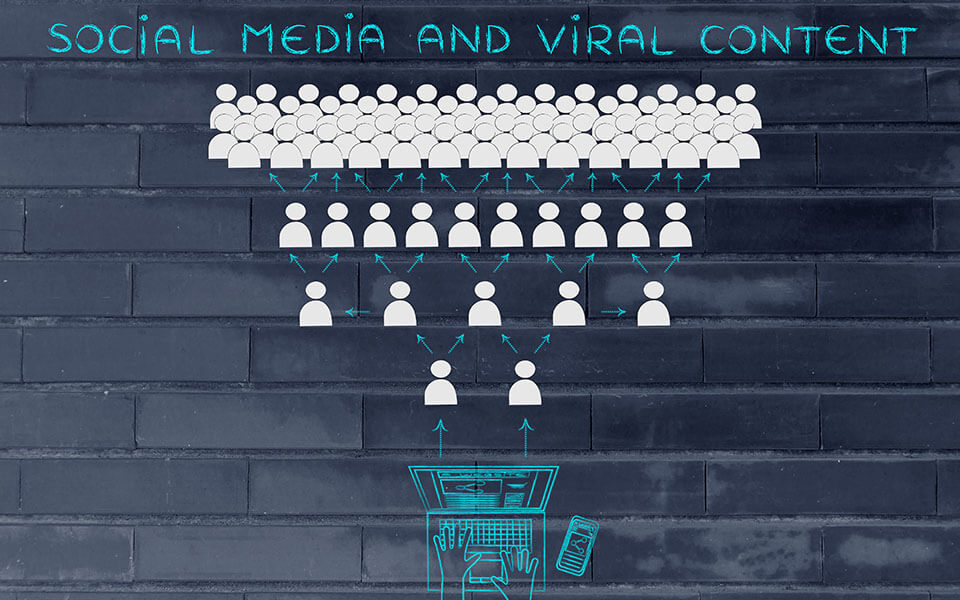
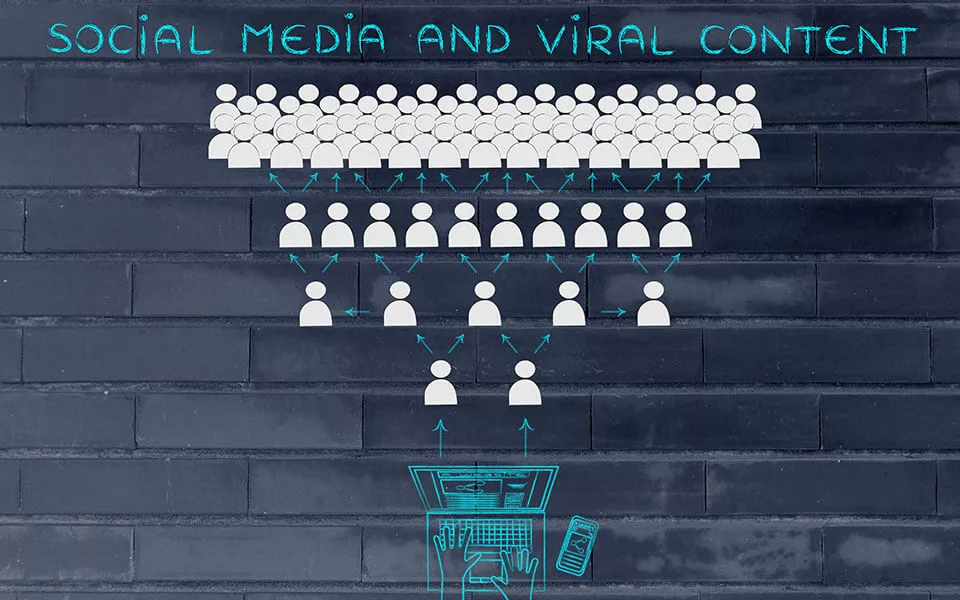
Social media marketing is a useful means for responding to queries quickly and in a way that speaks directly to target groups. In just a few hours, a video or post can be shared and commented on thousands of times, making appealing, up-to-date content an effective way of getting visitors to come to you of their own accord. Those looking to reap the benefits of viral content on social networks should use it in a way that complements other marketing efforts (e.g. as part of an advertising campaign). With the help of viral marketing, it’s possible to reach a lot of people with even the smallest of budgets. The main goal here is to draw attention to your company or its products and brands.
How to use social media marketing correctly
Social media marketing is the modern form of referral marketing. A satisfied customer might hit a ‘like’ button or share an Instagram post with their followers, which in turn promotes a brand or product without the company ever lifting a finger. For a social media marketing campaign to be successful, a few factors need to be taken into consideration. If you want your business to succeed on social networks, you should…
...offer information
Companies can use social media to inform their customers about their products or services. Besides basic information, like opening hours and addresses, you can also use social media to spread important news. New dishes on the menu, a new collection in your clothing line, or a new colleague in your team: online bulletin boards and timelines offer enough space to post whatever news you care to share. Information on renovation work, opening hours during public holidays, and job offers can all be distributed on social networks. Regular customers are thus kept up-to-date and new customers always have relevant information at their fingertips.
...build up a reputation
There’s a lot of online competition and thanks to the many comparison platforms, businesses can quickly get to know their competitors. This is why a company should place a lot of importance on a ‘clean hands’ approach and build up a positive reputation, which is achieved by good customer care and image protection. Companies receive direct feedback from their customers on social media channels, so good management of your online community shows that customer opinions are taken seriously. If your social network consists of a transparent, open communication style, then you can create a positive reputation among your customers
...build and maintain contacts
Social media marketing is the perfect outlet for retaining customers. When liking or following a business, social media users express an interest in the company, which they then share with their own friends and followers. Social networks need to be managed sensibly since images, posts, and information are worthless if nobody reacts to them. The more people that like, share, or comment on a post, the more recognition the company receives. Direct communication brings the company and the customer closer together. A social media profile is a contact point for questions and complaints, which in these circumstances requires real-time interaction.
...maximize coverage
If properly used, social media marketing can generate a wider reach. Good posts with high value or entertainment factors are liked and shared. This can then be seen by the user’s contacts, which then multiplies your readership even more. Planning and strategy are very important here, so you should take advantage of the available social media tools to help you plan your activities on the network. The financial implications are relatively small in comparison to those of other marketing channels. Using various tools also lets you measure successes and failures.
...take advantage of the channel’s features
Social media channels offer numerous opportunities to arouse users’ curiosity and convert them into new customers. With special offers and campaigns, your company can’t go wrong. If you invite people to events using sites like Facebook, the sense of community among your followers becomes even stronger. Social media enables businesses to become more familiar with their target groups. You can form conclusions on customers’ preferences and interests based on the content they share. It’s also possible to monitor the interaction rate of individual posts and see which have the best results. Social media tools can help topics be better and more successfully developed when they resurface later.
...advertise
With Facebook Ads you can specify the exact target group that should see the ad. Facebook’s user metrics are valuable for all online marketing strategies. By specifically targeting certain groups with your ads, you’re left with little coverage waste.
Which social media platform is the right one?
Facebook is usually the platform that comes to mind when social media is mentioned. It makes sense, given that Facebook is the largest social network in the world. There are obviously many other platforms that can also be used to reach customers and these include sites like YouTube, Twitter, Instagram, and LinkedIn. In our article on social media platforms you can see which options are available to marketing managers.