

Content Planning

Content marketing is one of the central disciplines of successful online communication. If you want to be successful in content marketing and impress ever-more demanding customers, you should plan your content properly right from the start. Previously in our content marketing guide, we discussed the 8 most important steps to achieving a successful content marketing strategy. Today, we’re taking a closer look at the cornerstone of content marketing: proper content planning.
If you’re at the beginning of your strategic planning and are yet to determine the main aim of your content marketing, or you’re still carrying out target group analysis, then content planning can help to hold all of this together in a structured plan. Going forward, you will need to focus on coordinating topics, appointments, channels, and of course on sourcing reliable employees. The planning process usually begins with a search for valuable topics and finishes with a concrete editorial plan. In this article, we’ll take you through the most important steps in the process of content planning.
Finding a topic
An important component of content planning is finding topics. In order to continually provide fans and followers with new and interesting topics, you have to continue to find fresh, relevant, and exciting ideas regularly. Finding topics and researching is a continual process that should become part of the weekly routine for employees working in content marketing. The central focus should always be the interests and needs of the target group.
You shouldn’t make the common mistake of focusing on your own interests and picking topics according to personal taste when planning content. There’s good reason for this too: if your target group isn’t particularly interested in a topic you post about, you’ll miss out on huge potential – above all directly through interactions and engagement as well as indirectly through reach. Likes, shares, and other general forms of recommendation are valuable. And you’ll only get these if you’ve paid attention to your target market and tried to understand their problems, questions, and wishes – and then tailored your content to these. So how does this work?
If you want to discover more about the thoughts and wishes of your target audience, there are a few options to help you get closer to them. The first question that you should consider is what your target audience is looking for. Just as in classic keyword research for search engine optimization (SEO), the focus for finding ideas for content creation should be on questions that the user typically enters into search engines online. To find out what your target group is searching for, there are some other useful tools besides the Google Keyword Planner.
Analysis of trends
An important mark of quality for content is current relevance. Content marketers have to record relevant and – above all – current topics and contribute to discussions with appropriate content. So paying regular attention to current trends and hotly debated topics is a crucial aspect in content planning. There are various tools and platforms available to help with this, including:
Google Suggest
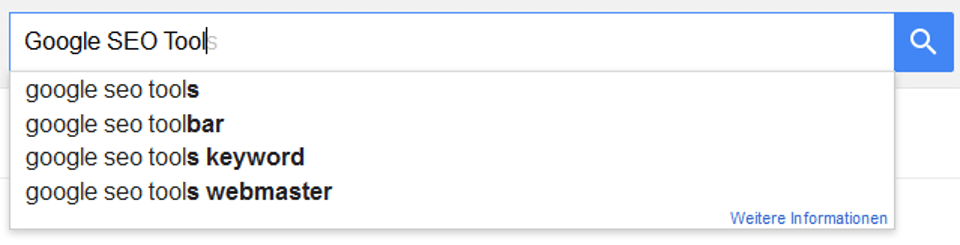
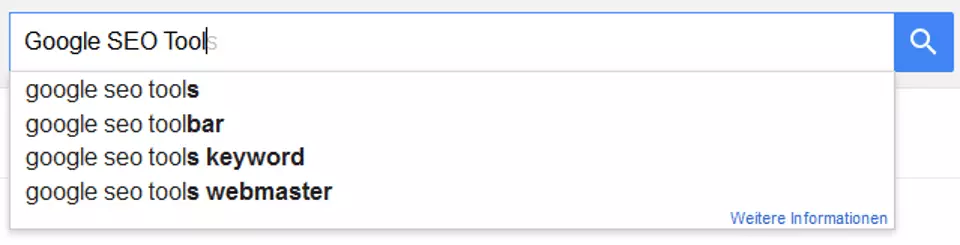
You don’t need to get a lot of fancy software to start identifying relevant keywords in common search terms: you can simply put your keywords into the Google search bar and note down the expanded suggestions provided by the Google Suggest function. Google also shows ‘related searches’ at the end of the search results.
Pay attention
If you’ve identified some trends and in doing so have found some good ideas for topics, then there are methods to avoid commonly discussed topics, and focus on the specific preferences of your target groups. These are useful for finding out more about your audience by listening to them, reading user comments, and observing their behavior. There are several ways to go about this.
Customer service
If you want to get to know your existing customers, you must open your ears to them. This is where your colleagues in customer-relationship management and customer service come into play. These are the employees with the most direct contact to customers, and they spend the majority of their day-to-day employment handling queries and complaints from your users via telephone or e-mail. This information is valuable input – even when it comes to finding content topics. If you take the time to answer the questions and concerns of your customers in the form of tutorials, blog entries, or videos, you’ll be offering them an added value. Another option can be to actively ask for suggestions and areas of improvement. Surveys, interviews, and reviews, which could be generated by an e-mail marketing campaign, are also good opportunities to receive opinions and feedback directly from customers.
Social Media
But it’s not just the opinion of your existing customers that’s important – you should pay close attention to potential new customers too. The best source of opinion from your target market is of course: social media. There are numerous specialized tools to help you identify discussions and popular topics on the social web. You should take advantage of these monitoring options to observe discussion, using the knowledge you gain to influence your content planning.
Influencers
Another option is identifying influencers and opinion leaders in the field. Influencer marketing is concerned with the successful partnerships of celebrities, bloggers, or journalists, together with companies – you can read more about it in our digital guide to influencer marketing. Before you integrate influencers into your company communication actively and make them brand ambassadors, it’s worth doing your research: has a blogger or a YouTuber already published reviews or other information about your product in the past? If so, can the results be transferred into meaningful content for your users/fans and followers? How did the community react to the influencer’s post, and how can you use this reaction?
Content optimization and content recycling
When searching for new topics for your content planning, don’t forget to think about content optimization and what’s known as ‘content recycling’. Existing content can also be updated and extended with new aspects and a little effort. Content that doesn’t have to be current, or remains current for a while, can be considered ‘recyclable’ – you can simply create new formats of the same content.
While you can post blog entries on your company website, you can use an infographic, whitepaper, or videos to post on other platforms.
Results: a wider topic selection
All points of contact between consumers and brands or products listed above are incentives for good content marketing planning.
Other than through the methods mentioned above, you can find new topic ideas:
- through reading industry magazines
- by keeping track of event calendars with trade fairs and other events within the industry
- by analyzing your competition
- by looking at your own company, your history, and your company culture
Even though there are a wealth of great topics to choose from that will be relevant to your company, you shouldn’t forget the initial aims you set and your brand’s positioning. If you’ve done things right, you’ll end up with a large pool of topics and ideas that you can draw upon later – but the research and ideas phase has to lead to a strategic planning of resources and the drafting of an editorial plan.
Planning your resources
Implementing an editorial plan requires good resource management in advance. Here are some of the most important things to consider:
- Clearly define responsibilities: who’s in charge of which topics and content?
- Stick to the schedule: how often will you post and on which channels? The regularity of your publishing on your various platforms will depend on the aims of your communication.
- Clarify availability: who’s in charge of creating content at the last minute? Who’s responsible for spontaneous blog posts? In the modern digital world, it’s more important than ever to react to news and changes in real time and comment on daily updates as quickly as possible.
- Always be ready for sudden changes: fast and spontaneous reactions when unexpected news breaks or viral internet sensations appear are essential when writing content. But community management also plays an important role in everyday content marketing. When it comes to answering comments and queries, the quicker your reaction, the better. To make sure you can pull this off successfully, it makes sense to clearly define your communication strategy. That way, if something sudden and unexpected comes up, you can refer to your strategy to plan your reaction.
For many companies, resource planning holds the key to mastering content strategy. For this reason, you shouldn’t just draft an editorial plan: you should make sure you stick to it, creating good content and sharing it over your many designated channels. If there aren’t enough resources available in-house, it can be worthwhile looking for external service providers. But the decision to put your content production in the hands of others is a big one. Your in-house staff normally know exactly what type of content you need and how to produce it. This means that you should weigh-out whether an external agency or another service provider will deliver the content you need in the quality you want.
Creating an editorial plan
Once you’ve decided upon your topics and carried out your resource planning, it’s time to build an editorial plan. A well-structured plan has many responsibilities – it helps with organization and timekeeping as well as creating transparency and commitment. To form an editorial plan, you’ll need to take your collection of ideas and structure them into categories and sub-categories. The most important questions to answer in this process of content planning are:
- Is the topic relevant to my aims and strategic planning?
- Which of my aims does this topic focus on?
- Which of my buyer personas will I be speaking with on this topic?
- Which point of contact during the customer journey is the topic suited towards?
Customer journey maps can be used as a basis, particularly to answer the last question. This involves looking more closely at the individual phases involved in the purchasing decision process, and identifying the central touch points between the customer and the brand – you can later build your content marketing strategy around these touch points. To learn more about touch points and how to use them, please refer to our digital guide article about customer journey mapping.
Your editorial plan should now contain all of your content planning and the topics you intend to write about at a later stage, and you should refer to it before making any strategic decisions.
What goes in the editorial plan?
Your editorial plan is designed to provide clear instructions for all actions, create roles and responsibilities, and contain deadlines and publication dates. It makes sense to create your editorial plan in a calendar format. This will make the plan clearer and more binding than a list of dates.
The content calendar usually covers a fixed time, which can vary between four weeks and three months. You should also include any other important appointments and events, to be sure you factor them into your timekeeping. A detailed overview about tasks and responsibilities will usually contain:
- Scheduled publication times
- Focus areas including a headline, keywords, target group, and CTA if necessary
- Responsibilities of editors, including required releases, deadlines, and statuses, if necessary
- Content formatting (guide, news, how-to, surveys, video tutorials, galleries, etc.)
- Distribution channels: where will the content be published?
Depending on your communications strategy, it could be worthwhile to write down notes about your respective target group. Which personas is the planned content designed to reach? As mentioned above, you should also include the targeted touch points within the customer journey in the editorial plan.
Free templates for your editorial plan
The question that most marketers ask themselves is: what’s the best way to implement this plan? How will I manage to collect all relevant information in one place and create a calendar that all responsible colleagues can access? Many companies use classic Excel files, or Sheets on Google Drive. The latter can also be edited by multiple colleagues in real time.
But combining all the information you need into a concise, structured document with the corresponding functions and references is certainly a challenge. And you can quickly lose sight of the overview for the plan. Fortunately, there are many free templates online that you can use to create a clear and concise structure. We’ll introduce the best ones below:
Editorial calendar template from Curata
Curata is a simple editorial tool designed in Excel format. It comes with a feature to organize employees around your content plan and structure, and lets you track tasks to help streamline performance. Curata’s tool offers analytical features too, including meta tags, notes, and labels, that allow you to analyze performance.
Webpage FX – built in Google Sheets
Webpage FX’s intuitive tool is perfect for Google Sheets users. It’s a template created within the program that you can edit without downloading. Packed full of clever ideas and options, Webpage FX offers everything that you need to create a solid format for your editorial plan.
Convince & Convert – the eye-catching Excel template and guide
Convince & Convert offer more than just a downloadable guide. The content experts here offer a content marketer’s guidebook for building your own editorial plan as well as their free, downloadable template that you can use. Their editorial plan template is based on Excel, but their tips and guidance can be applied to any software you want to use.
Of course, there are a number of professional tools that can help you in content planning and generally in implementing a content marketing strategy. For an overview of these, check out our digital guide to the best content marketing tools.
Distribution and promotion: which channels are best?
The next important aspect in content planning is the choice of appropriate distribution channels.
When it comes to choosing the right distribution strategy, many companies still have a lot of catching up to do. Typically, most companies choose to just use their own channels – known as ‘owned media’. Approaching customers who are already connected to a brand or a company is sensible, of course. This strengthens your business relationship to your existing customers, but it doesn’t do enough to address potential new customers who are outside of your current sphere of influence. Paid media, like social media (e.g. sponsored posts on Facebook) or display advertising on search engines (e.g. Google AdWords), is important for generating additional reach. The strategic coordination of different distribution channels is almost always a recipe for success, but many companies still rely too heavily on their own media. To read more about content distribution and promotion, check out our digital guide to promoting your own content.
The sooner you decide on the different channels you want to focus on for your content marketing strategy, the better you can optimize your editorial content – the channel will usually determine the type of content you need to produce. For blogs and publisher pages, your content should of course be text-based, while channels like YouTube or Instagram carry a more visual focus.